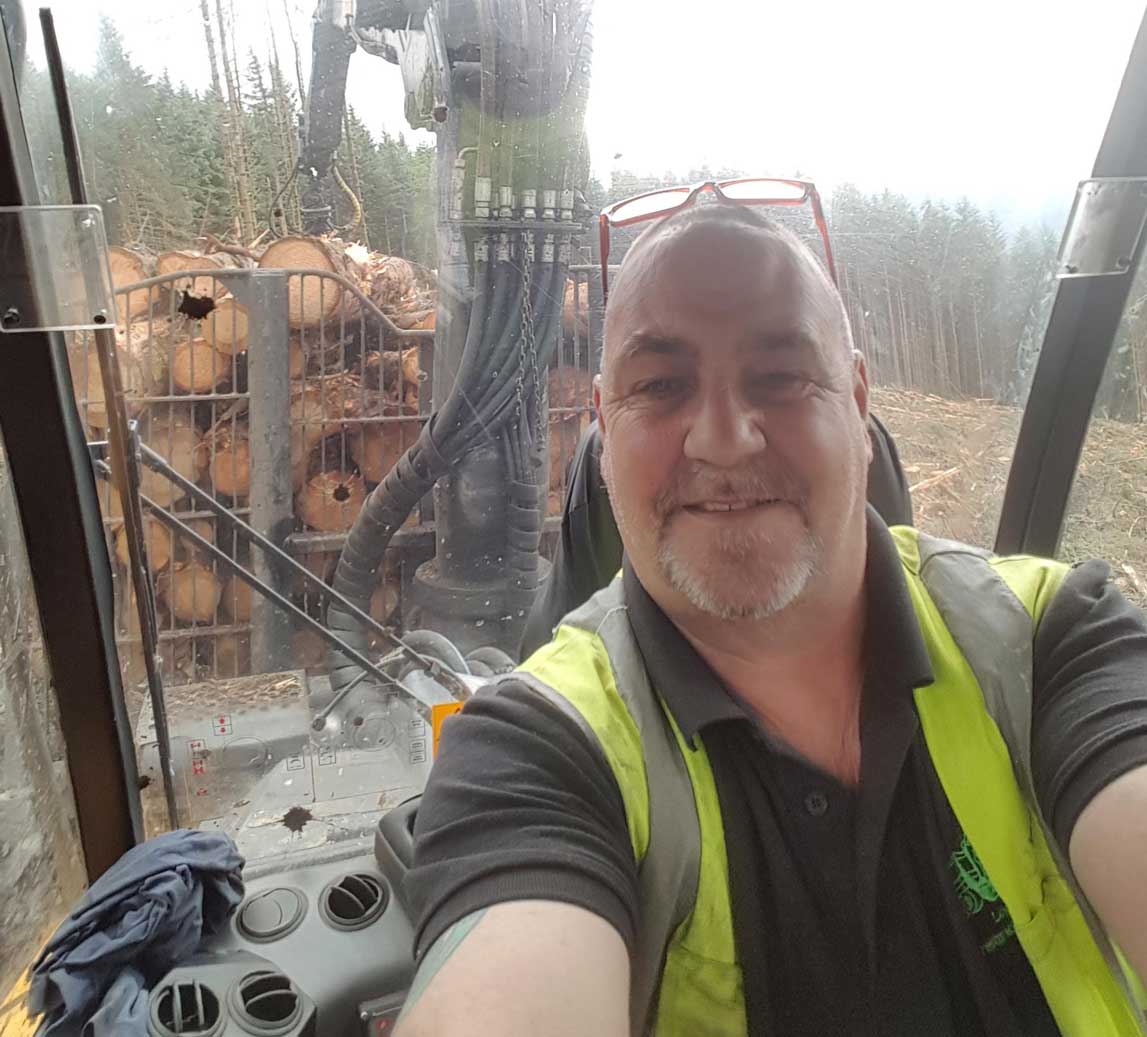

Forestry, along with other industries, is being hit hard due to the conflict in the Middle East and it looks like this is going to have another major impact on the boots on the ground.
Front Line Of Forestry-It has been a difficult period recently for many of us working in forestry, timber haulage, and wood processing. This issue has not only affected the UK but has also led to a slowdown in timber production across numerous countries due to decreased demand.
As is often the case, it is the individuals on the frontline who experience the consequences of this situation; while forest owners may need to implement temporary cost-saving measures, they retain the option to suspend timber sales until market prices begin to recover.

-
That’s a remarkable amount of work hours for a single machine, the Norcar 600 owned by Erkki Rinne is taken well care of, it even has the original Diesel engine.
-
Kieran Anders is a forestry contractor working in the lake district. His work involves hand cutting and extracting timber using a skidder and tractor-trailer forwarder.
-
It is not possible to eliminate chain shot, but there are simple steps that can be taken to reduce the risk.
-
Arwel takes great pride in the fact that the mill has no waste whatsoever, “the peelings are used for children’s playgrounds, gardens and for farm animals in barns in the winter and the sawdust has multiple uses in gardens and farms as well.
-
Timber hauliers need to encourage young blood in, and also look after the hauliers we have, we need make the sector a safe and positive place to work.
FIND US ON
Companies that have made substantial investments in equipment and staff training are likely to see the greatest impact, and they are the ones who suffer the most.
In 2025, in the UK, timber prices decreased by about 5%, squeezing profit margins (if there were any), while equipment costs, fuel, finance, parts, and labour all increased, even as contractors were locked into fixed rates. This meant that profit margins were being squeezed from all sides.
The last few years in forestry have been a roller coaster: prices spiked post-COVID due to timber shortages, and before long, the mills were full, and no one wanted our timber.
This makes it difficult for contractors to invest in new equipment or have a long-term plan; one year it is hunky-dory, and the next, everyone is competing for the little work available, leading to undercutting rates just to keep finance payments, labour and running costs up to date.
Our imports are also up and down like a yo-yo, as Scandinavia and the Baltics are experiencing similar problems, with prices fluctuating as well.
I don’t know if I am missing something, but I thought we should use our homegrown timber first to support our forest industry, and then supplement the shortfall with imports, not the other way around.
The building and construction industry has been struggling, even when timber is cheaper, their material and labour costs are still rising. Many large companies, such as the National Timber Group, have gone into administration, resulting in hundreds of job losses and site closures.
Other factors are out of our control, such as recent storms, which have worsened the problem: when large areas of forest are blown down, large-scale felling programmes are carried out, and timber floods the market, leading to a further drop in price.
I actually thought we were beginning to see daylight on the horizon, but after talking to colleagues, there is another big storm brewing.
The conflict in the Middle East is likely to have serious repercussions. I spoke to a friend who runs a forestry business, and his fuel costs have increased by £7,000 in a week, with talks of fuel rationing being introduced.
Middle Eastern construction markets are heavily dependent on imports of lumber and other wood products, as they have limited natural resources for construction. If the current conflict escalates, it could slow economic activity, delay construction projects, and tighten financing and logistics, likely reducing demand for imported lumber. Kirill Baranov, founder of Signals from

the Wood, said in a March 7 update that delayed shipments of raw materials and equipment are already forcing some Gulf companies to reassess construction project deadlines and terms.
The Middle East has been a significant market for Nordic lumber, particularly when European construction demand has been weak. Prolonged disruption in that region could force Nordic lumber producers to redirect volumes to Europe, North Africa, and Asia, potentially causing temporary oversupply and price pressures in those markets.
It would be incredible to have representatives in Westminster who understand the importance of our forests and would support the working people of the forest industry. This contrasts sharply with the current tweed-suited, brogue booted brigade, who think a harvester is a chain of pub restaurants.
Sign up for our free monthly newsletter here
Contact forestmachinemagazine@mail.com to get your products and services seen on the world’s largest professional forestry online news network.
#homeoflogging #writtenbyloggersforloggers #loggingallovertheworld
Written by loggers for loggers and dedicated solely to the equipment used in forestry operations.