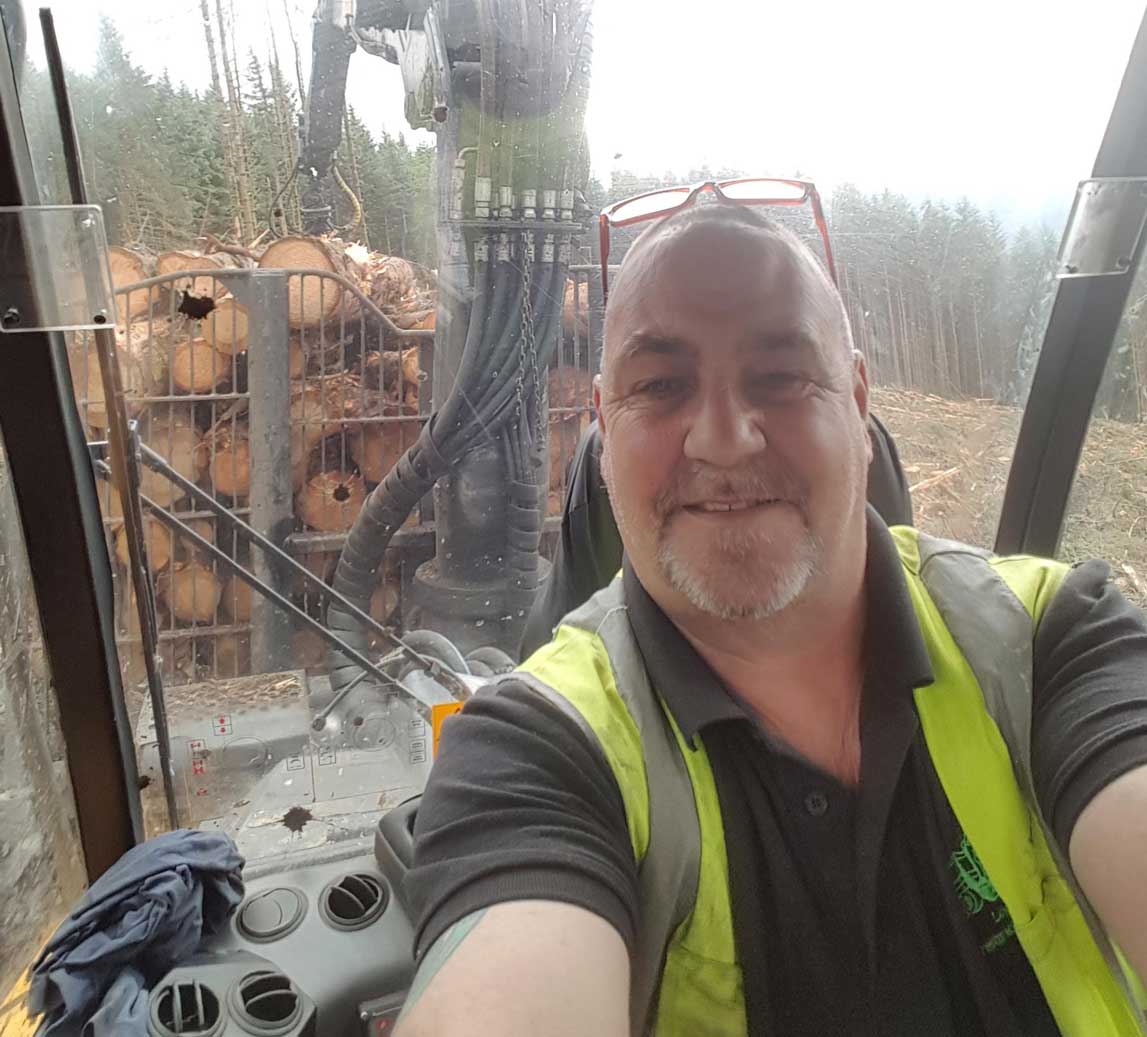
Rory Sutherland made the significant decision for himself and his spouse to relocate to the opposite side of the globe in pursuit of an outdoor lifestyle free from inclement weather and bothersome midges.
Logging in New Zealand, Rory Sutherland is originally from Dunoon, and from a young age, he enjoyed spending weekends in the forest helping his dad. As he grew older, Rory explored various jobs, including working at outdoor centers and laboring on construction sites. After getting married, he and his wife embraced outdoor activities such as mountain walking, mountain biking, and snowboarding, which led them to relocate further north to Fort William.

-
That’s a remarkable amount of work hours for a single machine, the Norcar 600 owned by Erkki Rinne is taken well care of, it even has the original Diesel engine.
-
Kieran Anders is a forestry contractor working in the lake district. His work involves hand cutting and extracting timber using a skidder and tractor-trailer forwarder.
-
It is not possible to eliminate chain shot, but there are simple steps that can be taken to reduce the risk.
-
Arwel takes great pride in the fact that the mill has no waste whatsoever, “the peelings are used for children’s playgrounds, gardens and for farm animals in barns in the winter and the sawdust has multiple uses in gardens and farms as well.
-
Timber hauliers need to encourage young blood in, and also look after the hauliers we have, we need make the sector a safe and positive place to work.
FIND US ON
John Sutherland, Rory’s father, had relocated to Lochaline and was employed by Tree Top Forestry in the area. He inquired among other contractors to see if anyone needed forestry workers, and he successfully secured an apprenticeship for Rory as a timber faller.
Initially, Rory worked on felling trees in front of harvesters and skylines, which allowed him to gain experience before moving on to learn how to operate a forwarder.
“My first few jobs in forestry weren’t the best, but they helped me get my foot in the door and provided valuable learning experiences,” Rory recalled.
Eventually, he received a work placement with Highland Timber Harvesting, which involved felling trees and operating forwarders. However, he and his wife grew weary of the constant rain, wind, and midges, so they decided it was time to start planning their move to Australia.
“I worked for Duffy Skylining for nine months prior to our move. During that time, I was felling trees and operating Callum’s forwarder. In 2015, we eventually got everything sorted out and took a big step in emigrating to Australia.
Once we settled in Western Australia, I continued working in forestry. My tasks included felling trees for skylines, brashing prior to harvesting, performing cut-to-waste cleanup, and operating a forwarder. I primarily worked in clearfell areas, but I also participated in some thinning projects. The only downside to working in Australia was the presence of various dangerous critters in the forest. You could never let your guard down, even for a minute. Whether I was working, walking through the blocks, or nipping to the toilet, I was always on edge. I encountered plenty of snakes, some quite large. Even after we moved to New Zealand, it took a long time for me to walk through long grass without feeling paranoid!
We relocated to New Zealand in 2018 and have been living there for the past five years.
New Zealand boasts that 38% of its land mass is covered in trees, which amounts to 10.1 million hectares in total. Of this, 8 million hectares consist of native species, which include five types of beech trees, as well as podocarp, rimu, totara, miro, kahikatea, and matai trees.”
In New Zealand, there are 2.1 million hectares of plantation forests, with 1.7 million hectares designated for timber production. Of these plantation forests, 90% consist of Radiata Pine, which grows faster in New Zealand than anywhere else in the world. The remaining areas include Douglas fir, Eucalyptus, and a variety of other hardwoods and softwoods.
The crown (government) owns 5.2 million hectares of native forests, which comprise national parks, scenic reserves, and other conservation areas.
Most of the plantation forests are privately owned but are managed by the crown.
Rory has moved to Northland, New Zealand, which is located near the northern tip of the North Island.
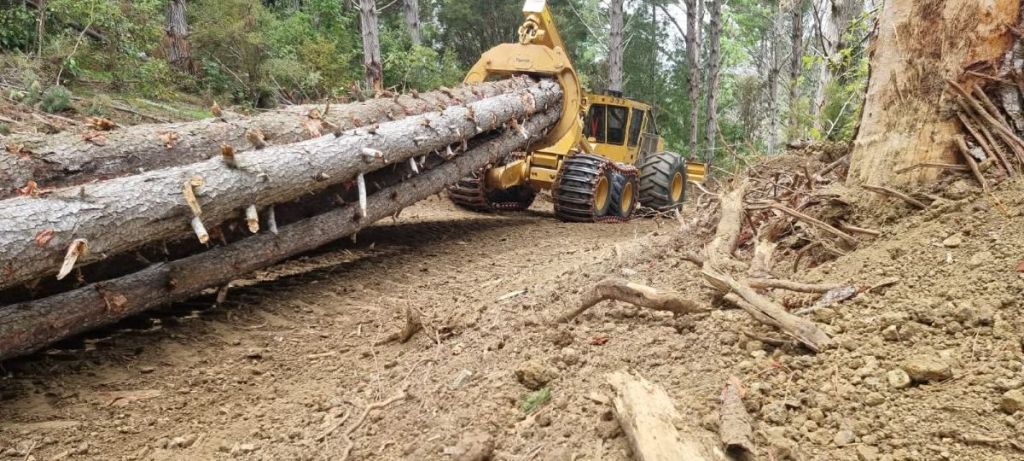

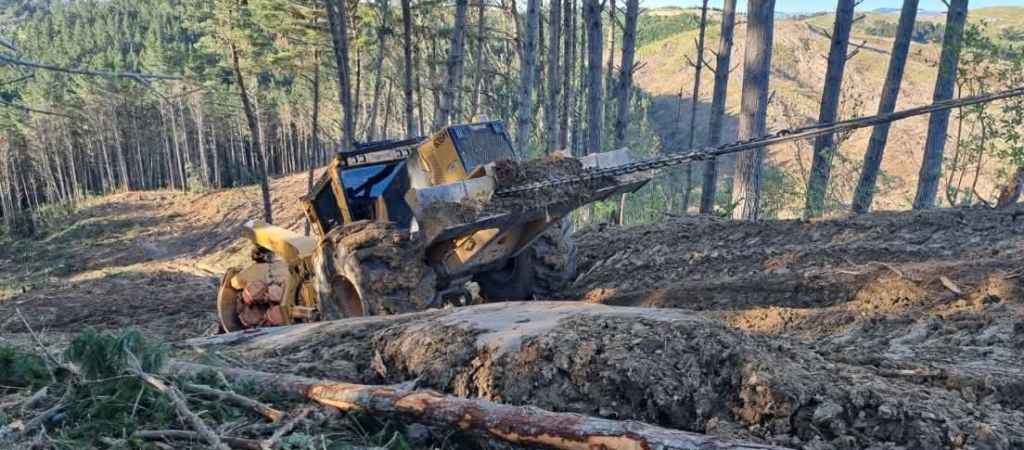
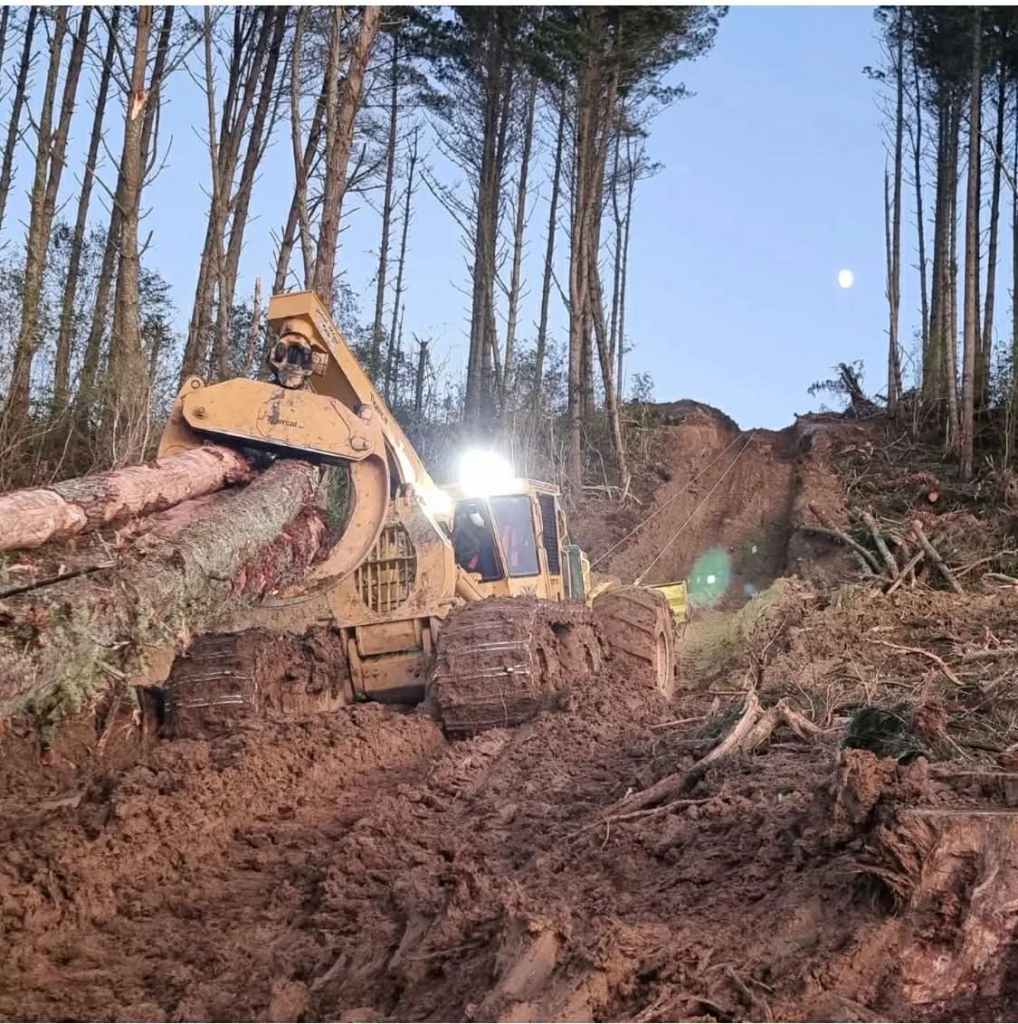
“I work for Douglas Logging Limited which is based in Dargaville, Northland and we mostly harvest Radiata Pine. The majority of our wood is exported to China and prices for our timber can fluctuate drastically so this defines our daily production targets. When prices are low we typically harvest 250-300 tonne per day and when they are high 700+ tonne per day”.
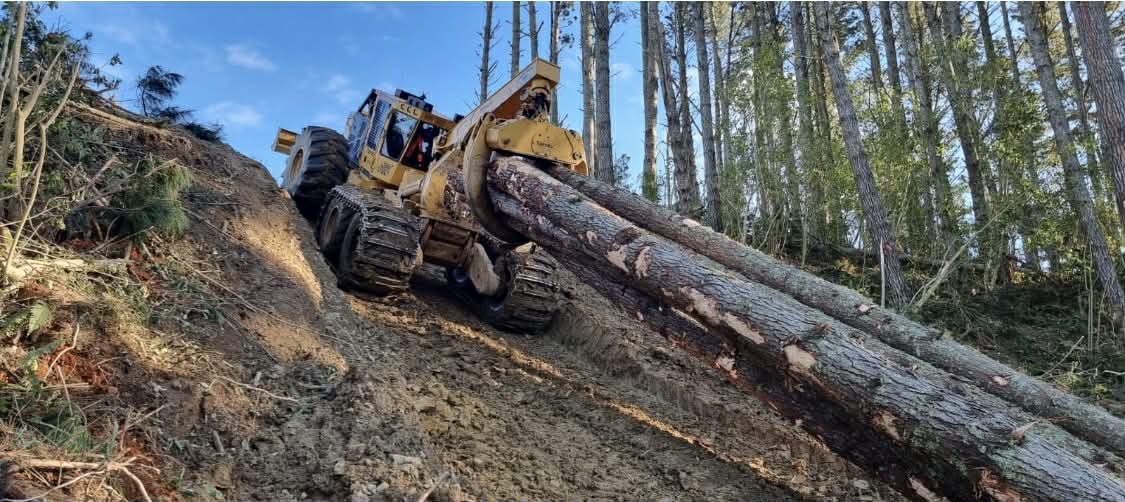
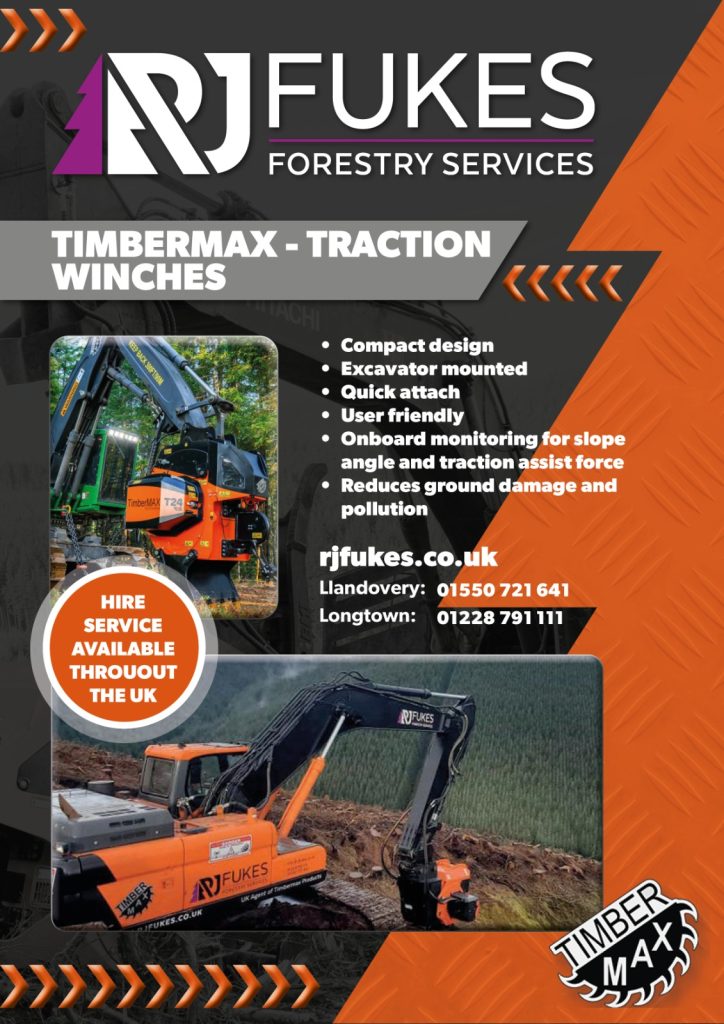
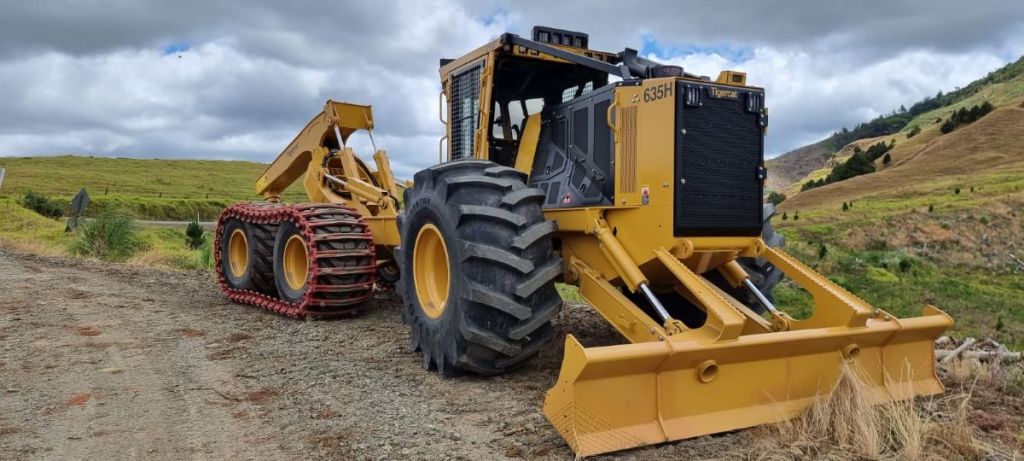
“I operate a Tigercat 635H Grapple Skidder which I got new two years ago, this machine really is the King of Skidders and the new cabin layout is so much more comfortable than the previous model. I’ve also got a Komatsu PC300 with a traction line conversion to assist me when I’m skidding on really steep ground”.
The Tigercat 635H is a 285 hp six wheel drive skidder which weighs just over 25 tonnes. It has a 2.32m³ capacity grapple and has a top speed of 23km/hr. It comes with Electronic Control Technology and a Hydrostatic Drive System which allows the Skidder to operate at automatic variable engine rpm which offers improved fuel economy.
This skidder has undergone two decades of development in some of the harshest forestry environments, it has a extreme heavy duty rear axle for improved traction and lower ground pressure and results in a much smoother ride for the operator.
The 220° rotating seat locks in any position and includes log-on telematics for machine data and diagnostic tools, accessible remotely via Wi-Fi.
This is Tigercat’s highest-capacity skidder, which excels in both extreme ground conditions and winch-assisted steep-slope logging.
“Our working day usually starts around 7 am, and we are finished by 3:30 pm, and we work a five-day week. If we are on high production, I will start at 5 am and work until 3.30 pm I am home every evening, as we are rarely more than an hour from home. A work Ute, diesel and work clothing are all provided by Douglas Logging”.
“The company has six different crews, three are haulier crews, with the other three ground-based. All the wood is extracted by haulier or skidder and processed at the landing, where it is taken away by trucks”.
“ That’s eight years I’ve been away from Scotland now, and I haven’t been back home yet. I do really miss family and friends and good old Scottish banter, but the cost of flying and a 28-hour flight with our two kids, who are both under four, doesn’t sound very appealing lol”.
NB
According to Careers New Zealand, the demand for forestry and logging workers is strong in New Zealand, and the chances of getting a job in this field are good.
The training required is usually more than a year, and the pay for trainee forestry and logging workers ranges from $47,000 to $65,000 per year, while qualified forestry and logging workers earn between $65,000 and $75,000 per year.
Crew managers and specialised operators may earn between $100,000-$120,000 per year.
Sign up for our free monthly newsletter here
Contact forestmachinemagazine@mail.com to get your products and services seen on the world’s largest professional forestry online news network.
#homeoflogging #writtenbyloggersforloggers #loggingallovertheworld
Written by loggers for loggers and dedicated solely to the equipment used in forestry operations.