Accurately located harvester thinning data can be used to calculate an estimate of the remaining growing stock
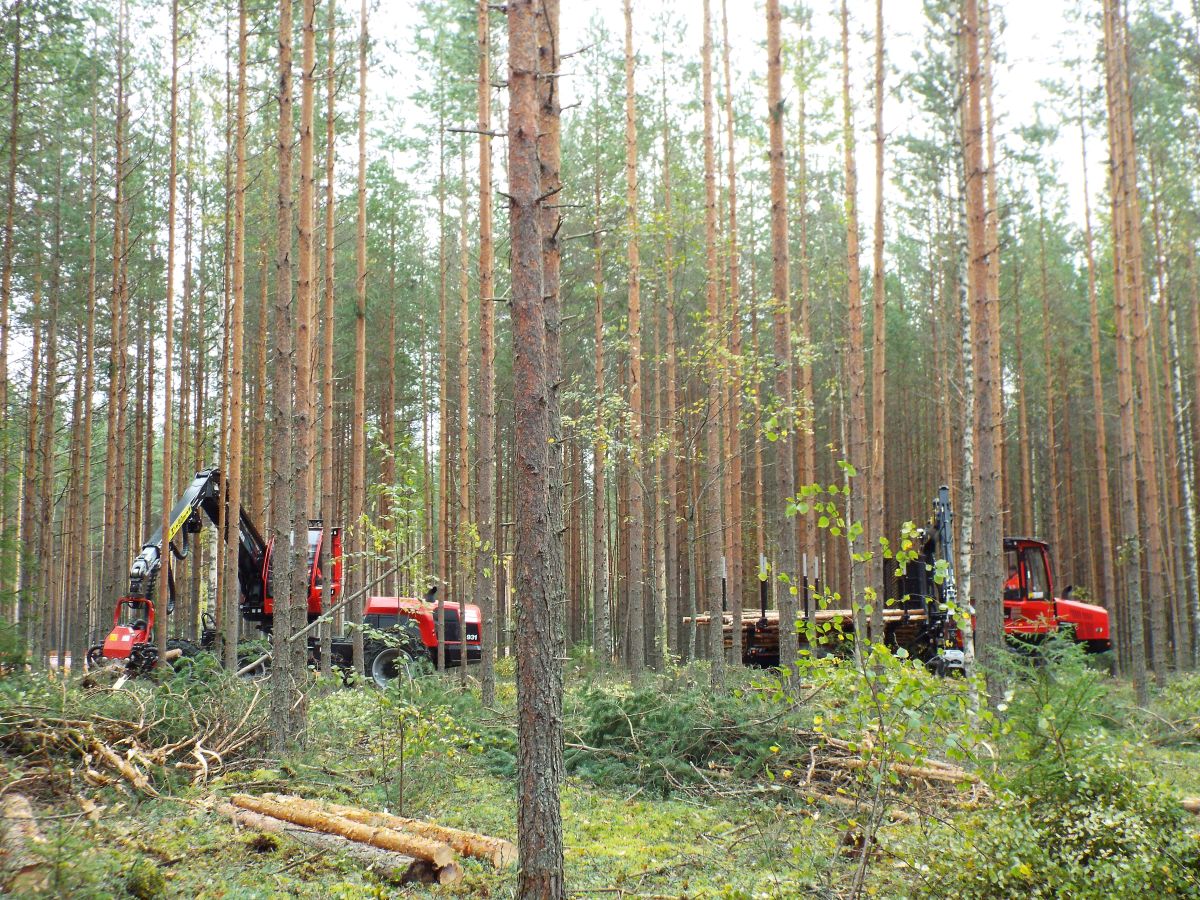
Harvester Thinning Data-In recent years, forest machine manufacturers have introduced accurate positioning as part of their equipment. With the help of precise positioning, the tip of the harvester’s boom or even the location of the harvester head is known with an accuracy of tens of centimetres at the time of felling the tree. This brings a lot of potential for new data mining methods, as the data is obtained quickly after the operation and the calculation is relatively easy to implement.

-
That’s a remarkable amount of work hours for a single machine, the Norcar 600 owned by Erkki Rinne is taken well care of, it even has the original Diesel engine.
-
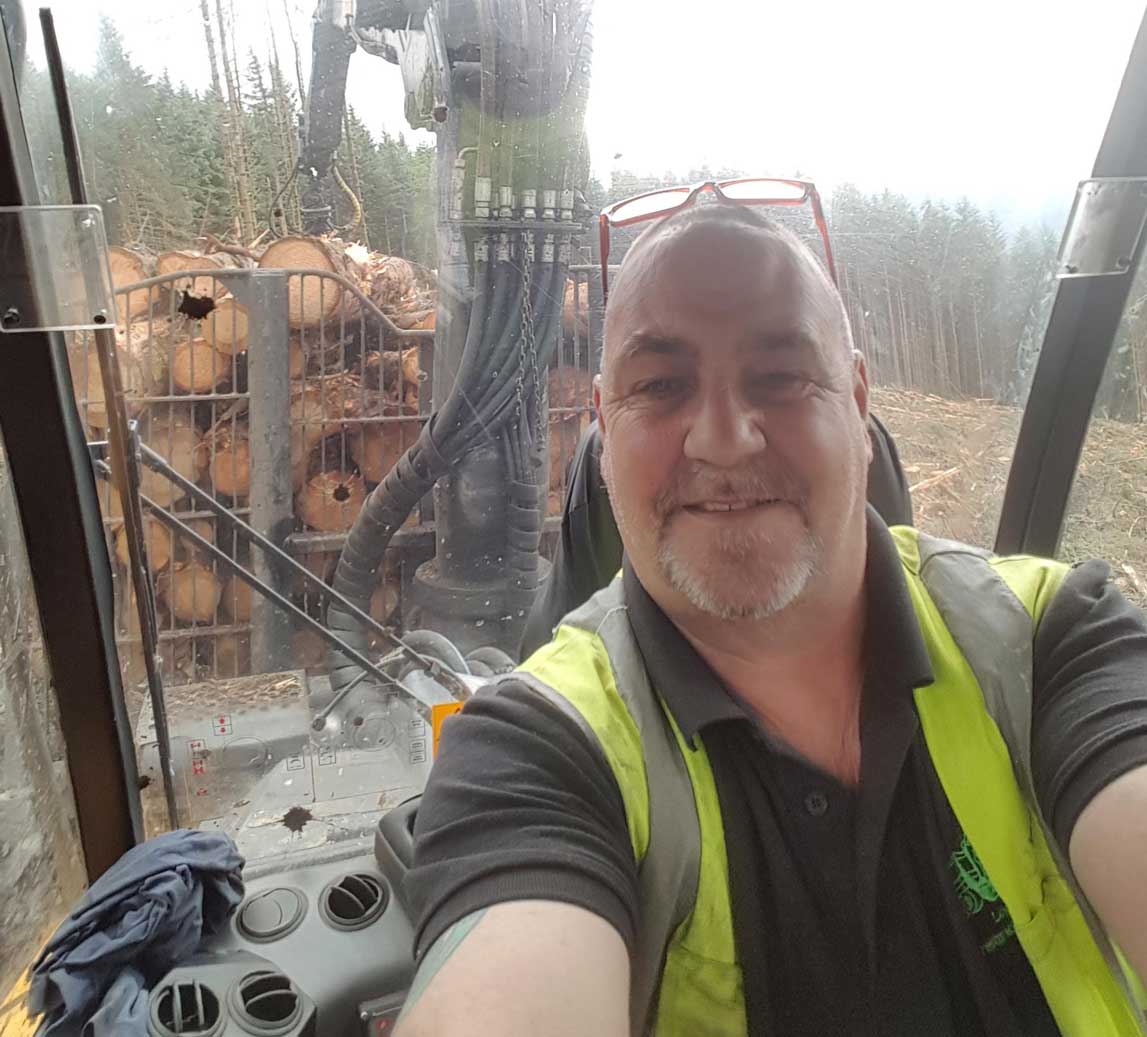
Kieran Anders is a forestry contractor working in the lake district. His work involves hand cutting and extracting timber using a skidder and tractor-trailer forwarder.
-
It is not possible to eliminate chain shot, but there are simple steps that can be taken to reduce the risk.
-
Arwel takes great pride in the fact that the mill has no waste whatsoever, “the peelings are used for children’s playgrounds, gardens and for farm animals in barns in the winter and the sawdust has multiple uses in gardens and farms as well.
-
Timber hauliers need to encourage young blood in, and also look after the hauliers we have, we need make the sector a safe and positive place to work.
FIND US ON
In the method, the pinpoint hpr data collected from the first thinnings is used to identify drift trees and scale them to describe the trees before felling. The number of trees after felling was estimated by subtracting the removals from the pre-harvested stand.
Up-to-date and accurate information on forest resources is in the interest of all operators in the forest sector. Satellite-based methods provide up-to-date information, but spatial accuracy is not yet sufficient for the needs of precision forestry. Laser scanning data has been developed vigorously in recent years, but the challenge is the timeliness due to the time intervals between scans.
The method produced reliable results, especially in estimating the stem number describing the pre-felling. Greater variation was observed in the estimation of the growing stock after felling, especially in terms of the base area. However, the utilisation of HPR data is still in its early stages, and at Metsäteho, the development work continues in terms of data acquisition and method development in the OptiForValue project.
This work has been carried out as part of the KESTOTÄSMÄ project funded by the EU’s Recovery and Resilience Facility (RRF), one of the objectives of which is to develop methods for monitoring the quality of precision timber harvesting and fellings.

Sign up for our free monthly newsletter here
Contact forestmachinemagazine@mail.com to get your products and services seen on the world’s largest professional forestry online news network.
#homeoflogging #writtenbyloggersforloggers #loggingallovertheworld
Written by loggers for loggers and dedicated solely to the equipment used in forestry operations.