
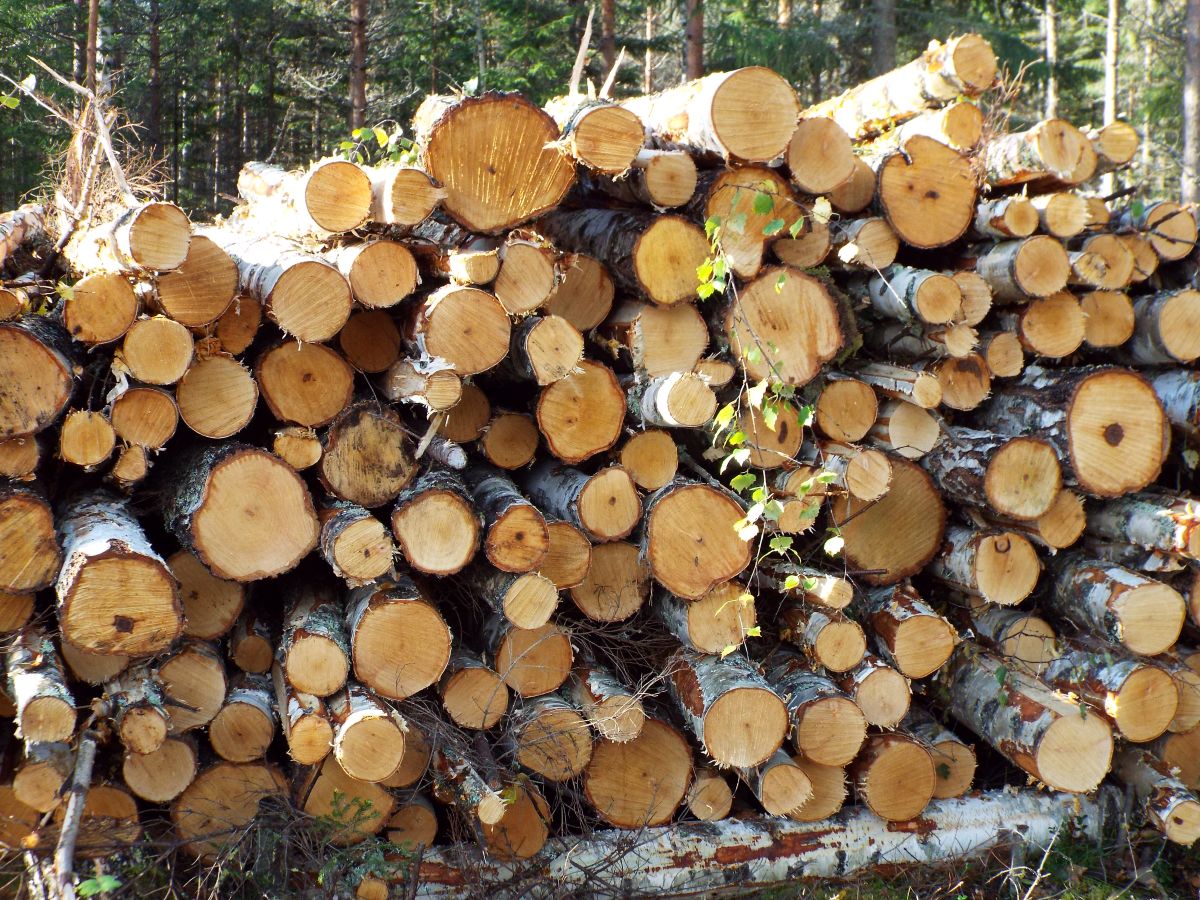
In January, Russia’s forestry timber production experienced a significant decline of 18.4% compared to the same month last year, totaling 6.36 million cubic meters.
In 2025, logging figures for Russia’s forestry fell sharply.Total timber sales experienced a significant decline, reaching 176 million cubic meters. This figure represents a 10% drop compared to the previous year, marking a concerning trend in the industry. Notably, it is the lowest recorded volume of timber sales since the onset of Russia’s full-scale aggression against Ukraine. Furthermore, when compared to a decade ago, the current sales illustrate a staggering decrease of 30%, highlighting the long-term impacts on the sector and the broader economic challenges faced during these tumultuous times.

-
That’s a remarkable amount of work hours for a single machine, the Norcar 600 owned by Erkki Rinne is taken well care of, it even has the original Diesel engine.
-
Kieran Anders is a forestry contractor working in the lake district. His work involves hand cutting and extracting timber using a skidder and tractor-trailer forwarder.
-
It is not possible to eliminate chain shot, but there are simple steps that can be taken to reduce the risk.
-
Arwel takes great pride in the fact that the mill has no waste whatsoever, “the peelings are used for children’s playgrounds, gardens and for farm animals in barns in the winter and the sawdust has multiple uses in gardens and farms as well.
-
Timber hauliers need to encourage young blood in, and also look after the hauliers we have, we need make the sector a safe and positive place to work.
FIND US ON
The crisis currently affecting the forestry industry in the Russian Federation is systemic in nature. International sanctions have severely impacted the sector, resulting in a significant reduction in demand for timber and compelling suppliers to alter their logistics chains. Consequently, timber prices have increased, rendering harvesting operations unprofitable. The Kremlin’s efforts to advocate for domestic demand have proven ineffective, as Russian consumers do not require such substantial volumes of costly firewood. Nikolai Ivanov, the Vice President of the Segezha Group trading company, asserts that the Chinese market is unlikely to provide relief for Russian loggers. He notes, “For China, the European Union market is semi-closed in many sectors, and it faces considerable trade difficulties with the United States, alongside its own internal challenges in the construction industry. As a result, demand for exports is diminishing and is expected to continue its downward trajectory.”
A critical issue facing the logging industry in Russia is the deterioration of logging equipment. Experts anticipate that by 2028, approximately 90% of imported harvesters and forwarders will no longer be operational. Currently, Russian manufacturers lack the capacity to provide effective replacements for this imported machinery. As it stands, they are constructing isolated instances of such equipment, despite a demand ranging from 3,500 to 10,000 machines within the next two to three years.
The Kremlin has announced plans to increase rental rates for forest plots by 40-50% in 2026, which contributes to a prevailing sense of uncertainty among employees in the Russian forestry industry. Consequently, it is anticipated that the crisis within the logging sector will not only persist but will also intensify, potentially affecting related sectors such as the pulp and paper industry and wood processing.
Sign up for our free monthly newsletter here
Contact forestmachinemagazine@mail.com to get your products and services seen on the world’s largest professional forestry online news network.
#homeoflogging #writtenbyloggersforloggers #loggingallovertheworld
Written by loggers for loggers and dedicated solely to the equipment used in forestry operations.