We heading towards a serious timber shortage and have zero possibilities of reaching net zero unless we increase our tree cover in the UK.
Once again, another government fails to meet the annual woodland creation target of 30,000 hectares. As another year comes to an end, it has become all too clear that the government has once again failed to meet its ambitious target of planting 30,000 hectares of new woodlands. This shortfall is especially significant given the urgent climate crisis and rising atmospheric CO2 levels.

-
That’s a remarkable amount of work hours for a single machine, the Norcar 600 owned by Erkki Rinne is taken well care of, it even has the original Diesel engine.
-
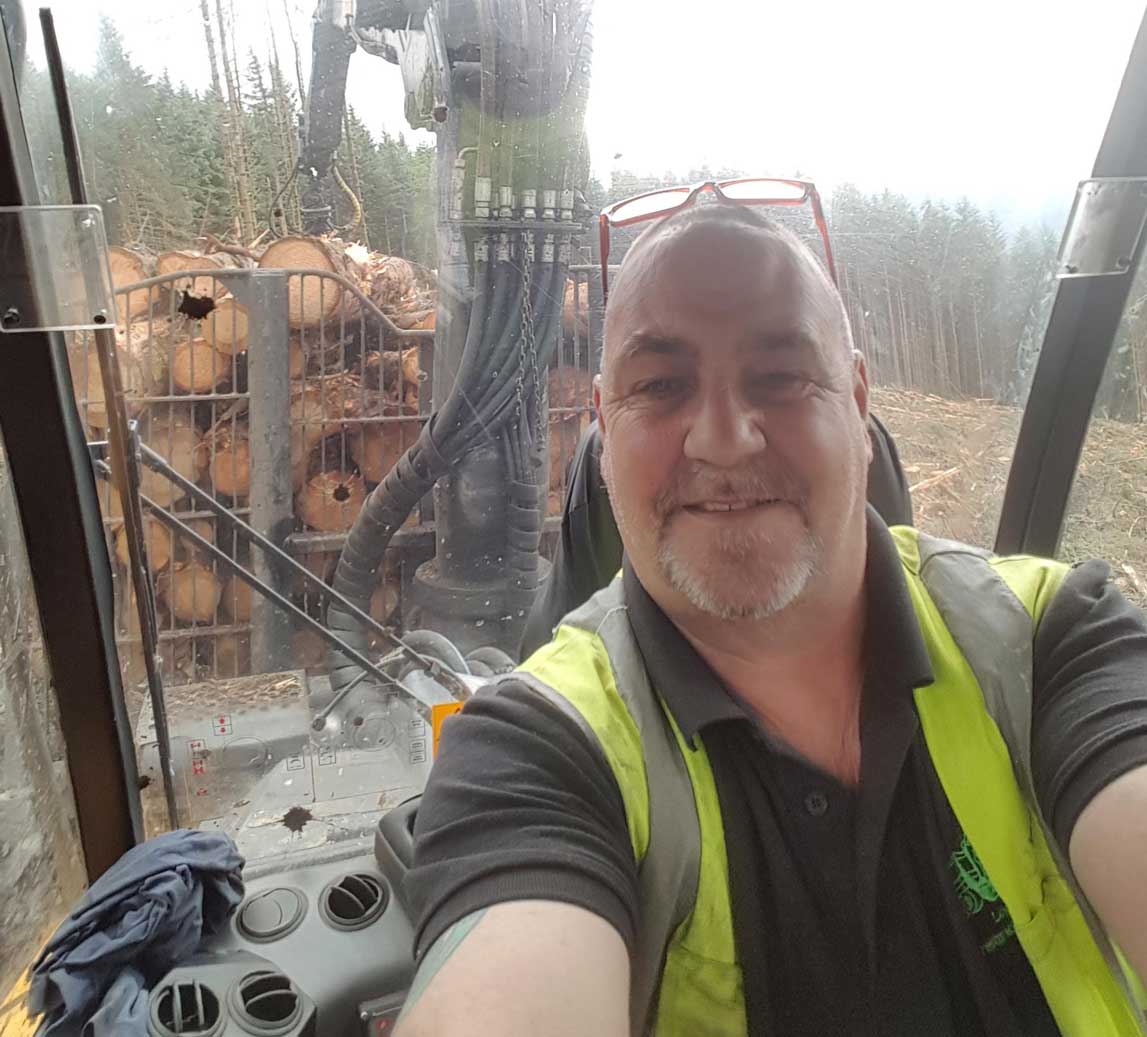
Kieran Anders is a forestry contractor working in the lake district. His work involves hand cutting and extracting timber using a skidder and tractor-trailer forwarder.
-
It is not possible to eliminate chain shot, but there are simple steps that can be taken to reduce the risk.
-
Arwel takes great pride in the fact that the mill has no waste whatsoever, “the peelings are used for children’s playgrounds, gardens and for farm animals in barns in the winter and the sawdust has multiple uses in gardens and farms as well.
-
Timber hauliers need to encourage young blood in, and also look after the hauliers we have, we need make the sector a safe and positive place to work.
FIND US ON
The lack of progress is disheartening, raising concerns among citizens about the effectiveness of current policies and the government’s true commitment to promoting sustainable growth. The once vibrant vision of a lush, green future now feels increasingly out of reach, leaving many questioning the way forward in our collective fight against climate change.
As of March this year, the area of UK woodlands was just 3,286,000 hectares, representing 13.5% of the total land area. Broadleaves account for half of this total, though the proportion varies across countries.
In 2019, the government set a manifesto to increase tree planting to help achieve net-zero without a clearly defined delivery roadmap. A figure of 30,000 hectares annually was the headline target, with a pledge to meet it by 2025.
The devolved nations set their own woodland creation targets in 2020: Wales aimed for 2,000 ha, Northern Ireland for 900 ha, Scotland for 18,000 ha, and England for 7,500 ha. A total of 28,400 ha was planned, but in every year except 2024, we fell well short.
The figures that were achieved each year are abysmal: 2021-13,300 ha, 2022-13,900 ha, 2023-13,000 ha, 2024-20,700 ha and 2025 15,600 ha.
It is anticipated that the Labour Party will attribute the failure to meet targets to the Conservative Party; however, it is important to acknowledge that their performance is even less commendable. It is anticipated that the Labour Party will attribute the failure to meet targets to the previous government; however, it is important to acknowledge that their performance is much worse.
It appears this was operationally unrealistic from the outset, as the woodland creation targets were set without regard to delivery capability.
The nurseries failed to expand capacity to supply sufficient young trees, resulting in a significant shortage. This issue was exacerbated by a shortage of skilled labour, inconsistent and inadequate funding, and insufficient incentives for farmers to plant trees. Moreover, there was notable public and political resistance, along with slow planning approvals, which further hindered progress.
The UK remains the second-largest net importer of timber, valued at £9.4 billion.
The average forest cover in Europe, Scandinavia, and the Baltic is 46%, while the UK mainland has only 13.5%.
This paints a bleak picture for the future of UK forestry and supply of commercial timber, given that forestry and wood processing is a £2 billion industry employing 21,000 people.

It is widely recognised that young, growing forests play a crucial role in the environment, acting as a natural mechanism for capturing and storing carbon dioxide. These forests, typically characterised by rapidly expanding trees and diverse vegetation, efficiently absorb CO2 from the atmosphere through
photosynthesis. As they grow, they not only sequester carbon in their biomass—such as trunks, branches, leaves, and roots—but also enhance soil carbon storage through organic matter decomposition and root interactions. In addition to their carbon-storing capabilities, young forests provide vital habitats for a wide array of wildlife, improve air quality, and contribute to overall biodiversity, making them essential components of ecological health and climate regulation.
A hectare of new woodland can absorb between 4 and 8 tonnes of CO2 per year.
Given the circumstances, it is puzzling that we are falling behind in expanding our tree cover. This situation raises doubts about the UK government’s true commitment to reaching net zero emissions, rather than just using it as a public relations stunt.
Sign up for our free monthly newsletter here
Contact forestmachinemagazine@mail.com to get your products and services seen on the world’s largest professional forestry online news network.
#homeoflogging #writtenbyloggersforloggers #loggingallovertheworld
Written by loggers for loggers and dedicated solely to the equipment used in forestry operations.