Europe’s forests are facing an increasing risk from wildfires, storms, and insect infestations.
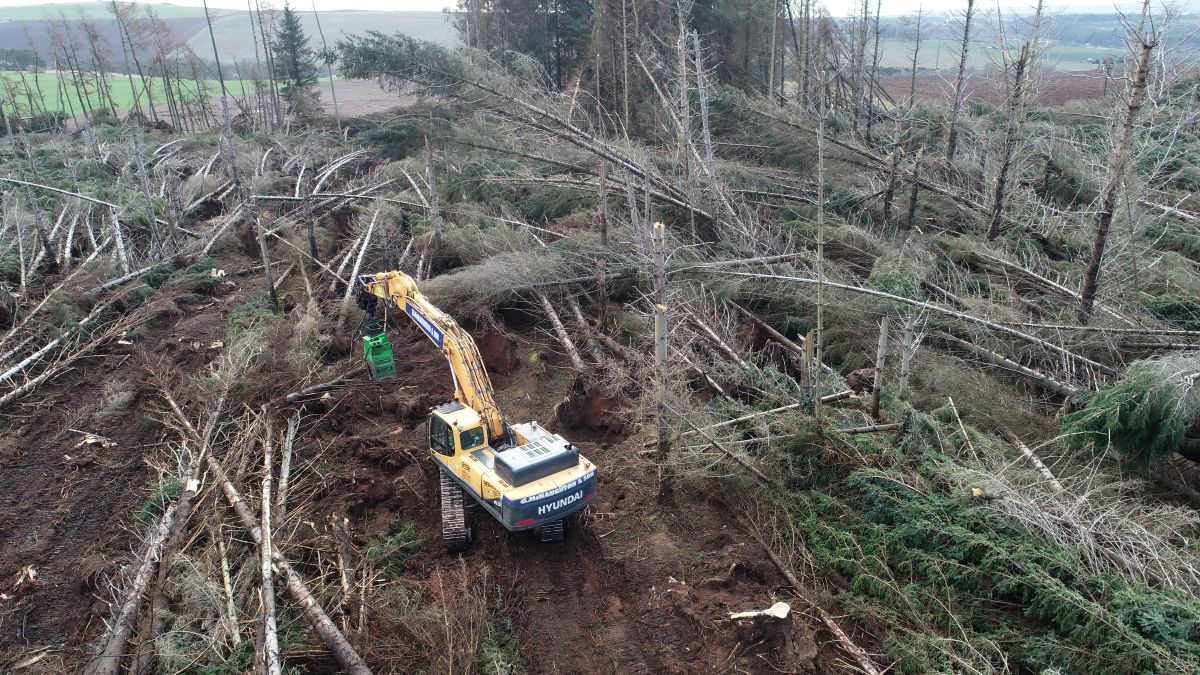
A recent study indicates that by 2100, a significant portion of Europe’s forests is projected to experience increased risks from wildfires, storms, and bark beetles, regardless of the climate scenario anticipated. Even if the average temperature increase is limited to approximately 2°C, researchers predict a rise in the area of forest damage compared to recent decades. If the temperature increase exceeds 4°C, the affected area could potentially more than double.

-
That’s a remarkable amount of work hours for a single machine, the Norcar 600 owned by Erkki Rinne is taken well care of, it even has the original Diesel engine.
-
Kieran Anders is a forestry contractor working in the lake district. His work involves hand cutting and extracting timber using a skidder and tractor-trailer forwarder.
-
It is not possible to eliminate chain shot, but there are simple steps that can be taken to reduce the risk.
-
Arwel takes great pride in the fact that the mill has no waste whatsoever, “the peelings are used for children’s playgrounds, gardens and for farm animals in barns in the winter and the sawdust has multiple uses in gardens and farms as well.
-
Timber hauliers need to encourage young blood in, and also look after the hauliers we have, we need make the sector a safe and positive place to work.
FIND US ON
This research was conducted by a large international team based at the Technical University of Munich (TUM). It is one of the first efforts to combine the major disturbance factors—fire, wind, and beetles—into a comprehensive overview across the continent. The aim is to assess how much forest may be affected and where these impacts might occur.
Forests are dynamic ecosystems. Trees die and fall, creating gaps that seedlings quickly fill; this is a natural process. However, what has changed is the frequency and scale of these disturbances. Climate change is a significant factor in this shift: hotter summers, prolonged droughts, and more extreme weather patterns increase the likelihood of fires, intensify storms, and make beetle outbreaks easier to trigger and more challenging to control.
Central Europe has already experienced the effects of these changes in recent years. The difficulty lies in determining whether these incidents are part of a temporary cycle or indicative of a new, ongoing trend.
Disturbances influence how much carbon forests can sequester, the volume of timber they can produce, and the diversity of plant and animal species they can support.
The researchers did not rely on just a few case studies; instead, they created a comprehensive model using satellite records of forest disturbances collected over several decades.
The team also incorporated forest simulations from 13,000 locations across Europe to illustrate how forests might grow and change under various conditions. They trained an AI-based model on an impressive 135 million data points and used it to simulate future scenarios at a fine scale—down to approximately one hectare. This approach allows the results to specify that “this region is likely to be severely affected, while that one may be less impacted,” rather than simply stating that “Europe will worsen.”
For their reference point, the experts used the period from 1986 to 2020. This timeframe is significant because it was not one of calm or ideal conditions; it already experienced unusually high levels of disturbance. Despite this, the model suggests that future disturbances may surpass those levels.
Even the most optimistic climate scenarios show concerning outcomes. In the best-case climate pathway, which projects a temperature increase of roughly 2°C, the researchers still anticipate more disturbed forest area than what was observed during 1986-2020.
Furthermore, even if we manage to effectively limit warming, it does not mean that forests will return to their previous state. In a hotter scenario—projecting just over 4°C of warming—the areas affected by fires, storms, and pests such as bark beetles could potentially more than double by the year 2100. This represents a significant and transformative shift in the forest landscape.

The study indicates that Southern and Western Europe are likely to experience the largest increases in disturbances. This aligns with expectations: hotter conditions and increased drought stress can weaken forests, making them more susceptible to fires and pests.
Northern Europe is projected to perform better overall. However, “better” does not mean “fine.” The researchers still anticipate the emergence of hotspots with significant damage in that region as well. Furthermore, the effects are unlikely to remain localized.
“Disturbances are increasingly becoming a cross-regional issue, disrupting timber markets across Europe and threatening the ecosystem services that forests provide for society,” stated Professor Rupert Seidl, who led the research.
When multiple regions are affected within the same decade—or even the same year—there can be timber gluts, price volatility, supply chain disruptions, and significant declines in the services forests provide, such as cooling cities and safeguarding water supplies.
The authors believe that policy and forest management should move away from treating disturbances as occasional surprises and instead plan for them as a regular feature of the future.
“We need to prepare for significant forest damage in the coming years. On one hand, this means we must take measures to cope with and buffer against stronger fluctuations in the services that forests offer,” explained Seidl.
“On the other hand, disturbances present an opportunity to establish new, climate-resilient forests; they can serve as catalysts for change. Forestry must address both the risks and opportunities associated with rising disturbance levels, supported by new scientific methods and insights.”
“This essentially calls for a shift in thinking—from merely aiming to ‘prevent loss’ to also considering ‘what should we replant, and how can we design forests that are resilient?’”
The study does not claim that Europe’s forests are doomed. Rather, it suggests that the era of stability is coming to an end. Disturbances are increasing across all scenarios tested. The key choice remains regarding how severe the impact will be and how prepared we are to manage it when it occurs.
Source Science.org

Sign up for our free monthly newsletter here
Contact forestmachinemagazine@mail.com to get your products and services seen on the world’s largest professional forestry online news network.
#homeoflogging #writtenbyloggersforloggers #loggingallovertheworld
Written by loggers for loggers and dedicated solely to the equipment used in forestry operations.