Weak consumer demand, the imposition of U.S. tariffs, and growing policy uncertainty have collectively driven business confidence down to its lowest point in five years.
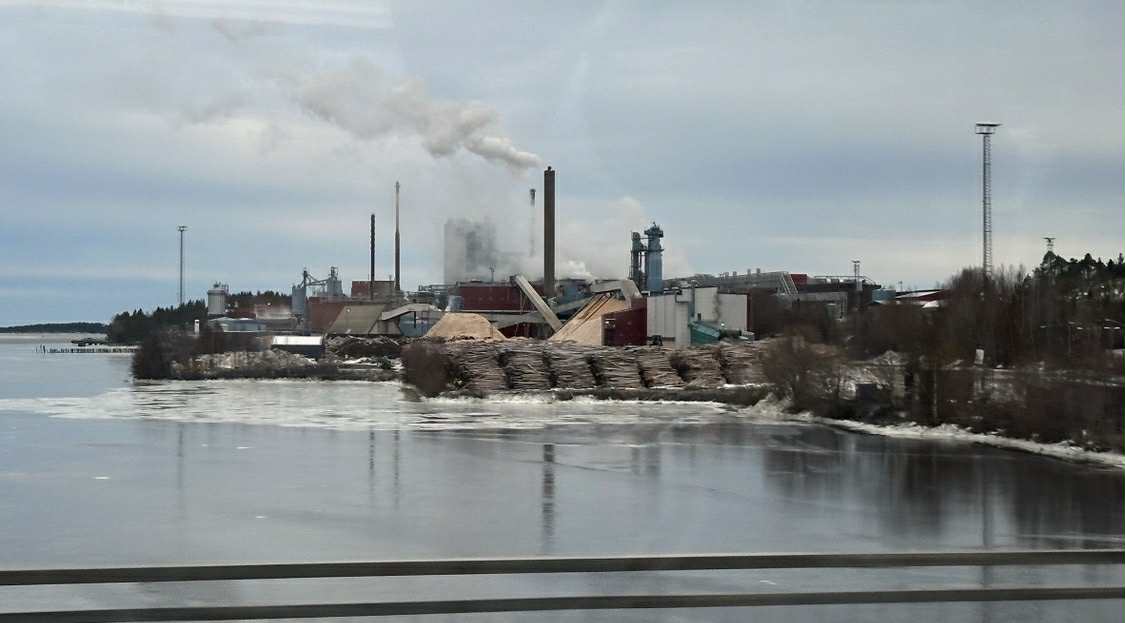
Sweden’s forest industry is currently experiencing its most significant decline in over five years, with confidence levels within the sector reaching their lowest point since the onset of the pandemic. This downturn is attributed to a decrease in global demand and the impact of trade barriers.

-
That’s a remarkable amount of work hours for a single machine, the Norcar 600 owned by Erkki Rinne is taken well care of, it even has the original Diesel engine.
-
Kieran Anders is a forestry contractor working in the lake district. His work involves hand cutting and extracting timber using a skidder and tractor-trailer forwarder.
-
It is not possible to eliminate chain shot, but there are simple steps that can be taken to reduce the risk.
-
Arwel takes great pride in the fact that the mill has no waste whatsoever, “the peelings are used for children’s playgrounds, gardens and for farm animals in barns in the winter and the sawdust has multiple uses in gardens and farms as well.
-
Timber hauliers need to encourage young blood in, and also look after the hauliers we have, we need make the sector a safe and positive place to work.
FIND US ON
The forestry subindex of the Green Business Index, issued by the Federation of Swedish Farmers (LRF), experienced a decline of 19 points in the fourth quarter, reaching a value of 97.6. This marks its lowest level since spring 2020 and highlights the increasing pressures faced throughout Sweden’s supply chain, affecting stakeholders from sawmills and pulp producers to landowners.
Sweden’s export activities in the forest products sector exceed US $18 billion (approximately SEK 180 billion), with 66% of these exports being directed to the European Union. Recent analyses by Wood Central indicate that diminishing export demand, decreasing prices for sawn wood and pulp, and a weakened U.S. dollar have all contributed to a reduction in revenues. The introduction of new tariffs on Swedish wood products destined for the United States, in conjunction with a slowing global economy, has further constrained profitability in this sector.
Weaker export demand, declining prices for sawn wood and pulp, and a depreciating U.S. dollar have negatively impacted revenues within the sector. Additionally, the implementation of new tariffs on Swedish wood products destined for the United States, in conjunction with a decelerating global economy, has further constrained profitability.
The Swedish Forest Industries Federation has indicated that forestry companies are encountering a challenging environment, as elevated costs and diminished demand significantly affect sawmills, pulp manufacturers, and paper producers.
Recent data indicate that the area designated for final felling declined by 8 percent in September and 4 percent in October compared to the same period last year. The Land Resource Forum (LRF) has attributed this decline, in part, to uncertainty surrounding new restrictions on forest utilization, which has adversely affected the confidence of landowners. Additionally, the Green Business Index, which monitors sentiment across Sweden’s agricultural sectors, has experienced a downturn, decreasing from 106.5 in the previous quarter to 100.7. While crop farming has exhibited signs of pressure, forestry has recorded the most significant decline.
Forestry is a fundamental component of Sweden’s economy, encompassing nearly 70 percent of the nation’s land area and providing employment to over 100,000 individuals. Despite this significance, the industry is currently experiencing the lowest level of confidence in five years. Industry leaders have expressed concerns that, in the absence of policy stability and enhanced market conditions, forest owners may be compelled to reduce their operations. The Forest Industries Federation has
indicated that increased trade barriers are generating uncertainty within the sector, further exacerbating the pressures on profitability throughout the supply chain.
Sign up for our free monthly newsletter here
Contact forestmachinemagazine@mail.com to get your products and services seen on the world’s largest professional forestry online news network.
#homeoflogging #writtenbyloggersforloggers #loggingallovertheworld
Written by loggers for loggers and dedicated solely to the equipment used in forestry operations.