
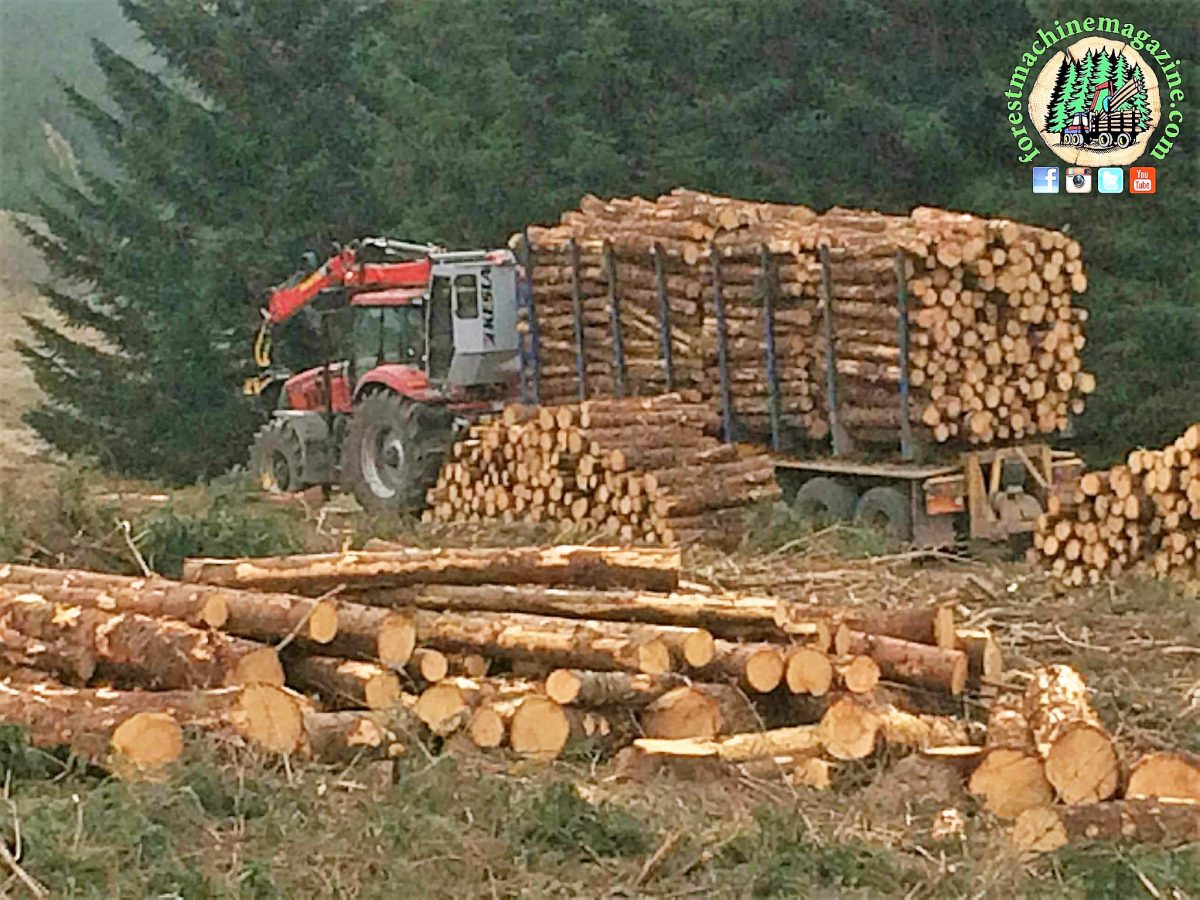
After a difficult two years, forestry is still recovering but starting to stabilise as global timber markets are heading towards a calmer and more predictable phase
The timber markets in Europe are showing a gradual improvement, exhibiting modest growth in the range of 2% to 3%. While this situation does not constitute a robust recovery, it represents an enhanced outlook compared to recent trends.
In early 2026, soft log prices are anticipated to remain subdued; however, a discernible upturn is expected by mid to late 2026 as demand begins to return. The forestry sector remains heavily dependent on the construction markets, which are currently experiencing sluggish housebuilding activity due to elevated global interest rates. As a result, sawmills are proceeding with caution, timber purchasers are hesitant, and harvest volumes are inconsistent.

-
That’s a remarkable amount of work hours for a single machine, the Norcar 600 owned by Erkki Rinne is taken well care of, it even has the original Diesel engine.
-
Kieran Anders is a forestry contractor working in the lake district. His work involves hand cutting and extracting timber using a skidder and tractor-trailer forwarder.
-
It is not possible to eliminate chain shot, but there are simple steps that can be taken to reduce the risk.
-
Arwel takes great pride in the fact that the mill has no waste whatsoever, “the peelings are used for children’s playgrounds, gardens and for farm animals in barns in the winter and the sawdust has multiple uses in gardens and farms as well.
-
Timber hauliers need to encourage young blood in, and also look after the hauliers we have, we need make the sector a safe and positive place to work.
FIND US ON
The regional distribution of the timber market is becoming increasingly disparate:
– **Europe** is witnessing a more gradual recovery characterised by an oversupply in certain softwood species.
– **The United States** has enjoyed a relatively stable period, attributable to a robust domestic housing market.
– **Canada** is experiencing challenges stemming from supply constraints and mill closures.
– **China** has encountered a downturn, driven by diminished demand relative to previous years. The global timber market has become fragmented, and there is no longer a singular, unified market
**Long-Term Demand**
Despite short-term challenges, the outlook for the global timber market is highly positive, with projections indicating growth of $1.06 trillion. This anticipated increase can be attributed to several factors, including heightened construction demand, the adoption of engineered wood products such as Cross-Laminated Timber (CLT) and Glulam, initiatives focused on decarbonization, and the increasing preference for wood products over traditional materials like steel and concrete. It is expected that long-term consumption will accelerate significantly.
Forestry is projected to remain a growth sector in the long term.
**Key Challenges for 2026**
Contractors are expected to encounter increasingly narrow profit margins as they grapple with soaring operating costs, primarily fuelled by significant increases in labour and fuel expenses. In addition, some mills are currently operating well below their optimal capacity, creating bottlenecks in timber movement and ultimately straining cash flow. Although signs of recovery are emerging, frontline workers may continue to face difficult, demanding conditions in the near future as the industry slowly adapts to these challenges.
Additionally, factors such as wildfires, insect infestations, and severe weather events pose substantial risks to timber markets and the continuity of work. Concerns about future timber supplies are also prevalent, as insufficient tree planting has failed to meet demand; the

UK and other nations are significantly falling short of their planting targets. On a positive note, there is a strong emphasis on sustainable forestry practices, the development of carbon markets, and the expansion of biomass energy markets.
This year is expected to serve as a transitional phase, characterised by stable yet subdued growth. A modest recovery is anticipated as demand improves, with gradual price increases expected. However, many stakeholders may continue to encounter difficulties throughout this period. In the longer term, the outlook appears much more favourable, driven by population growth and increasing demand for construction and sustainable building practices.
Sign up for our free monthly newsletter here
Contact forestmachinemagazine@mail.com to get your products and services seen on the world’s largest professional forestry online news network.
#homeoflogging #writtenbyloggersforloggers #loggingallovertheworld
Written by loggers for loggers and dedicated solely to the equipment used in forestry operations.