
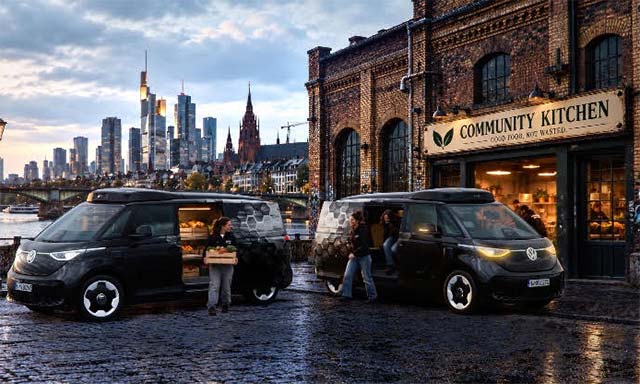
Volkswagen has unveiled the autonomous ID. Buzz equipped with NVIDIA Hyperion 10 technology.
Volkswagen Commercial Vehicles is featuring an autonomous ID. Buzz that utilises NVIDIA’s DRIVE AGX Hyperion 10 reference architecture at GTC Berlin. This demonstration emphasises how their electric van platform can facilitate scalable driverless transportation.

-
The WeighPro Wireless Weighing Link represents a precise and dependable weighing system designed specifically for round timber, eliminating the need for re-calibration. This system offers operators minimal maintenance requirements, boasting an impressive battery life of up to two years between recharges.
-
That’s a remarkable amount of work hours for a single machine, the Norcar 600 owned by Erkki Rinne is taken well care of, it even has the original Diesel engine.
-
It is not possible to eliminate chain shot, but there are simple steps that can be taken to reduce the risk.
-
Arwel takes great pride in the fact that the mill has no waste whatsoever, “the peelings are used for children’s playgrounds, gardens and for farm animals in barns in the winter and the sawdust has multiple uses in gardens and farms as well.
-
Timber hauliers need to encourage young blood in, and also look after the hauliers we have, we need make the sector a safe and positive place to work.
FIND US ON
The stationary exhibit features a long-wheelbase ID. Buzz, showcasing a mobility-as-a-service interior along with a comprehensive sensor setup. It shows how cutting-edge autonomous-driving technology can integrate seamlessly into a vehicle designed to series-production standards.
For Volkswagen Commercial Vehicles, the goal extends beyond supplying an electric van. The company aims to provide the vehicle engineering, integration expertise and validation needed to help autonomous-driving developers and operators bring their systems into passenger and commercial transport applications.
The ID. Buzz displayed in Berlin incorporates a NVIDIA DRIVE AGX Hyperion 10 reference configuration comprising 14 cameras, nine radars and three lidars.
Together with the computing architecture, the sensor package illustrates how a Level 4 autonomous-driving technology stack can fit within Volkswagen’s vehicle platform. The display is an integration showcase, rather than an announcement of a commercially deployed driverless service using this configuration.
The long-wheelbase model’s mobility-as-a-service interior reflects one potential application: autonomous passenger transport. However, Volkswagen’s platform strategy also covers commercial transport and logistics, allowing a common vehicle foundation to accommodate different operating requirements.
Developing an autonomous transport service requires more than sensors and computing power. The driving technology also needs to be integrated with a vehicle engineered and validated for its intended use.
Volkswagen Commercial Vehicles wants the autonomous ID. Buzz to provide that foundation. Developers and fleet operators could combine qualified autonomous-driving systems with a series-production-based vehicle, reducing the need to develop vehicle integration from the ground up.
That approach could reduce complexity and support the rollout of different passenger and commercial transport applications. It also positions the ID. Buzz as a flexible platform capable of accommodating different qualified autonomous-driving technologies.
The NVIDIA configuration shown in Berlin demonstrates an additional technology approach that can be integrated into this shared vehicle foundation.
The broader ambition is to establish the autonomous ID. Buzz as a vehicle platform for driverless passenger and commercial transport across multiple customers and markets.
The GTC Berlin exhibit illustrates the integration potential behind that strategy. Volkswagen contributes the vehicle platform and engineering expertise, while autonomous-driving developers can bring the technology required for specific services and operating environments.
The showcase does not establish a deployment timetable for the Hyperion 10-equipped ID. Buzz. Its significance lies in demonstrating how production-based electric vehicle engineering and advanced autonomous-driving hardware could come together to support future transport services
Contact forestmachinemagazine@mail.com to get your products and services in front of the world’s largest professional forestry online news network.
#homeoflogging #writtenbyloggersforloggers #loggingallovertheworld
Written by loggers for loggers and dedicated to bringing you the latest forestry news