Södra, OX2 and TES advance feasibility study for e-NG production in Värö.e-NG is a synthetic gas produced by combining carbon dioxide (CO₂) with hydrogen generated from renewable electricity
Södra, OX2 and TES have decided to move into the next phase of developing a potential facility for producing e-NG – a renewable gas that can replace fossil natural gas – in Värö. With support from The Industrial Leap, the parties are launching an in‑depth feasibility study to assess the project’s technical, legal and commercial conditions.

-
That’s a remarkable amount of work hours for a single machine, the Norcar 600 owned by Erkki Rinne is taken well care of, it even has the original Diesel engine.
-
Kieran Anders is a forestry contractor working in the lake district. His work involves hand cutting and extracting timber using a skidder and tractor-trailer forwarder.
-
It is not possible to eliminate chain shot, but there are simple steps that can be taken to reduce the risk.
-
Arwel takes great pride in the fact that the mill has no waste whatsoever, “the peelings are used for children’s playgrounds, gardens and for farm animals in barns in the winter and the sawdust has multiple uses in gardens and farms as well.
-
Timber hauliers need to encourage young blood in, and also look after the hauliers we have, we need make the sector a safe and positive place to work.
FIND US ON
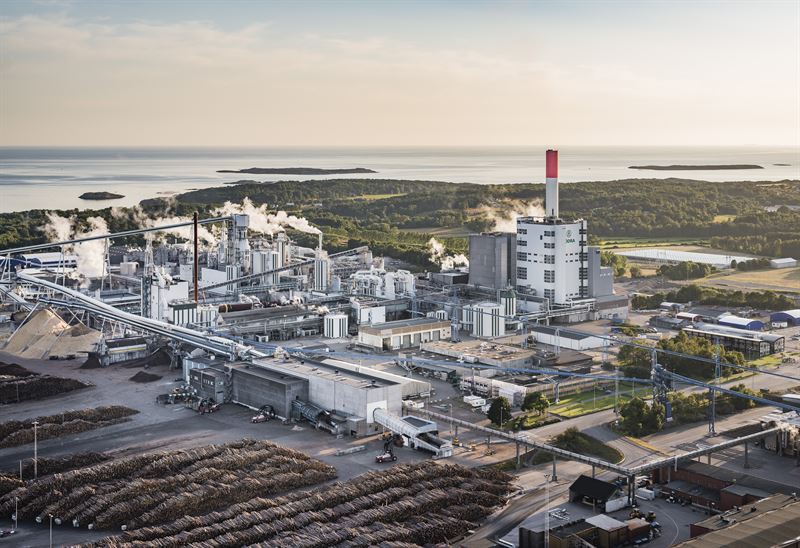
Södra, OX2 and TES are now taking the next step in exploring the possibility of capturing biogenic CO₂ from Södra’s pulp mill in Värö and converting it into renewable gas, known as e-NG. With support from the Industrial Leap, the parties are commencing a detailed feasibility study running until summer 2027. The study will generate the technical, legal and commercial documentation required ahead of a future decision on a FEED phase and a potential investment.
The feasibility study covers key issues such as land conditions, permitting processes, water supply, raw‑material flows, technical solutions, market dynamics, business model and access to renewable electricity. The work will show how a full‑scale facility could be integrated with Södra’s Värö pulp mill, including the supply of biogenic CO₂ and energy collaboration.
The need for renewable energy carriers is rising rapidly as industry transitions and demand for alternatives to fossil natural gas grows. At the same time, raw materials are increasingly sought after, making it more important to use every part of the forest resource efficiently. By utilising the biogenic CO₂ currently released to the atmosphere, we can create additional value from an existing side stream and strengthen our competitiveness. The market for renewable gases such as e-NG is growing quickly in both Sweden and Europe, and Värö offers unique conditions – with stable CO₂ flows, access to renewable electricity and close proximity to the West Swedish gas grid. Altogether, this makes the site particularly well‑suited for testing a new value chain that strengthens energy security and makes more of every tree.
“For us, this project is about creating long‑term value throughout the value chain. By making use of the biogenic CO₂ already present in our processes, we can develop a business that enhances profitability while contributing to the industry’s need for renewable energy solutions. At the same time, we increase the value of every tree and reduce dependence on fossil gas in Swedish and European industry. It’s a step that combines business logic with resource efficiency – and that is exactly how we want to drive our development forward,” says Johannes Bogren, Executive Vice President Södra Bioproducts
The project is based on a collaborative approach in which each party contributes a key part of the value chain. Södra supplies the biogenic CO₂ generated in the pulp mill’s processes and the expertise required for industrial integration. OX2 develops the renewable electricity needed for hydrogen production. TES provides the technology and international experience of producing eNG and building the infrastructure required to deliver the renewable gas to the market. Together, the parties create a complete value chain – from raw material and energy to end product and distribution.
A future facility could produce around 1.2 TWh of e-NG per year, corresponding to approximately 15 percent of today’s volumes in the West Swedish gas grid.
“The pilot trials we are conducting in Värö this spring for the capture of biogenic CO₂ show strong potential to turn flue gases into a raw material that creates value and new revenue in our operations. It is a good example of how we are working to make more of every tree while strengthening our competitiveness,” says Jenny Gotthardsson, Mill Manager at Södra Cell Värö.

The project is funded through the Industrial Leap, which is part of the EU Recovery and Resilience Facility (RRF) and Next Generation EU. The Industrial Leap is a government initiative run by the Swedish Energy Agency.
Facts about e‑NG
eNG (electronic natural gas) is a synthetic gas produced by combining carbon dioxide (CO₂) with hydrogen generated from renewable electricity. The result is a gas that functions in the same way as fossil natural gas – but with significantly lower climate impact. This means existing gas networks, industrial processes and vehicles can be used without modification, while emissions are reduced. Natural gas is a common input material in the chemical industry, but is also used for heating and transport.
About OX2 AB
OX2 is a leading renewable energy company that operates a large and diverse project portfolio across all major technologies, including onshore and offshore wind, solar, and storage. The total portfolio including development, construction, asset management and operations amounts to about 33 GW. The company is also active in developing projects based on other renewable energy solutions, such as hydrogen. OX2 is present in 5 markets across Europe, and Australia. The company has about 500 employees and is headquartered in Stockholm, Sweden. OX2 is owned by EQT, one of the world’s largest private equity investors. http://www.ox2.com.
About TES
TES is a global green energy company developing giga-scale projects to accelerate the energy transition. In Europe, TES’ projects strengthen energy security and the diversification of energy imports, as well as support the European Union’s decarbonisation efforts. In Wilhelmshaven, Germany, TES is developing a green energy terminal, that will serve as a major hub for sustainable molecules. The already operating floating storage and regasification unit (FSRU) will be followed by a large-scale onshore LNG terminal and a CO₂ export terminal. Globally, TES leverages renewable energy solar, wind, and hydro, along with climate-neutral CO₂ for the production of e-NG (electric natural gas). Large-scale e-NG projects are underway in the US (Live Oak), Canada (Project Mauricie), Finland (Luoto Energia) and across Europe, and the Middle East. These green molecules support the shift to real zero emissions across industries and help win the race against climate change.

Sign up for our free monthly newsletter here
Contact forestmachinemagazine@mail.com to get your products and services seen on the world’s largest professional forestry online news network.
#homeoflogging #writtenbyloggersforloggers #loggingallovertheworld
Written by loggers for loggers and dedicated solely to the equipment used in forestry operations.