

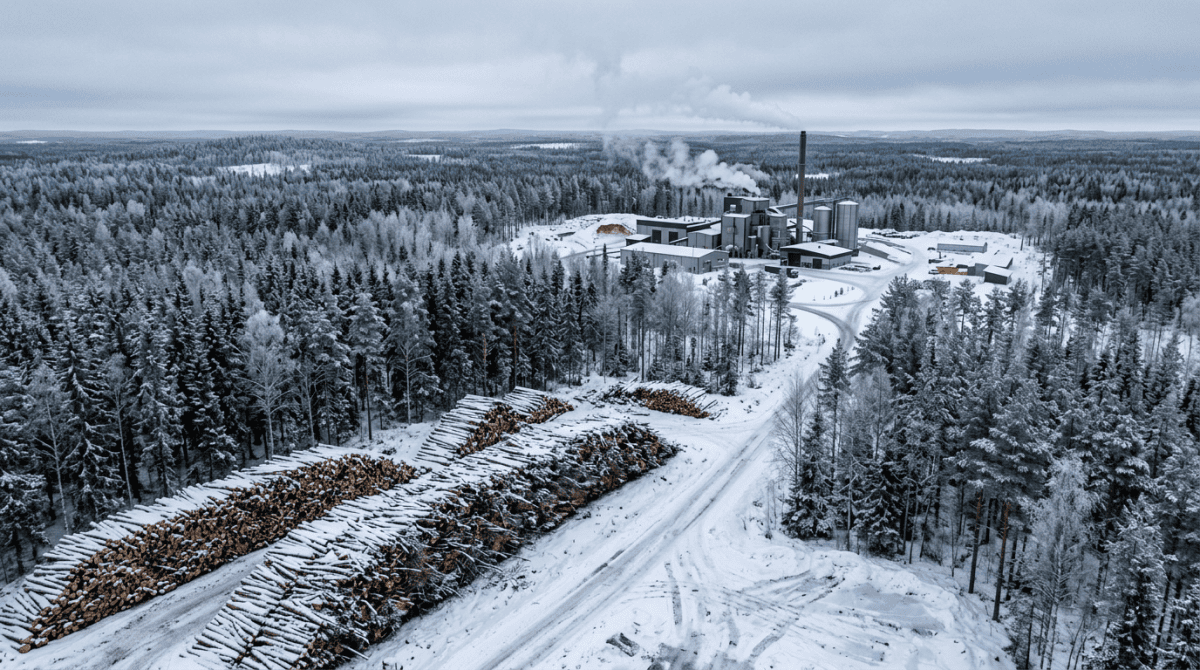
Low-cost electricity is having a negative effect on Finnish energy wood, with demand down by over 20 per cent, and prices falling by 14% from the previous quarter
Finnish energy wood demand is declining as energy companies increasingly turn to electric boilers for heat production. Helen’s Hanasaari project in Helsinki will combine four electric boilers with a total thermal output of 200 megawatts and 1,000 megawatt-hours of thermal storage. The published schedule envisages commissioning during the 2026–2027 heating season.

-
The WeighPro Wireless Weighing Link represents a precise and dependable weighing system designed specifically for round timber, eliminating the need for re-calibration. This system offers operators minimal maintenance requirements, boasting an impressive battery life of up to two years between recharges.
-
That’s a remarkable amount of work hours for a single machine, the Norcar 600 owned by Erkki Rinne is taken well care of, it even has the original Diesel engine.
-
It is not possible to eliminate chain shot, but there are simple steps that can be taken to reduce the risk.
-
Arwel takes great pride in the fact that the mill has no waste whatsoever, “the peelings are used for children’s playgrounds, gardens and for farm animals in barns in the winter and the sawdust has multiple uses in gardens and farms as well.
-
Timber hauliers need to encourage young blood in, and also look after the hauliers we have, we need make the sector a safe and positive place to work.
FIND US ON
Energy wood prices in Finland continued their downward trend in the third quarter of 2026, reflecting a significant year-on-year decrease of 20–24 per cent in real terms, according to the Natural Resources Institute Finland (Luke).
This decline is largely attributed to more energy companies shifting to electric boilers for heat production. Hannes Tuohiniitty from the industry association Bioenergia highlights this technological transition as a key factor behind the drop in demand. In an interview with the Finnish newspaper Maaseudun Tulevaisuus, he noted that sales volumes of whole trees for energy purposes have at least halved compared to 2024.
Prices have decreased across both sales categories. From July to September, the average price for energy wood was €12.42 per cubic meter for standing timber sales, where the buyer manages harvesting, and €29.67 for delivery sales, where the seller handles both harvesting and transportation to the designated delivery point.
Compared to the previous quarter, prices in these categories fell by 10 per cent and 4 per cent, respectively. For delimbed energy wood, the prices were €17.44 and €35.15 per cubic meter. Luke’s reported price changes are inflation-adjusted.
Low-cost electricity replaces heating fuels
Electric boilers are taking a growing role in Finnish district heating. According to Finnish Energy, the industry association, they produced approximately 2.6 terawatt-hours of heat in 2025, up from about 1.5 terawatt-hours in 2024.
Operators use the boilers to replace fuel-based heat production when electricity prices are low. The boilers are often combined with thermal storage, allowing heat to be produced during cheaper periods and used later.
One example is Helen’s project at Hanasaari in Helsinki. The company has announced four electric boilers with a combined thermal output of 200 megawatts, alongside thermal storage with a capacity of 1,000 megawatt-hours. Under the published project schedule, the facility is due to enter service during the 2026–2027 heating season.
Purchases decline as logging residues dominate
Luke recorded energy wood purchases of 2.4 million cubic metres between January and September, down 16 per cent from the same period in 2025.
Third-quarter purchases totalled 647,000 cubic metres. Although this was 10 per cent above the year-earlier figure, it remained roughly one-third below the average for the corresponding quarter over the previous five years.
Logging residues accounted for 53 per cent of recorded purchases, delimbed stems for 27 per cent, whole trees for 17 per cent and stumps for 3 per cent. The statistics cover recorded purchases from forest owners and represent part of the private forest energy wood market.
Source: Natural Resources Institute Finland

Contact forestmachinemagazine@mail.com to get your products and services in front of the world’s largest professional forestry online news network.
#homeoflogging #writtenbyloggersforloggers #loggingallovertheworld
Written by loggers for loggers and dedicated to bringing you the latest forestry news