
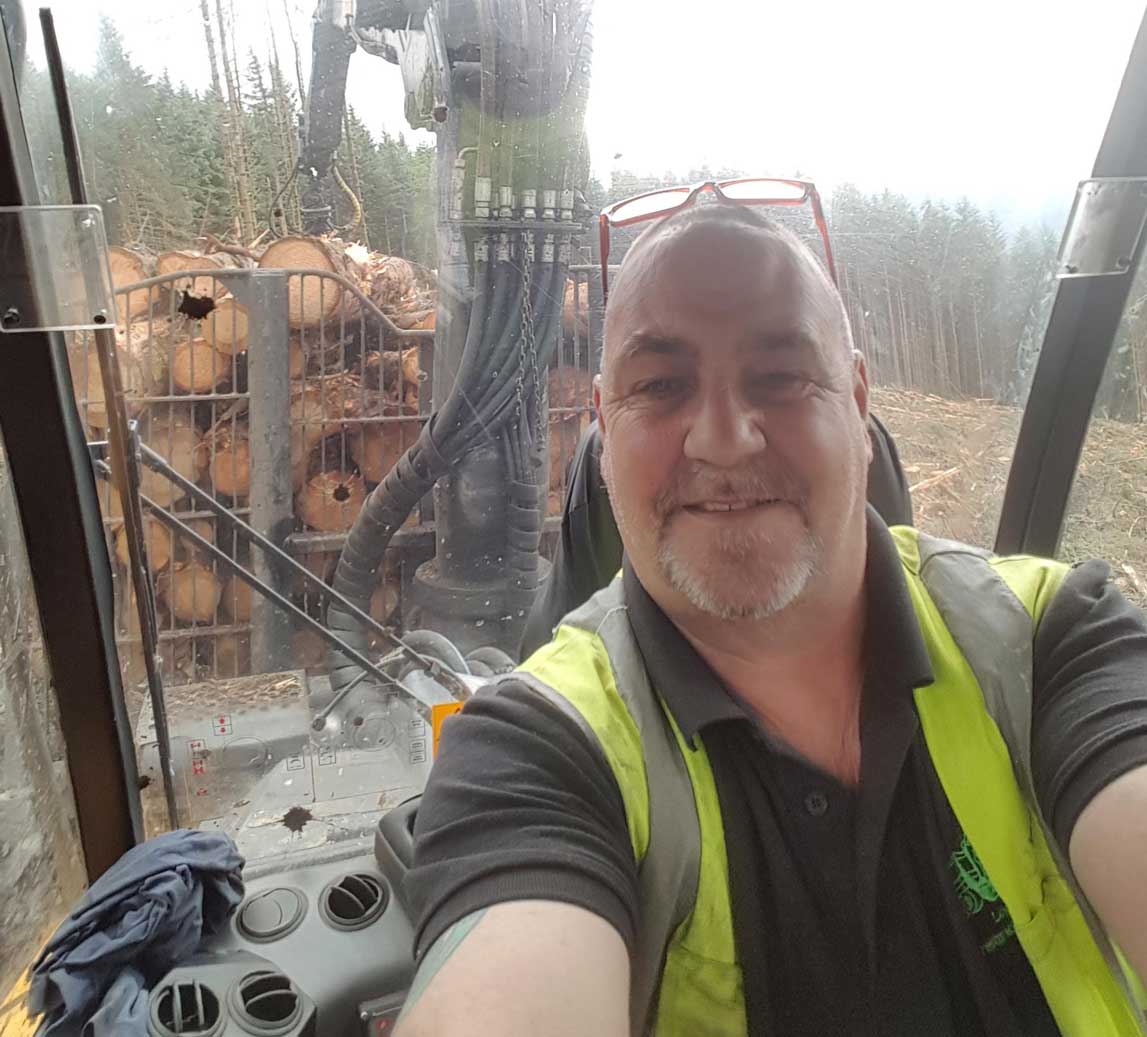
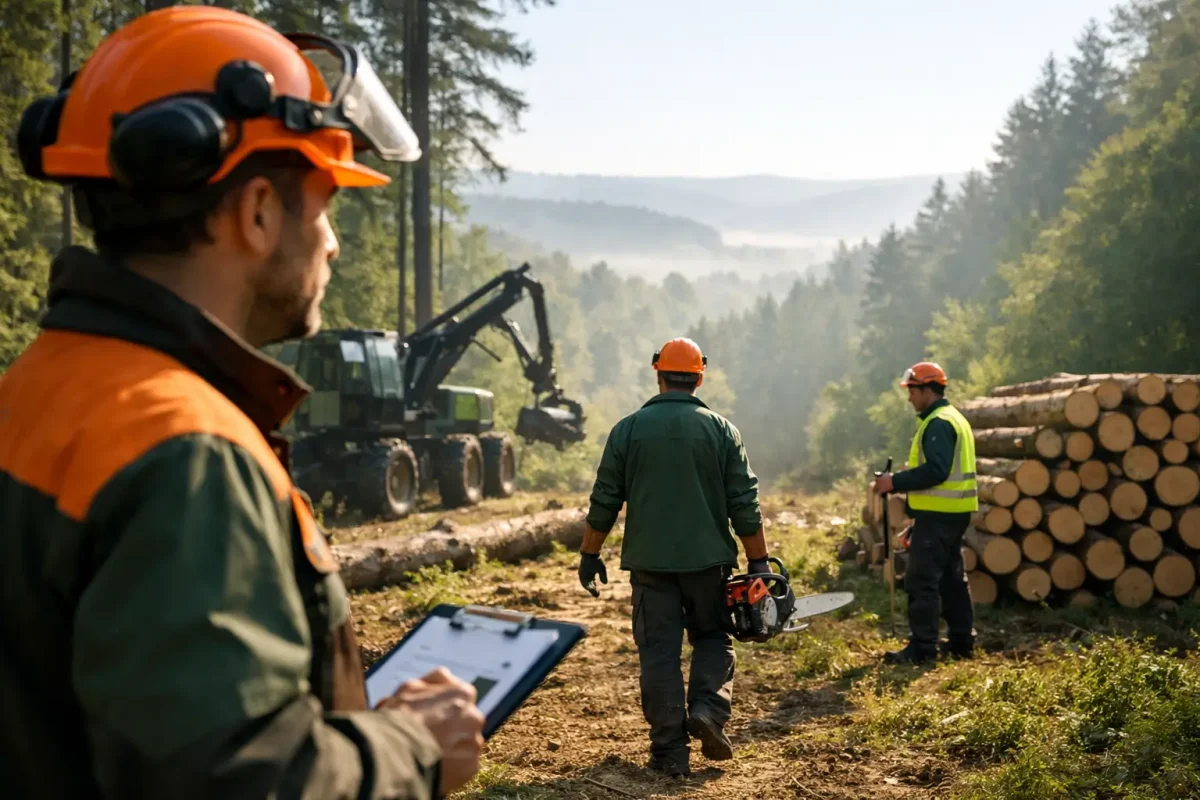
If you are watching the forestry jobs market from the cab, the yard or the office, one thing is clear – employers are not all looking for the same person. Some need a proven harvester operator who can keep production moving on steep ground. Others need a forwarder operator with enough mechanical sense to spot a fault before it becomes downtime. And plenty are chasing reliable people who understand that forestry is not just trees and machines, but haulage, compliance, maintenance, planning and margin.
Forestry jobs are no longer only about filling a seat. It is about finding people who can work safely, produce consistently and fit into a business that is under pressure from costs, regulation, timber prices and tighter expectations around environmental delivery. For anyone hiring or anyone looking to move, the detail matters.

-
The WeighPro Wireless Weighing Link represents a precise and dependable weighing system designed specifically for round timber, eliminating the need for re-calibration. This system offers operators minimal maintenance requirements, boasting an impressive battery life of up to two years between recharges.
-
That’s a remarkable amount of work hours for a single machine, the Norcar 600 owned by Erkki Rinne is taken well care of, it even has the original Diesel engine.
-
It is not possible to eliminate chain shot, but there are simple steps that can be taken to reduce the risk.
-
Arwel takes great pride in the fact that the mill has no waste whatsoever, “the peelings are used for children’s playgrounds, gardens and for farm animals in barns in the winter and the sawdust has multiple uses in gardens and farms as well.
-
Timber hauliers need to encourage young blood in, and also look after the hauliers we have, we need make the sector a safe and positive place to work.
FIND US ON
Forestry jobs – what the market looks like
The broad picture is busy, but uneven. Harvesting and extraction roles remain the most obvious vacancies because they are hard to fill with experienced people. A contractor can buy another machine, but if there is nobody competent to run it properly, that investment quickly turns into parked iron and finance payments.
At the same time, there is steady demand beyond the usual machine operator roles. Woodland management, forest planning, road building, mechanised thinning, tree planting supervision, haulage coordination and workshop support all sit within the same labour picture. The public image of forestry work still leans heavily towards chainsaws and clearfell, but the commercial reality is broader and more specialised.
Regional demand shifts with crop type, access, ownership and active harvesting programmes. Scotland continues to carry a large share of commercial harvesting work, particularly where productive conifer forests drive year-round machine demand. Parts of Wales and northern England also see regular movement in contractor and operator positions, while southern regions often show more mixed roles tied to woodland management, estates, arboriculture crossover and smaller-scale forestry operations.
The result is a market where there is work, but not always in the same place, on the same terms or at the same skill level. That catches out both employers and applicants. A good cutter in one setting will not automatically suit a fully mechanised contracting outfit, and a solid operator used to first thinning may need time to adapt to larger clearfell production targets.
Where employers are struggling to recruit
Experienced machine operators remain the obvious pinch point. Harvester and forwarder seats are difficult to fill because the job requires more than basic driving skill. Productivity, timber presentation, machine sympathy, site awareness and daily maintenance all come together. Employers are not only paying for hours worked. They are paying for low damage rates, good stem handling, sensible fuel use and fewer workshop bills.
Mechanics and fitters with forestry knowledge are another hard-to-find group. Modern forestry kit is packed with hydraulics, electronics, control systems and software, but it still works in mud, brash, rain and rough ground. Businesses need people who can diagnose faults quickly and understand the difference between a machine that can limp through a shift and one that needs to stop before more damage is done.
Then there is haulage. Timber lorry operators and planners sit under the same labour pressure as harvesting crews. If roadside stacks are building and transport cannot keep up, production suffers. In practical terms, some forestry jobs listings may not carry the word forestry in the title at all, yet they are central to keeping timber moving.

What skills matter most now
Tickets still matter, but they are only the start. Employers expect proof of competence, not just attendance on a course. For machine roles, that means safe operation, daily checks, routine servicing and an understanding of output expectations. For hand cutting and chainsaw work, it means clean work, hazard awareness and the discipline to keep standards up when the weather turns or access gets awkward.
More employers also want people who can work with digital systems. Production reporting, mapping, machine telematics and maintenance logging are now part of the job on many sites. Nobody expects every operator to be an office man, but basic confidence with digital tools is becoming normal rather than optional.
Attitude carries serious weight in a small industry. Forestry businesses talk. A reputation for turning up, looking after kit and getting on with the rest of the crew often counts for more than polished CV language. The opposite is also true. Someone who can operate well but causes avoidable grief around safety, breakdown reporting or site discipline will not stay in demand for long.
Entry routes are there, but they are narrower than people think
New starters can still get in, but not every employer is set up to train from scratch. That is one of the key trade-offs in the current market. Contractors need labour, yet many are running lean enough that they cannot absorb weeks or months of reduced productivity while somebody learns on the job.
The strongest route in is usually through a mix of formal training and practical exposure. Land-based colleges, apprenticeships and entry-level estate or contractor roles can all open the door, but progression depends on getting proper site time with experienced people. Forestry remains a trade where judgement is built in real conditions, not in a classroom alone.
That creates a gap between what the sector says it needs and what some businesses can realistically offer. Everyone wants the next generation of operators, cutters and managers. Fewer can afford to carry the training burden on their own. That is why candidates who show mechanical awareness, reliability and a willingness to start with the less glamorous parts of the job often move faster than those waiting for a perfect role.
Pay, conditions and the real-world trade-offs
Wages vary widely across forestry jobs UK, and there is no honest way to discuss recruitment without saying so. High-output machine roles with the right operator can command strong money, especially where experience is scarce and the work is sustained. But headline rates never tell the whole story.
Location matters. So does whether the work is employed, self-employed or contract-based. Accommodation, travel time, weather downtime, site movement and responsibility for tools or maintenance all affect what a job is actually worth. A day rate that looks solid on paper can thin out quickly if the site is remote, the machine is unreliable or the workflow is inconsistent.
For employers, the pressure is equally real. Fuel, finance, parts, insurance and labour costs have all tightened margins. Many businesses want to pay more to secure good people, but they can only do that if harvesting rates, standing timber prices and customer terms allow it. This is why the best recruitment conversations are usually the most direct ones. Good operators and good employers tend to recognise each other quickly once the practical detail is on the table.
What makes a job worth taking
For experienced people, the best role is not always the highest rate. It is often the job with decent kit, realistic targets and a business that plans properly. A well-maintained machine, clear communication and organised timber extraction can make a lower-stress, more reliable living than chasing a headline figure on a chaotic contract.
For newcomers, the right role is usually one where somebody is willing to teach without cutting corners. In forestry, bad habits are expensive and dangerous. Learning under pressure from the wrong example can set a person back years.
This is also where specialist trade platforms earn their keep. A forestry title such as Forest Machine Magazine reaches people who understand what a vacancy actually involves, whether that is mechanised harvesting, roadside processing, haulage support or workshop work tied to the timber sector. That matters more than broad job board traffic when the role needs real operational knowledge.
How the sector can improve recruitment
The industry does not need polished slogans. It needs clearer pathways, better visibility of real jobs and more honesty about conditions. Young entrants should see that forestry includes advanced machinery, logistics, engineering and land management, not just the old caricature of a chainsaw in the rain. At the same time, employers should be realistic about what they can ask from a new starter on day one.
Retention also deserves more attention than it often gets. Losing a good operator because of poor planning, weak kit support or muddled communication is expensive. In a tight labour market, keeping competent people is often a better commercial decision than constantly trying to replace them.
The forestry labour market will keep shifting with planting policy, harvesting programmes, energy demand, environmental rules and machinery investment. But the core issue stays the same. This sector runs on dependable people with practical skill, good judgement and the ability to keep working when conditions are less than ideal. If you are hiring, be clear about the job and realistic about the package. If you are looking, judge the business as hard as it judges you. That is usually where the right move starts.
Sign up for our free monthly newsletter here
Contact forestmachinemagazine@mail.com to get your products and services seen on the world’s largest professional forestry online news network.
#homeoflogging #writtenbyloggersforloggers #loggingallovertheworld
Written by loggers for loggers and dedicated solely to the equipment used in forestry operations.