Acquiring used forestry equipment can present significant challenges. I have personally experienced the difficulties associated with being inexperienced and misinformed, which led to the purchase of equipment that was neither reliable nor suitable for its intended purpose. Below are several recommendations that will hopefully help you to make the correct decision.
A tidy paint job can hide a hard life. In forestry, that matters. Anyone scanning used forestry equipment for sale knows the headline price is only the start. The real question is whether the machine will earn from day one or head straight into the workshop and start emptying your pocket.
That is why buying used kit in this sector is rarely about finding the cheapest option. It is about finding the right hours, the right history and the right level of wear for the work you actually do. A forwarding outfit working tidy roadside thinnings has a very different risk profile from a contractor buying a harvester for steep, rough ground and long shifts.

-
The WeighPro Wireless Weighing Link represents a precise and dependable weighing system designed specifically for round timber, eliminating the need for re-calibration. This system offers operators minimal maintenance requirements, boasting an impressive battery life of up to two years between recharges.
-
That’s a remarkable amount of work hours for a single machine, the Norcar 600 owned by Erkki Rinne is taken well care of, it even has the original Diesel engine.
-
It is not possible to eliminate chain shot, but there are simple steps that can be taken to reduce the risk.
-
Arwel takes great pride in the fact that the mill has no waste whatsoever, “the peelings are used for children’s playgrounds, gardens and for farm animals in barns in the winter and the sawdust has multiple uses in gardens and farms as well.
-
Timber hauliers need to encourage young blood in, and also look after the hauliers we have, we need make the sector a safe and positive place to work.
FIND US ON
Why used forestry equipment for sale still attracts serious buyers
The market for used forestry kit stays busy for one simple reason – new machinery is expensive, lead times can drag, and plenty of businesses need capacity now rather than next season. A sound second-hand machine can bridge a contract win, replace a breakdown casualty or let a smaller operator step up without taking on new-machine finance.
There is also a practical point that experienced buyers understand. In some cases, older equipment is easier to live with. Parts availability may be better than expected, independent engineers know the systems, and operators are already familiar with the controls. That matters when uptime is worth more than a glossy spec sheet.
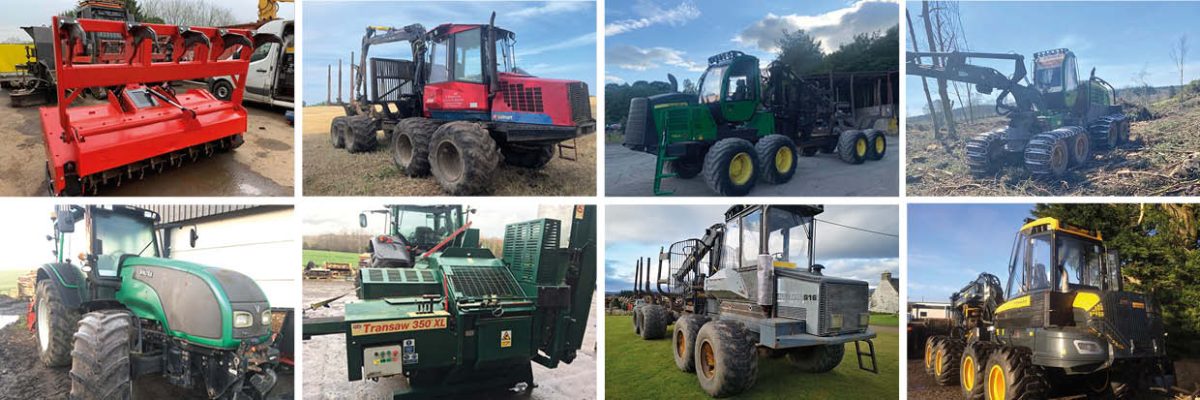
Still, used buying has changed. Prices have remained firm on well-kept machines, especially on harvesters, forwarders, timber trailers, chippers and loading equipment with decent service records. The best stock tends to move quickly, while the tired machines sit around looking cheap for a reason.
Start with the job, not the advert
A lot of buying mistakes begin with the wrong question. Instead of asking, “Is this a good machine?”, ask, “Is this the right machine for our work?” A six-wheel forwarder with attractive hours may still be the wrong answer if your sites demand flotation, steeper terrain capability or heavier extraction volumes.
Think first about timber type, average extraction distance, ground conditions, haulage setup and operator preference. Then look at transport practicalities. Can you move it legally and economically between sites? Will your current low-loader, support gear and workshop setup cope with it? A bargain is not much of a bargain if every move becomes a headache.
It also pays to be honest about utilisation. If the machine is only needed to cover seasonal demand or occasional contract peaks, an older unit with sensible wear may make financial sense. If it is expected to carry the business five or six days a week, the tolerance for hidden faults should be far lower.
What matters most when assessing used forestry equipment for sale
Hours matter, but hours alone can mislead. A machine with higher hours and proper servicing is often a safer bet than a lower-hour unit that has been neglected, parked up outside and patched together to get through sales photos. Service history, repair invoices and evidence of component replacement usually tell you more than the meter.
On harvesters and forwarders, pay close attention to the crane base, slew ring, kingpost, boom pins and bushes. Excessive play here is not a minor issue. It points to wear that can be expensive to put right and often reflects the general standard of maintenance.
The undercarriage needs the same hard look. Bogies, bearings, hubs, tyres, tracks and driveline components all take punishment in forestry work. Uneven tyre wear can suggest alignment or drivetrain trouble. Cracks, fresh welds and plating repairs deserve proper scrutiny, especially around articulation points and chassis sections that carry repeated stress.
Hydraulics will make or break a used purchase. Slow functions, noisy pumps, drift, overheating and contaminated oil should all ring alarm bells. If the machine is fitted with a harvesting head, inspect feed rollers, knives, measuring systems, hoses and rotator wear. A tired head can turn a promising machine into a money pit
Then there is the cab and control system. Tatty interiors are not just cosmetic. Worn controls, damaged screens, faulty seat suspension and inconsistent electrics can indicate a machine that has been run hard and maintained late. Modern forestry kit depends heavily on electronics, so software faults and sensor issues are not side notes – they are part of the buying decision.
Inspection is not optional
No serious buyer should commit off a few photographs and a brief description. At minimum, the machine needs a proper walk-round and a working demonstration. Better still, take somebody who knows the model and has no stake in the sale. An experienced fitter or operator will often spot wear patterns and warning signs within minutes.
Cold-start behaviour is worth seeing. Machines that are already warmed up when you arrive can hide a lot. Watch how it starts, idles and responds under load. Look for smoke, hesitation, fluid leaks and fault codes. Run every function you can. Lift, slew, travel, brake, steer, load and process timber if possible.
Ask direct questions and listen carefully to the answers. Why is it for sale? What work has it done? Who operated it? What major components have been replaced? When were the pumps, transmission or head last overhauled? Straight answers are a good sign. Vague replies usually are not.

Dealer stock versus private sale
There is no single right route here. Buying from a reputable dealer may give you some comeback, a checked machine and help with transport or parts support. You will often pay more for that, but plenty of businesses accept the premium because the risk is lower.
Private sales can offer sharper pricing and occasionally better provenance, especially if the machine is coming directly from a known contractor with a clear maintenance culture. But private deals need more care. Once the money has moved, any surprises are usually yours.
This is where a specialist marketplace earns its keep. Buyers looking through listings on Forest Machine Magazine, for example, are usually not browsing random plant. They are looking within a trade environment where the machinery, the language and the audience all come from the sector itself. That does not remove the need for checks, but it does improve the odds of finding equipment that is actually relevant to forestry operations.
Paperwork, compliance and ownership details
Before any deposit changes hands, check the paperwork properly. Serial numbers should match the machine and any supporting documents. Finance must be cleared. Service records should be reviewed, not just mentioned. If major rebuilds are claimed, ask for invoices.
Imported machinery needs extra care. Confirm specification, conformity and parts support in the UK. Some machines arrive looking attractive on price but prove awkward once you need software access, dealer backup or the correct replacement components.
Transport dimensions and weight also matter more than many buyers admit. It is easy to buy first and worry later, but moving oversized forestry machinery around Britain has real cost, permit and scheduling implications. If the machine complicates every relocation, its true value drops quickly.
The numbers behind the deal
Used buying only works if you cost the whole picture. Purchase price is one line. Add transport, immediate repairs, replacement wear parts, service work, insurance and likely downtime. If tyres are half-shot, the crane has play and the head needs attention, be honest about what the first six months could cost.
Finance should be judged against earning potential, not just monthly comfort. A cheaper machine that loses working days or underperforms on fuel and output may cost more than a newer used unit with stronger reliability. In contracting, utilisation is everything.
It is also worth considering resale from the start. Some makes and models hold demand better because operators like them, fitters know them and parts channels are established. Buying a machine that nobody wants later on can trap capital just when you need flexibility.

When a used machine is the right call
There are plenty of good reasons to buy second-hand. It can help a growing business increase capacity without overreaching. It can put a proven model back to work with a good operator in the seat. It can also make sense for backup, seasonal work or lower-intensity operations where the economics of new simply do not stack up.
But discipline matters. The best buyers are not the ones chasing a bargain at all costs. They are the ones who know the application, inspect properly, price the risk and walk away when the story does not add up. In a tight market, that takes patience.
A used forestry machine does not need to be perfect. It needs to be honest, mechanically sound enough for the job and priced with its real condition in mind. Buy on that basis, and second-hand kit can still put in a very decent shift. Buy with your eyes shut, and the cheapest machine in the advert soon becomes the most expensive one in the yard.
If a listing looks promising, take the extra time before you commit. A careful inspection costs far less than a bad season with the wrong iron.
Sign up for our free monthly newsletter here
Contact forestmachinemagazine@mail.com to get your products and services seen on the world’s largest professional forestry online news network.
#homeoflogging #writtenbyloggersforloggers #loggingallovertheworld
Written by loggers for loggers and dedicated solely to the equipment used in forestry operations.