
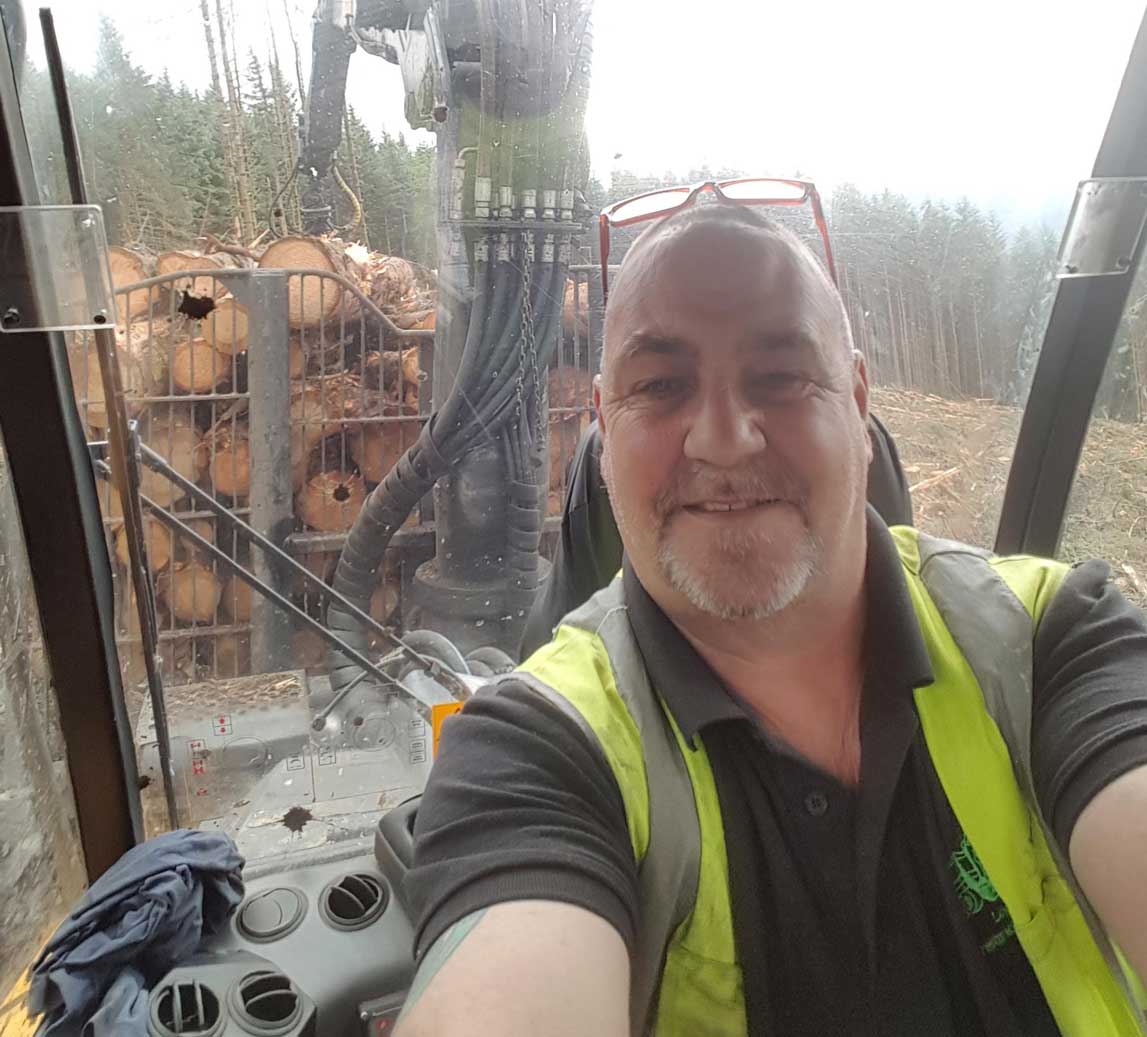
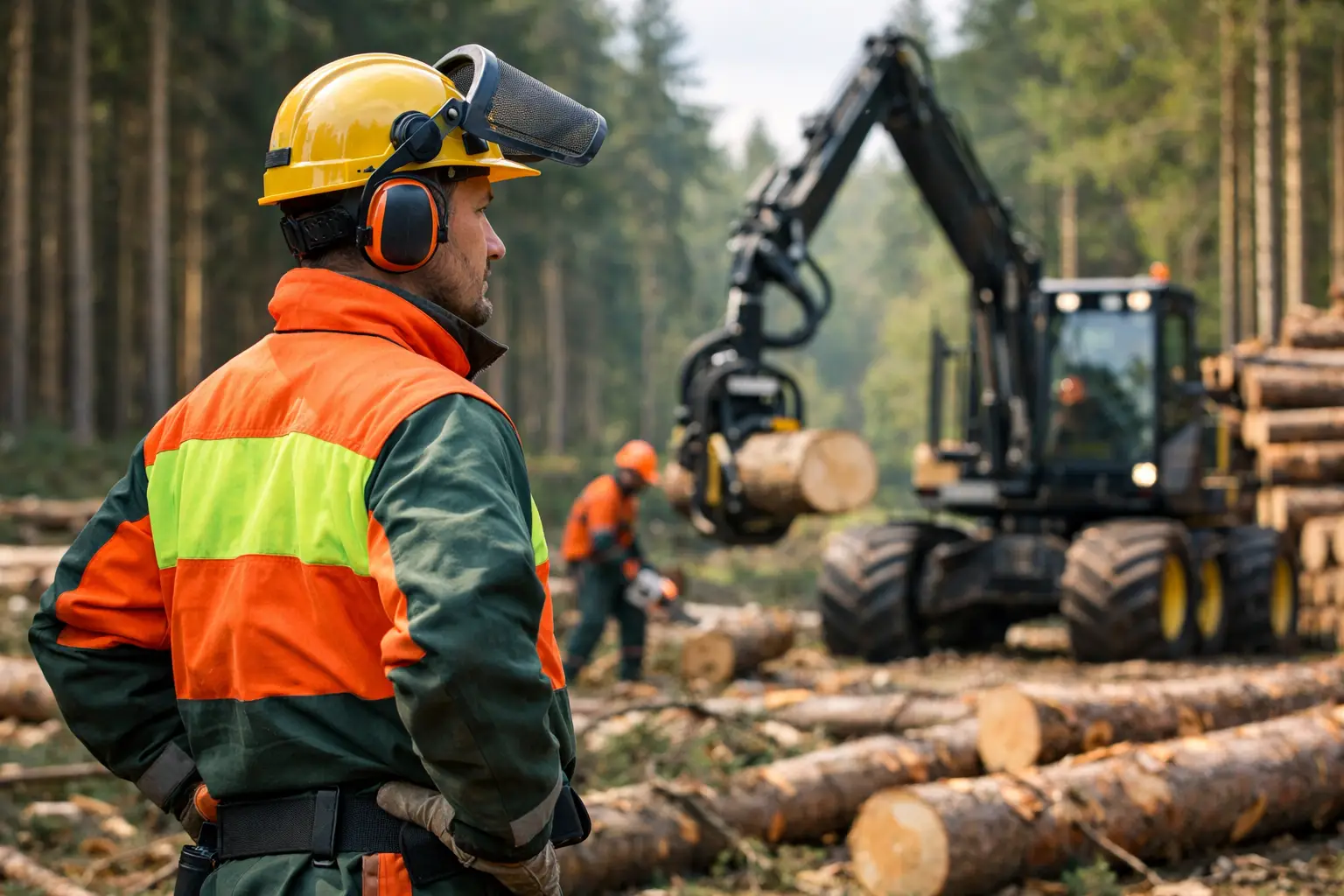
A near miss in the wood rarely comes down to one dramatic failure. More often it starts with something ordinary – a machine parked on poor ground, a radio check missed, a tired operator pushing on, or a lorry movement not properly separated from men on foot. That is why forestry safety updates UK businesses should pay attention to are not just about new rules on paper. They are about how work is planned, supervised and carried out when production pressure is real.
Fotrestry safety-for contractors, estate teams and haulage operators, the direction of travel is clear. The industry is seeing sharper attention on machinery interfaces, lone working, site traffic management, emergency planning and operator competence. None of this is new in principle, but the standard expected on site keeps rising. If your systems still rely on habit and verbal understanding, you are already behind.
-
The WeighPro Wireless Weighing Link represents a precise and dependable weighing system designed specifically for round timber, eliminating the need for re-calibration. This system offers operators minimal maintenance requirements, boasting an impressive battery life of up to two years between recharges.
-
That’s a remarkable amount of work hours for a single machine, the Norcar 600 owned by Erkki Rinne is taken well care of, it even has the original Diesel engine.
-
It is not possible to eliminate chain shot, but there are simple steps that can be taken to reduce the risk.
-
Arwel takes great pride in the fact that the mill has no waste whatsoever, “the peelings are used for children’s playgrounds, gardens and for farm animals in barns in the winter and the sawdust has multiple uses in gardens and farms as well.
-
Timber hauliers need to encourage young blood in, and also look after the hauliers we have, we need make the sector a safe and positive place to work.
FIND US ON
Forestry safety updates operators are seeing on site
The main shift is from broad risk awareness to evidence of control. Clients, insurers and enforcement bodies increasingly want to see that hazards have been thought through for the specific site, specific machine mix and specific timber movement plan. A generic folder in the vehicle is not enough if the reality on the ground looks different.
This matters most in harvesting and extraction, where mechanised systems reduce some traditional felling risks but introduce others. Machine exclusion zones, maintenance lock-off procedures, steep ground planning and assisted winching arrangements all need to be clearly understood by everyone involved. Mixed sites are where problems tend to start – hand cutters working near mechanised operations, visiting hauliers entering active loading areas, or landowners walking in without appreciating swing radius and blind spots.
There is also more scrutiny around the gap between qualification and competence. Tickets matter, but so does current experience on the machine, on that type of terrain, in those weather conditions, with that attachment or harvesting head. Plenty of incidents happen when a nominally qualified person is asked to work outside their normal setup.
Machinery, maintenance and operator risk
Modern forestry kit is safer than the machines many of us started around, but only when the safety systems are maintained and used as intended. Guarding, access steps, handrails, glazing, cameras, fire suppression and emergency stops are all part of the package. Once they are damaged, bypassed or ignored, the margin narrows fast.
One of the more practical forestry safety updates UK contractors should act on is treating maintenance safety with the same seriousness as production safety. Too many injuries still happen during repairs, clearing blockages, checking hydraulic leaks or climbing onto machines in poor light. Stored energy, raised booms, rotating parts and hot components do not forgive rushed jobs.
In workshop and field service terms, the basics still do the heavy lifting. Machines need proper isolation before work starts. Attachments and heads need secure support, not trust in hydraulics alone. Tyre, track and roller work need the right lifting arrangement. Fire risk from debris build-up around hot areas still deserves more attention than it gets, particularly in dry spells and around older machines.
Cab safety also remains part of the conversation. Operators are spending long shifts in demanding terrain, often with vibration, repetitive movements and poor visibility in foul weather. Fatigue is not a soft issue. It affects judgement, reaction time and willingness to stop when conditions deteriorate. Anyone looking at forestry safety seriously should treat operator welfare as an operational control, not an optional extra.
Where machine incidents still start
The same patterns keep turning up. People approach running machines without positive communication. Operators move before the area is clear. Banksmen are used informally rather than properly briefed. Maintenance gets done with the machine partly live because stopping fully feels inconvenient. On haulage sites, loaders and lorries work too close to pedestrians.
The point is not that the industry lacks guidance. It is that production routines can make unsafe work feel normal unless site leadership keeps standards tight.
Lone working, communications and emergency response
Large parts of the UK forestry sector depend on people working remotely, often with patchy signal and long ambulance access times. That makes emergency planning more than a paperwork exercise. If somebody is trapped, struck, crushed or taken ill, the first ten minutes matter.
The stronger sites now build emergency response into the setup from the start. That means clear access points, accurate grid references, agreed contact methods, named first aid cover and realistic extraction plans if a casualty cannot simply be walked to a vehicle. It also means checking whether the communications method actually works in that block, not assuming a mobile phone will do.
Lone working remains one of the biggest judgement calls in the trade. In some tasks it is routine and manageable. In others it creates exposure that is hard to justify. The answer depends on the activity, remoteness, weather, terrain and experience of the person involved. Lone machine operating in a well-planned mechanised setup is one thing. Hand cutting in difficult woodland with poor access is another altogether.
For employers and principal contractors, the key test is whether the control measures are real. Scheduled check-ins, vehicle tracking and welfare calls are useful, but only if someone is actively monitoring them and knows what to do when a check is missed.
Haulage and loading areas are under the spotlight
A lot of serious risk sits at the roadside stack and the forest loading bay. This is where forestry meets public roads, agency drivers, changing ground conditions and tight turnaround pressure. It is also where assumptions can become dangerous very quickly.
Loading plans need to account for ground bearing, trailer position, machine stability, timber presentation and vehicle movement. Drivers need a safe place to stand, and everyone on site needs to know whether they stay in the cab or leave it during loading. Different businesses still work to different rules, which is exactly why the site instruction has to be clear.
One practical area getting more attention is segregation. If the only walking route to check the load takes the driver through the loader working arc, the site is not properly set up. The same applies where reversing movements are routine but unmanaged, or where mud and brash create slip hazards around chains, stanchions and straps.
Public highway interface is another pressure point. Timber haulage joining fast roads from forest exits, temporary stacking close to carriageways and mud on roads all create obvious exposure. Safe movement starts well before the lorry reaches the gate.

Competence, supervision and the subcontractor question
Most forestry businesses know the challenge here. Some forestry work can be seasonal, teams are mixed, and subcontract labour can be essential. But once several firms are operating in the same block, responsibility can blur unless one person is clearly in charge of the site standard.
That is where many of the better forestry safety updates UK firms are implementing make a difference. They are tightening inductions, recording site briefings properly and making sure subcontractors are working to the same operational rules as the principal team. A ticket check at the gate is not enough. Visitors and subcontractors need to understand the extraction routes, machine zones, radio channels, emergency plan and who has authority to stop work.
Supervision matters most when conditions change. Windblow, deep rutting, snow, storm damage, poor visibility and late design changes all alter the risk picture. A site that was acceptable at 8 am can be a different job by mid-afternoon. The businesses that keep a grip on safety are the ones that revisit the plan rather than forcing the original method through.
What good operators are doing differently
The strongest operations are not necessarily the ones with the thickest paperwork. They are the ones where the paperwork matches the job and the job matches the briefing. Good sites feel orderly. Machine routes are obvious. Exclusion zones are respected. Loading areas are thought through. People know who is where and what happens if something goes wrong.
They also accept trade-offs honestly. Sometimes the safer option is slower. Sometimes a hand-cut edge tree is the right answer even on a mechanised site. Sometimes haulage has to wait because ground, weather or visibility is not good enough. Mature contractors understand that lost production can be recovered. A serious injury or fatality cannot.
For a title that bills itself as written by loggers for loggers, Forest Machine Magazine has always done best when it sticks to the field reality. Safety is no different. The sharp end is not the policy file. It is the operator climbing into the cab before first light, the cutter stepping onto a wet bank, and the driver pulling under a loader at the end of a long day.
The useful question is not whether your site is broadly safe. It is whether today’s crew, on today’s ground, with today’s machine mix, could explain exactly how the job stays under control when something changes.
Sign up for our free monthly newsletter here
Contact forestmachinemagazine@mail.com to get your products and services seen on the world’s largest professional forestry online news network.
#homeoflogging #writtenbyloggersforloggers #loggingallovertheworld
Written by loggers for loggers and dedicated solely to the equipment used in forestry operations.