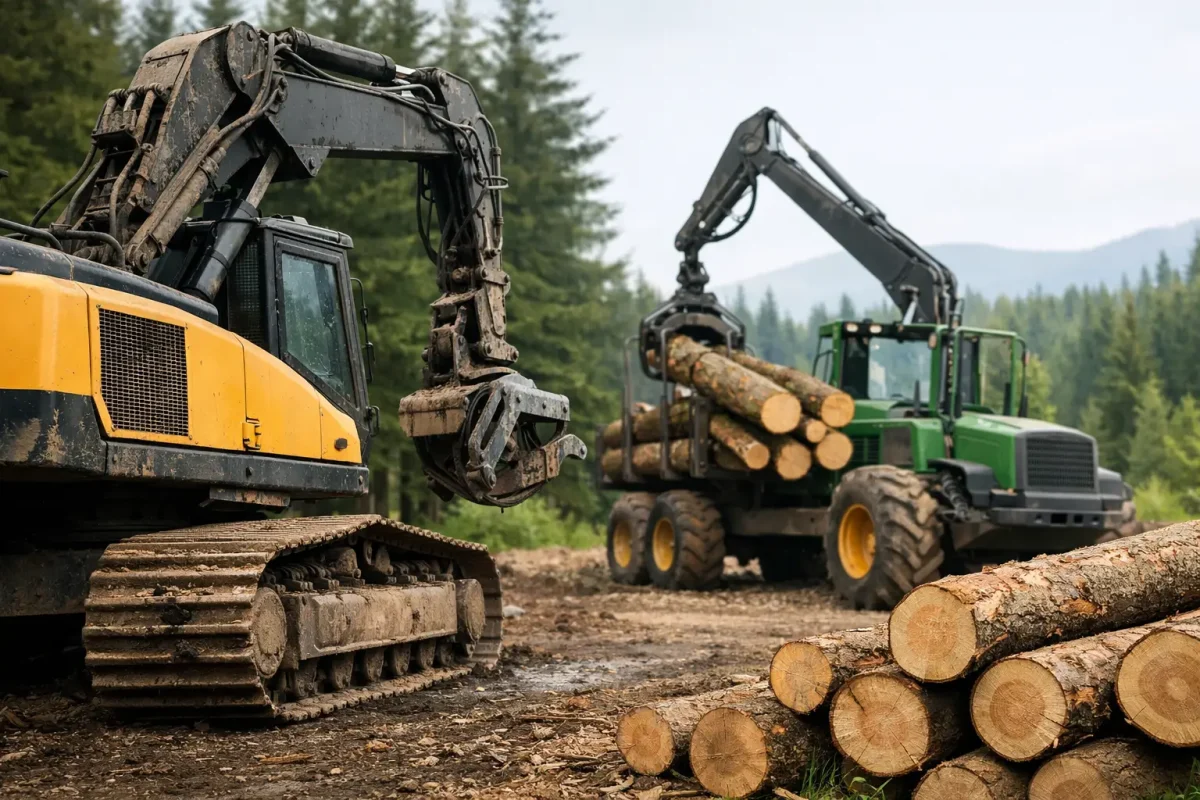
A cheap machine can get expensive very quickly once it is halfway up a bank, bleeding oil and waiting on parts. That is why any proper used forestry equipment guide has to start in the woods, not on the advert. Hours on a screen mean very little if the machine has spent its life on steep ground, in brash, with indifferent maintenance and three different operators.
Used Forestry Equipment is rarely bought for appearance. It is bought for output, reliability and whether it can keep earning when weather, timber size and site conditions are against you. A tidy repaint might catch the eye, but experienced buyers know to spend more time looking at pins, bushes, pumps, bearings, slew rings, head rollers and the paperwork than the panels.

-
The WeighPro Wireless Weighing Link represents a precise and dependable weighing system designed specifically for round timber, eliminating the need for re-calibration. This system offers operators minimal maintenance requirements, boasting an impressive battery life of up to two years between recharges.
-
That’s a remarkable amount of work hours for a single machine, the Norcar 600 owned by Erkki Rinne is taken well care of, it even has the original Diesel engine.
-
It is not possible to eliminate chain shot, but there are simple steps that can be taken to reduce the risk.
-
Arwel takes great pride in the fact that the mill has no waste whatsoever, “the peelings are used for children’s playgrounds, gardens and for farm animals in barns in the winter and the sawdust has multiple uses in gardens and farms as well.
-
Timber hauliers need to encourage young blood in, and also look after the hauliers we have, we need make the sector a safe and positive place to work.
FIND US ON
Related Posts
What a used forestry equipment guide should actually help you do
Most buyers are not looking for a museum piece. They are trying to match a machine to a contract, a thinning programme, a forwarding distance or a harvesting head already in the fleet. That changes the buying decision completely.
A second-hand harvester that is right for first thinning in Sitka is not automatically right for heavier clearfell work in mixed ground. The same goes for a forwarder expected to carry decent payloads on soft sites without turning the job into a rutting problem. Used machinery only makes sense when the specification suits the work and the repair risk is priced in properly.
That is where plenty of buyers come unstuck. They chase headline price and forget the cost of getting the machine to work at the level the contract demands. If you need tyres, tracks, hoses, a pump rebuild and a head computer sorting within the first three months, the bargain has gone.
Start with the job, not the machine
Before viewing anything, be clear on what the machine will be doing in the next 12 to 24 months. That means timber size, terrain, extraction distances, transport limits and operator expectations. There is no point buying a big, heavy unit because it looks like value if it will spend half its life awkward on access and expensive to move between sites.
Likewise, buying too small can be just as costly. A machine that is constantly at its limit wears faster, burns productivity and gives operators a hard time. Used kit has less margin for mismatch than new. You are buying what the machine is now, not what the brochure said it was when it left the factory.
If you already run a mixed fleet, look hard at commonality. Shared filters, familiar diagnostics, existing head compatibility and dealer support matter. One oddball machine with poor parts back-up can eat workshop time and hold up production far beyond its purchase price.
The paperwork tells you how the machine has been lived with
A good service history does not guarantee a good machine, but poor or patchy records should ring alarm bells. You want to see regular servicing, evidence of major component work, software updates where relevant, and some sign that faults were dealt with properly rather than patched up for sale.

Hour readings need a bit of scepticism. Engine hours, head hours and working hours do not always line up cleanly, particularly on older machines or those with replacement components. Wear on controls, seat, pedals, crane functions and undercarriage can tell you more than the display.
Ask direct questions. Has the machine had pump work? Any issues with overheating? Has the crane been welded? When were the feed rollers, knives or saw unit last overhauled? What tyres are on it, and are they a proper matched set or whatever was cheapest at the time? Straight answers matter. So does how quickly the seller gives them.
Used forestry equipment guide to the inspection points that matter
A proper inspection is where money is saved. In many cases, the expensive faults are not hidden especially well. Buyers just need to slow down and look in the right places.
On harvesters and processors
Start at the head. Measure chain wear, inspect the bar mount, check for cracks, look at feed roller condition and assess slop in the delimbing knife pivots. Excessive movement in the head frame, tired motors or poor roller grip usually means more money straight away. Run every function through its full range and do it under load if possible.
Then move to the crane and base machine. Pins and bushes tell their own story. So do any fresh welds around the boom or slew area. A machine can have honest wear, but repeated plating and cracking around stress points suggest a hard life or poor repair standards. Watch how smoothly the crane operates. Jerky or hesitant movements can point to hydraulic wear, valve issues or pump trouble.
Cooling packs deserve attention as well. Forestry machines live with dust, needles, bark and debris. If the cooling system is neglected, overheating follows, and that can shorten the life of expensive components quickly.
On forwarders
Look hard at the articulation joint, bogies and load space. Cracks around bunk mounts or repeated repairs in the chassis should be taken seriously. Check the crane slew and extension under movement, not just parked up. On hydrostatic machines, drive response needs to be clean and predictable. Any delay, uneven pull or unusual noise warrants further investigation.
Tyres are a major cost and should be priced accordingly. A machine wearing part-worn, mismatched or damaged tyres is not a minor issue. In forwarding, ground contact, flotation and traction affect both output and site impact.

On skidders, chippers and support kit
Winches, guards, blade wear, driveline condition and underbody damage all matter. With chippers, rotor wear, anvil condition, stress control and feed system performance are key. Support kit often gets maintained last, which is precisely why it needs checking properly.
Test it warm, not just cold
Plenty of machines start nicely when cold and then show their faults once oil is hot. If you are serious, arrange enough time to run it properly. Travel it, slew it, lift with it, work the head, engage the drive and watch what changes after heat builds.
Hot hydraulic issues, lazy travel motors, slipping functions and intermittent electrical faults have a habit of appearing only after the machine has been worked. A quick spin round the yard is not a test in any meaningful forestry sense.
Dealers, private sales and auction stock all carry different risks
There is no single right route into used machinery. Dealer stock may cost more, but sometimes that extra money buys a machine that has been checked, prepared and backed up. Sometimes it only buys a shinier presentation. It depends on the seller and their reputation.
Private sales can be excellent if you know the owner, know the machine or can see the working history clearly. They can also be where awkward faults get passed on quietly. Auction stock can produce value, but buyers need discipline. Once bidding starts, repair budgets are often forgotten.
For many buyers, the smart play is to inspect with an engineer or fitter who knows that type of machine well. The fee is small compared with one serious hydraulic or transmission failure.
Price the first year, not just the purchase
This is where the used forestry equipment guide becomes a commercial exercise rather than a buying checklist. The right question is not, “Can I buy it?” It is, “What will this machine cost me over the next year per productive hour?”
That means finance, transport, immediate repairs, routine servicing, likely wear parts, insurance, downtime risk and resale position. A dearer machine with better tyres, stronger service records and less wear on major components may be far cheaper in practice than the cheapest unit in the market.
Parts support matters here too. A machine with an attractive ticket price but weak dealer coverage in your area can become a liability fast. If it is down in West Wales or the Borders waiting on parts from overseas, the savings disappear.

When to walk away
Some faults are negotiable. Worn pins, tired tyres and cosmetic damage can often be costed and managed. Other signs should make you think twice.
Repeated structural welding in high-stress areas, contaminated hydraulic oil, serious overheating history, major electrical bodges and poor ownership records usually point to deeper trouble. So does a seller who will not let the machine be tested properly, avoids basic questions or pushes hard for a quick decision.
Good used machines do come to market, but they rarely need much storytelling. If the advert is doing more work than the machine, take the hint.
For contractors and owner-operators, buying second-hand is often the only sensible route to fleet growth. There is nothing wrong with that. The trick is buying with clear eyes, not with optimism. A used machine does not need to be perfect. It does need to be honest, fit for the work and backed by numbers that still stack up when the weather turns and the job gets properly testing.
Sign up for our free monthly newsletter here
Contact forestmachinemagazine@mail.com to get your products and services seen on the world’s largest professional forestry online news network.
#homeoflogging #writtenbyloggersforloggers #loggingallovertheworld
Written by loggers for loggers and dedicated solely to the equipment used in forestry operations.