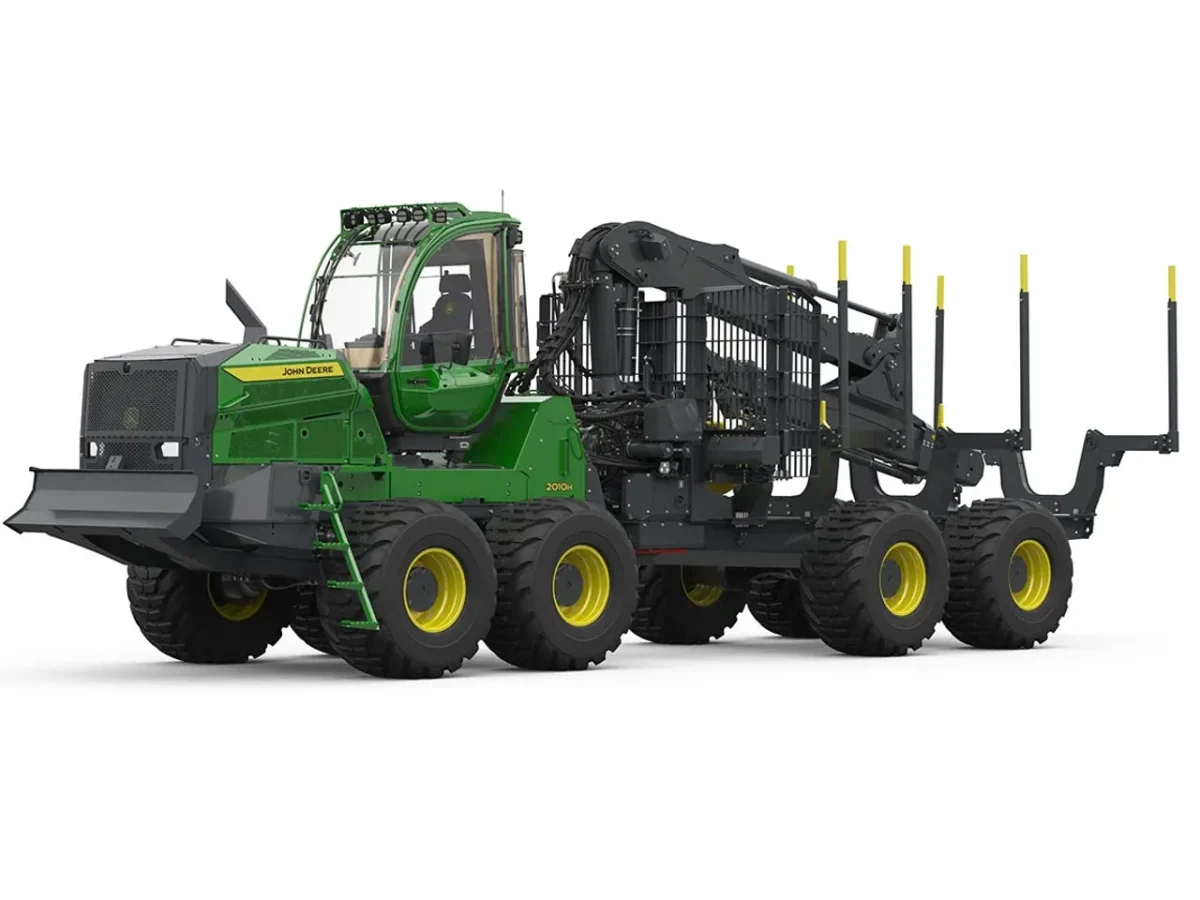
Pip: Forest Machine Magazine covers the machines that work where roads give up — and this episode goes deep into one forwarder that apparently thrives where other manufacturers’ equipment fears to tread.
Mara: That’s the territory: a Norwegian winter test of the John Deere 2010H forwarder, told through the eyes of the operator who put it through its paces in some genuinely punishing conditions. Let’s start with the machine, the terrain, and what the testing actually revealed.
John Deere 2010H: Built for Norway’s Toughest Ground
Pip: The real question here is whether the 2010H is a meaningful step forward or just a spec-sheet upgrade — and the answer comes from someone who actually drove it in rocky, wet, mountainous terrain in central Norway.
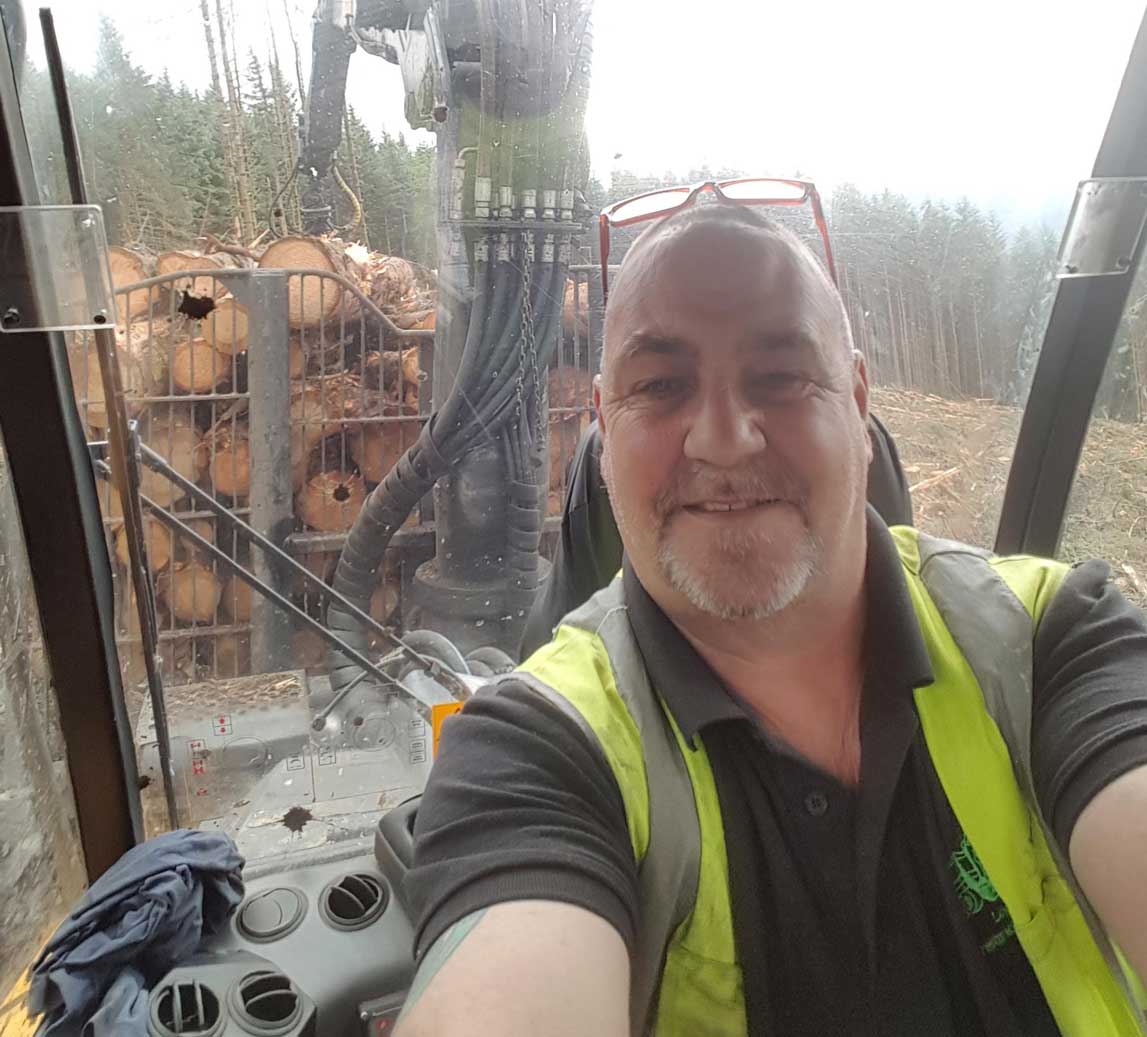
Mara: That someone is 26-year-old operator Martin Strømme Midtgård, and his take on being selected as a test driver sets the tone: “When I was asked if I wanted to drive the John Deere 2010H test machine, I felt privileged. It felt like recognition for always doing my best at work.”
Pip: That framing matters — this isn’t a promotional test drive handed to a company rep. It’s a working operator, on his own ground, with real stakes, running a machine that initially didn’t perform as expected in steep Norwegian terrain.
Mara: Right, and that early friction is worth dwelling on. The machine hadn’t been fully finalized, and Martin was frustrated. A team of engineers flew in from Finland to adjust it on site — and once they did, testing got underway in earnest.
Pip: He describes the Finnish engineers arriving in matching yellow jackets and black-and-yellow gear, surrounding the machine and speaking Finnish to each other — and apparently they looked, in his words, just like characters from the Minions movie. Which is not a comparison you expect in a forwarder review.
Mara: After that visit, Martin’s assessment of the machine’s capabilities gets specific. On the boom: “IBC 3.0 is a really big improvement. I wouldn’t have believed that the boom use could be improved that much. The larger load space is also a really good feature.”
Pip: And the terrain context here is important — Martin works where the ground is so rocky he says he wouldn’t want to drive machines from other manufacturers. The suspension is what makes the 2010H viable there.
Mara: Winter conditions add another layer. At minus twenty degrees, small details become significant — keyless ignition, easy oil checks through a hatch, a large fuel tank that cuts down on how often you have to step outside the warm cab.
Pip: Martin also frames his work in terms that go well beyond operating hours — he talks about timber demand, sustainable forestry, and what it means for forest owners. The machine is a tool in a much larger picture he clearly thinks about.
Mara: He puts it directly: the best operators care about both the forest and the quality of their work, and he wants engineers he can ask questions of and learn from. That relationship with John Deere’s technical team is clearly part of what made this test meaningful to him.
Pip: An operator who compares Finnish engineers to cartoon characters and then pivots to timber economics — that’s a certain kind of forestry professional.
Mara: The kind the industry probably needs more of. More from the machines and the people running them next time.