

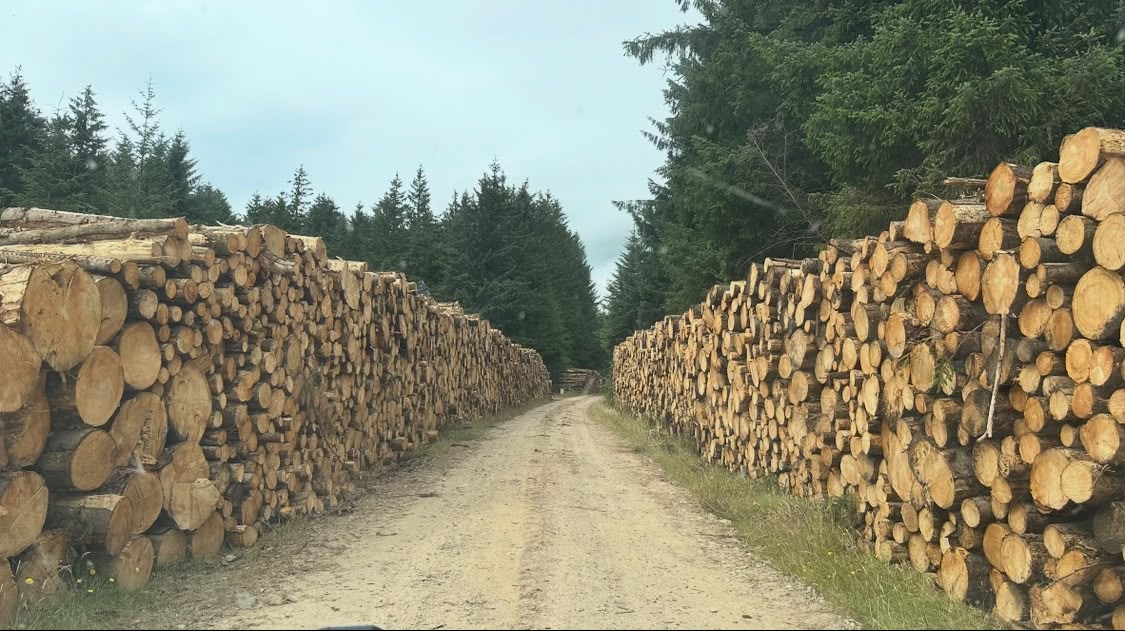
A wet winter, high diesel costs and patchy fibre demand can turn low-grade timber from a routine outlet into a margin problem very quickly. That is why bioenergy market trends matter on the ground, not just in policy papers
Bioenergy Market Trends-For forestry contractors, woodland managers, hauliers and processors, the movement in chip, pellet and biomass fuel demand now affects thinning economics, roadside values, investment timing and how cleanly the whole timber chain works. The main shift is straightforward enough. Bioenergy is no longer a side conversation about using up brash and poor material. It sits much closer to mainstream fibre planning, especially where roundwood markets are tight, sawlog recovery is under pressure, or site access and extraction costs make every outlet count. But the direction of travel is not one-way. Demand is there, though it is being shaped by subsidy changes, emissions scrutiny, plant efficiency, haulage costs and competition for the same fibre from board mills, panel producers and other wood users.

-
That’s a remarkable amount of work hours for a single machine, the Norcar 600 owned by Erkki Rinne is taken well care of, it even has the original Diesel engine.
-
Kieran Anders is a forestry contractor working in the lake district. His work involves hand cutting and extracting timber using a skidder and tractor-trailer forwarder.
-
It is not possible to eliminate chain shot, but there are simple steps that can be taken to reduce the risk.
-
Arwel takes great pride in the fact that the mill has no waste whatsoever, “the peelings are used for children’s playgrounds, gardens and for farm animals in barns in the winter and the sawdust has multiple uses in gardens and farms as well.
-
Timber hauliers need to encourage young blood in, and also look after the hauliers we have, we need make the sector a safe and positive place to work.
FIND US ON
What is driving bioenergy market trends
In the UK, the strongest driver remains the need for dependable, dispatchable renewable heat and power. Wind and solar get most of the attention, but biomass still has a practical role because it can be stored, moved and burned when needed. For operators in forestry, that creates a floor of demand for low-grade material that might otherwise struggle to find value.
That said, policy support is reshaping the market. Large-scale power generation has already faced tougher questions around sustainability, imported pellets and carbon accounting. Smaller heat-led systems, local biomass boilers and combined heat and power schemes often present a more defensible case, especially where feedstock is genuinely local and supply chains are transparent. That matters because the closer the end user is to the forest gate, the easier it is to defend both cost and emissions.
Energy prices also continue to pull the market around. When gas and power prices spike, biomass looks attractive. When fossil prices soften and confidence drops, some buyers become cautious, particularly if they are dealing with variable moisture content, inconsistent chip quality or expensive transport. Bioenergy can be competitive, but only when the fuel specification and logistics are under control.
Feedstock pressure is changing the market
One of the more important bioenergy market trends is the fight over fibre. Biomass operators want reliable volume. Panelboard, pulp, packaging and other wood processors want the same thing. In practice, this means that poor-quality roundwood, first-thinning material, sawmill residues, and clean recovered wood are all under pressure at the same time.
For forestry businesses, that can be positive when it increases the value of low-grade assortments. The problem is that it also makes procurement less predictable. A bioenergy buyer prepared to pay one month may step back the next if plant maintenance, subsidy uncertainty, or transport costs wipe out the margin. Mills can behave in much the same way. So while demand is broader than it once was, it is not always steadier.
Residues remain part of the picture, but the days of assuming all brash and low-value material will automatically make economic biomass are gone. Recovery costs, contamination risk, ash content and moisture can all turn apparent volume into poor fuel. On awkward ground, long extraction distances or soft sites, the arithmetic becomes unforgiving.
Quality matters more than volume
Buyers have become more exacting on fuel quality, and rightly so. Moisture content, particle size, fines, contamination and consistency affect boiler performance, emissions and maintenance intervals. From a forestry and harvesting point of view, this places greater emphasis on stacking, covering, storage time, and how material is handled from site to processor.

Wet chip hauled too far is rarely a good story for anyone. It costs more to move, delivers less usable energy and can create trouble in storage. That is why better discipline around seasoning, chipping timing and site segregation is becoming less of a nice extra and more of a commercial necessity.
Machinery and handling are becoming part of the margin
For this trade, machinery is where market theory meets hard cost. If biomass volumes are rising in your area but production costs are climbing faster, the opportunity disappears. Contractors are watching utilisation, fuel burn, knife wear, screen choice, loading efficiency, and lorry turnaround more closely because biomass margins leave little room for waste.
High-capacity chippers, grinders, loaders and walking-floor haulage all have their place, but the right setup depends on distance, product spec and site conditions. A machine package that works well feeding a large energy plant from roadside stacks may struggle badly on scattered woodland sites with poor access and variable material. The current market favours operators who can match machinery to feedstock rather than force every job through the same system.
There is also more interest in integrated processing yards and hub models. Instead of trying to produce a finished fuel product at the stump, some businesses are moving fibre into central points where drying, screening and blending can be managed properly. It adds handling, but it can improve consistency and reduce rejected loads. Whether that stacks up depends heavily on haul distance and local demand density.

Regulation and sustainability scrutiny are here to stay
No serious discussion of bioenergy market trends can ignore sustainability rules. The market is under constant scrutiny over carbon claims, land use, forest management and transport emissions. For professional forestry operators, this cuts both ways.
Well-managed UK forestry has a credible story to tell when biomass comes from thinning, harvest residues, storm-damaged timber, arboricultural arisings or low-grade fibre unsuitable for higher-value use. Poorly evidenced supply chains, on the other hand, invite criticism and tighter rules. Traceability is becoming more valuable, not less.
This will likely favour businesses that can confidently demonstrate origin, management practices, and fuel quality. It may also favour domestic supply over long-distance-imported biomass in some parts of the market, especially where customers want a clearer line of sight into sustainability. But it would be wrong to assume regulation automatically means higher prices at the forest gate. Compliance costs money, and buyers will try to pass that pressure back down the chain where they can.
Heat markets may offer better long-term stability
Large power-only biomass has attracted most of the headlines, but heat demand can make more sense commercially and politically. Schools, estates, industrial sites, hospitals, and commercial premises that need dependable heat often value fuel security over headline market noise. A well-run local heat customer buying to a clear spec can be worth more to a supplier than a larger but less predictable outlet.
That is especially true in rural areas where forestry operations can serve nearby users with shorter transport legs. It does not suit every region, and not every site can support the storage and handling needed, but local heat remains one of the sounder parts of the sector.
What UK forestry businesses should watch next
The next phase of the market looks less like a simple volume race and more like a sorting exercise. Buyers will keep wanting fibre, but they will be choosier about source, spec and delivery reliability. That puts pressure on contractors and managers to think beyond tonnes at roadside.
First, haulage remains a major swing factor. A viable biomass job can be turned on its head by distance, backloads, driver availability and fuel price. Second, fibre competition will intensify whenever board and panel markets strengthen. Third, weather still has a bigger effect than many market forecasts admit. Wet seasons reduce access, raise moisture content and slow seasoning, all of which hit cost.
There is also a practical question around investment. Some operators will be tempted to add chipper capacity or specialist biomass handling kit on the assumption that demand will keep climbing. In some districts that will be the right call. In others, subcontracting or partnership models may be safer than owning more iron outright. The old rule still applies: buy a kit for confirmed work, not for rumours.
For woodland owners and managers, the message is similar. Bioenergy can improve the economics of thinning and site clearance, but only if product separation, extraction planning and market timing are done properly. Treating all low-grade material as a single biomass stream leaves money on the table. Some fibre will still be better directed to fencing, pulp, panel, or local processing, depending on spec and haul.
Forest Machine Magazine readers know that markets are won or lost in the detail. Bioenergy is no different. The strongest opportunities are not in broad claims about green power, but in clean fibre, sensible distances, reliable machinery, honest moisture figures and end users who pay on time. If the sector continues to move towards local, traceable, and heat-led demand, forestry businesses that remain disciplined in quality and logistics should still find solid work in it.
Contact forestmachinemagazine@mail.com to get your products and services seen on the world’s largest professional forestry online news network.
#homeoflogging #writtenbyloggersforloggers #loggingallovertheworld
Written by loggers for loggers and dedicated solely to the equipment used in forestry operations.