
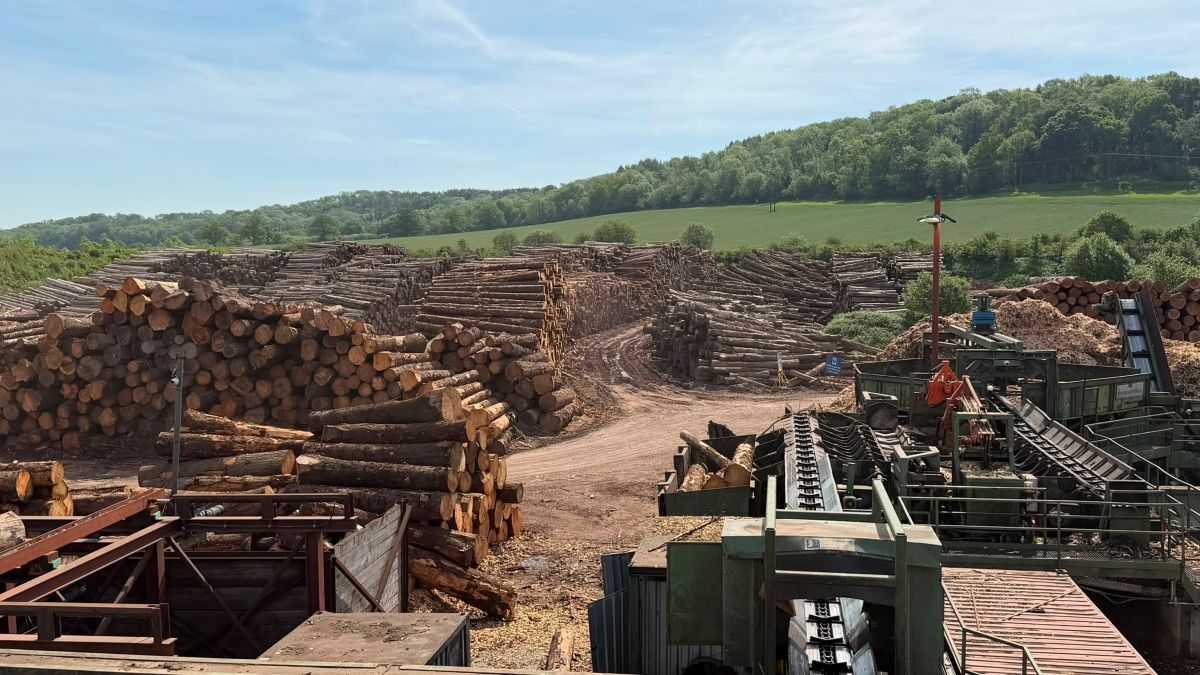
A sawmill can be operating at full capacity and still feel pressured by Friday afternoon. This is where industry news relevant to UK sawmills becomes important. It’s not just about broad headlines, but rather the specific changes in fiber supply, energy costs, transportation, labor, and regulations that can affect profit margins on a per-load basis.
Sawmill news-For mill owners, production managers and buyers, the current picture is not defined by one big story. It is a stack of moving parts. Softwood demand can hold up in one channel while pallet timber softens in another. Energy remains a live cost issue. Haulage availability still changes from region to region. At the same time, customers expect tighter grading, shorter lead times and better traceability than they did a few years ago.
That makes this a market where detail matters. If you are running primary breakdown, buying standing timber, planning kiln schedules or looking at a replacement line, the question is not whether the market is good or bad in general. The real question is which pressures are temporary, which are structural, and where investment still makes commercial sense.

-
The WeighPro Wireless Weighing Link represents a precise and dependable weighing system designed specifically for round timber, eliminating the need for re-calibration. This system offers operators minimal maintenance requirements, boasting an impressive battery life of up to two years between recharges.
-
That’s a remarkable amount of work hours for a single machine, the Norcar 600 owned by Erkki Rinne is taken well care of, it even has the original Diesel engine.
-
It is not possible to eliminate chain shot, but there are simple steps that can be taken to reduce the risk.
-
Arwel takes great pride in the fact that the mill has no waste whatsoever, “the peelings are used for children’s playgrounds, gardens and for farm animals in barns in the winter and the sawdust has multiple uses in gardens and farms as well.
-
Timber hauliers need to encourage young blood in, and also look after the hauliers we have, we need make the sector a safe and positive place to work.
FIND US ON
Sawmill news operators should watch closely
The biggest theme across the UK sawmilling trade is margin management. Input costs have not settled into anything that feels comfortably predictable, and output prices are not always moving in step. A mill can secure timber at one level, commit labour and energy, and find the finished market has shifted by the time stock is ready to move.
That is especially true where businesses serve several end uses at once. Construction timber, fencing material, packaging, biomass feedstock and by-products all have their own demand patterns. When one outlet weakens, another may help carry the load, but only if the mill is set up to recover value across the log rather than chase volume for its own sake.
The stronger operators are not necessarily the biggest. They are often the ones with disciplined buying, realistic maintenance planning and a clear idea of which customers they want to serve. In practical terms, that means better control of log specification, less waste in conversion, and fewer surprises when machinery goes down.
Timber supply remains the first pressure point
Raw material still sits at the centre of every sawmill decision. UK-grown timber gives many processors an obvious advantage on transport distance and supply chain resilience, but domestic availability is not simply a case of turning on the tap. Weather disruption, harvesting backlogs, site access and regional competition for fibre all influence what lands in the yard and at what price.
Storm events can create a short-term flush of material, but anyone in the trade knows that windblow is not straightforward profit. Quality can be mixed, extraction costs can rise quickly, and storage planning becomes critical if volumes arrive faster than the mill can sensibly process them. There is opportunity there, but only for businesses with enough flexibility in intake and stock handling.
Longer term, the supply question is tied to woodland management, replanting decisions and confidence across the wider forestry chain. Mills depend on harvesting contractors, hauliers and forest managers making the numbers work as well. If pressure builds too hard in one part of that chain, the effects show up everywhere else.

Species mix and product fit
Not all timber pressure is about volume alone. Species mix and diameter range matter just as much. A mill set up around a certain log profile can lose efficiency quickly if incoming timber drifts outside its sweet spot. Recovery falls, handling slows and extra wear lands on machinery.
That is one reason some operators are reviewing exactly where they want to sit in the market. A narrower, well-defined product range can improve consistency and throughput. The trade-off is reduced flexibility if a customer sector weakens.
Energy and drying costs are still hard on the numbers
Power and heat costs continue to affect sawmills more than many businesses outside the trade realise. Primary conversion is only part of the story. Once you add kiln drying, handling, machining and site services, energy becomes a daily operating issue rather than an overhead buried in the accounts.
For mills with drying capacity, scheduling has become more commercial than ever. Running kilns efficiently is no longer just good practice. It can be the difference between acceptable margin and stock that has cost too much before it reaches the customer.
Biomass helps some sites offset part of that pressure, particularly where by-products are recovered well and used intelligently. Even then, there is no one-size-fits-all answer. Capital costs, plant reliability, emissions compliance and feedstock quality all need to line up. A poorly planned energy project can become a distraction just as easily as a saving.
Machinery investment is becoming more selective
There is still appetite in the sector for line upgrades, scanning, optimisation and handling improvements, but buyers are asking harder questions. The days of justifying new kit on headline throughput alone are gone for most operators. Reliability, service backup, parts availability and ease of maintenance carry more weight than a glossy specification sheet.
That fits what many in the trade already know from the forest side. A machine only earns if it stays working. In sawmills, the same rule applies. One bottleneck on infeed, sorting or stacking can wipe out the gains promised by a faster headrig or edger.
Automation remains a live issue, especially where labour is difficult to recruit and retain. But automation is not automatically the right answer everywhere. Smaller mills, or those with varied product runs, may get better returns from targeted upgrades than from a full-system overhaul. In other words, it depends on product mix, staffing, maintenance capability and yard flow.
Used equipment is back in the conversation
More operators are looking at refurbished or second-hand plant for good reason. If the machine is right, support is available and installation is planned properly, used kit can offer a sensible route to added capacity without taking on the full cost of new. The risk, as always, is buying someone else’s problem. Proper inspection and realistic commissioning budgets matter.

Labour and skills are not getting easier
Sawmills are still competing for practical people who can keep production moving safely and consistently. That includes machine operators, fitters, electricians, graders, yard staff and supervisors who understand timber as well as output targets. Hiring remains difficult in many areas, and retention is just as important.
This is not only a wage issue. Working environment, shift patterns, training and clear progression all play a part. Businesses that treat labour as a fixed cost rather than an operational asset usually pay for it later in downtime, quality drift and avoidable accidents.
There is also a broader skills question. Modern mills increasingly need people who can work with scanners, controls and data systems without losing sight of the basics of timber behaviour and machine care. The best operations tend to blend old-school practical judgement with newer process control, not replace one with the other.
Regulation, compliance and assurance keep tightening
Regulatory pressure is now part of normal trading conditions. Chain of custody, timber legality, health and safety, dust control, noise, emissions and transport compliance all need proper attention. None of this is new to professional operators, but expectations are getting tighter and customers are asking more questions.
For some mills, compliance work feels like time taken away from production. The reality is that weak systems usually cost more in the long run. A failed inspection, insurance problem or safety incident can damage output and reputation far faster than the paperwork ever would.
Haulage sits inside this picture as well. Delivery performance still matters, but so do load security, routing, weights and driver availability. A good mill can still lose business if finished timber does not move reliably.
What the market is really rewarding
Across the current run of sawmill industry news UK readers care about, the common thread is not expansion at any price. The market is rewarding operators who understand their costs, know their fibre, maintain their plant and stay close to the customer.
That can mean investing, but not blindly. It can mean holding stock, but only where the market supports it. It can mean broadening output, but only if recovery and handling still make sense. The mills doing best are generally the ones making clear operational choices rather than reacting to every swing in sentiment.
For a trade publication like Forest Machine Magazine, that is where the real story sits. Not in polished claims, but in whether a mill can turn timber into saleable product efficiently, safely and repeatedly under UK conditions.
The next few quarters will still test buying discipline and operational control, but there is room for good businesses to perform. If you are watching one thing, watch the basics – fibre in, uptime, energy use and product out. In this sector, those four numbers usually tell the truth before the market chatter does.
Contact forestmachinemagazine@mail.com to get your products and services seen on the world’s largest professional forestry online news network.
#homeoflogging #writtenbyloggersforloggers #loggingallovertheworld
Written by loggers for loggers and dedicated solely to the equipment used in forestry operations.