
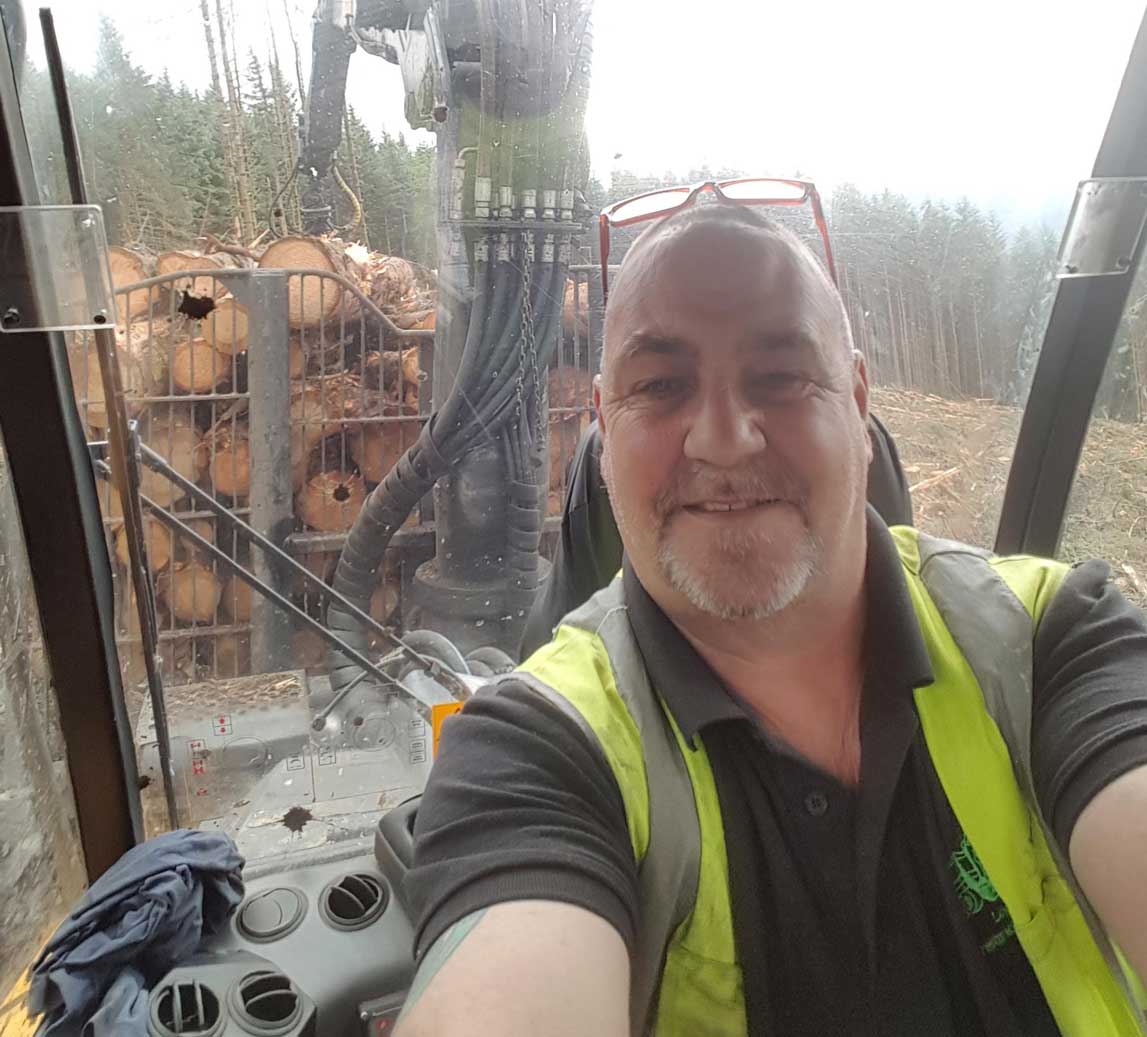
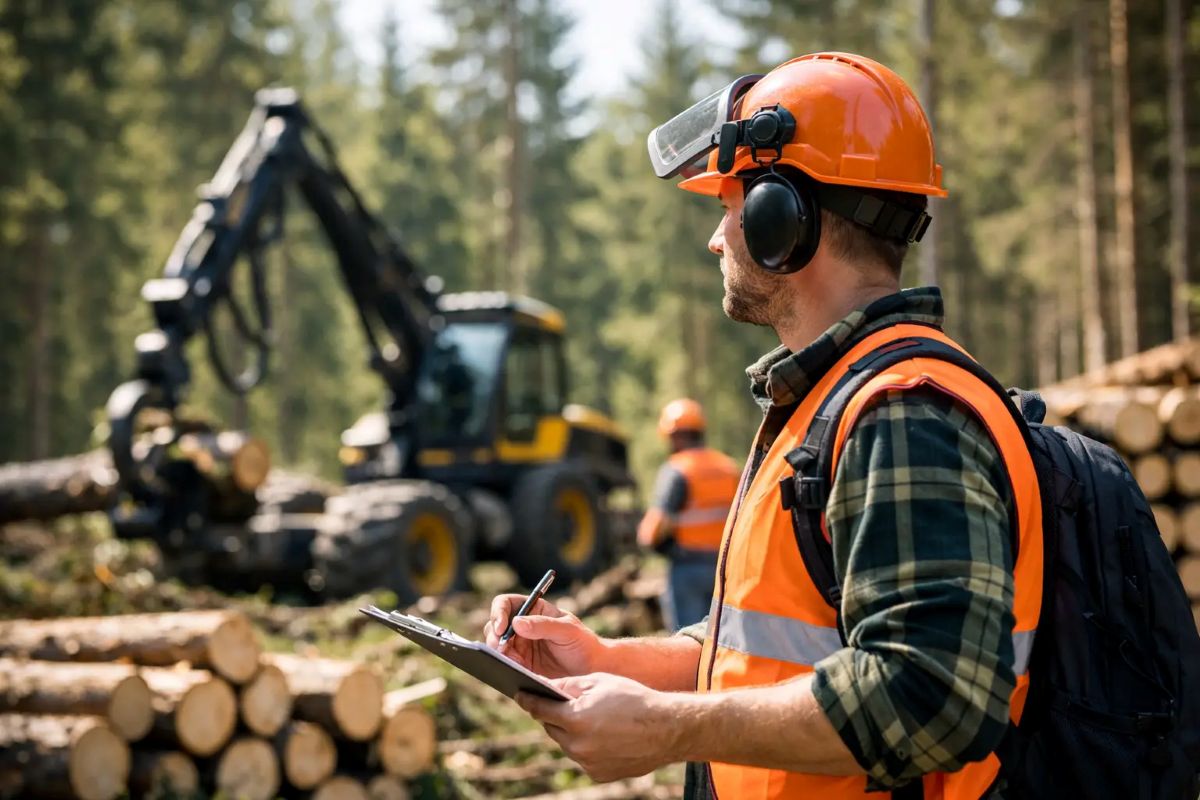
A lot of people like the idea of forestry until they meet the reality of it at 6am in sideways rain, on rough ground, with a machine waiting, timber to move and no room for excuses. That is exactly why anyone asking how to start forestry career in the UK needs a straight answer. Forestry can offer solid long-term work, but it rewards people who turn up, learn fast, work safely and understand that the job is bigger than chainsaws and trees.
How To Start Your Forestry Career-For some, the route in starts on the ground with manual cutting, planting or estate work. For others, it starts in a cab, in a workshop, in haulage or through college. There is no single doorway into forestry now, and that matters. Modern forestry is a chain of roles that runs from woodland establishment through harvesting, forwarding, haulage, processing and biomass. If you are serious about joining it, you need to know where you fit in.
-
The WeighPro Wireless Weighing Link represents a precise and dependable weighing system designed specifically for round timber, eliminating the need for re-calibration. This system offers operators minimal maintenance requirements, boasting an impressive battery life of up to two years between recharges.
-
That’s a remarkable amount of work hours for a single machine, the Norcar 600 owned by Erkki Rinne is taken well care of, it even has the original Diesel engine.
-
It is not possible to eliminate chain shot, but there are simple steps that can be taken to reduce the risk.
-
Arwel takes great pride in the fact that the mill has no waste whatsoever, “the peelings are used for children’s playgrounds, gardens and for farm animals in barns in the winter and the sawdust has multiple uses in gardens and farms as well.
-
Timber hauliers need to encourage young blood in, and also look after the hauliers we have, we need make the sector a safe and positive place to work.
FIND US ON
How to start your forestry career
The first step is deciding what sort of forestry work you actually want. Too many new entrants say they want to “work in forestry” without knowing whether they mean harvesting, machine operating, arboriculture, woodland management, fencing, haulage or sawmilling. Those are not interchangeable jobs, and employers will spot very quickly whether you understand the difference.
If you are drawn to operational forestry, the usual entry points are ground-based forestry work, machine support roles, apprenticeships, forestry college courses or junior positions with contractors and estates. If your interest is more technical, you may be better looking at forest management, surveying, planning or compliance roles. The practical route suits people who like machinery, outdoor work and production targets. The management route suits people who are comfortable with planning, regulation, mapping and longer-term woodland objectives.
There is also a hard truth here. Entry-level wages and conditions are not always glamorous, especially at the start. Some work is seasonal, some employers want experience before they give responsibility, and some jobs will involve plenty of travel. That does not make the sector a bad choice. It just means expectations need to be realistic from day one.
Start with the basics, not the image
The people who last in this trade usually build from the fundamentals. That means health and safety, reliability, physical toughness and a willingness to do routine jobs properly. New entrants often focus on the end goal – getting on a harvester, running a forwarder, moving into contracting – but most employers are looking first for attitude and site sense.
If you want to work on harvesting sites, basic chainsaw and cross-cutting qualifications can help, but tickets on their own do not make you job-ready. The same applies to machine certificates. A piece of paper gets you through the gate; being safe, productive and mechanically aware keeps you there.
A driving licence is often more valuable than newcomers realise. In rural forestry, getting to remote sites is part of the job. If you cannot travel independently, your options narrow fast. If you already have towing, agricultural or plant-related experience, that can also give you a useful edge.
Training routes that make sense
There are several workable routes into the sector, and the right one depends on age, experience and the type of role you want.
College remains a sensible option for younger entrants who need broad grounding. Land-based colleges can provide forestry, woodland management and some basic machinery-related training, along with practical exposure. The upside is structured learning and access to equipment. The downside is that college alone will not replace site experience.
Apprenticeships can be stronger where they are available and well run, because they combine training with real work. For employers, they reduce the risk of taking on somebody green. For entrants, they offer a way to earn while learning trade habits properly.
Then there is the direct-entry route. Plenty of people start by taking general forestry labouring work, estate maintenance, fencing, brashing, planting or yard jobs and move sideways into more skilled roles. That route is less tidy than college, but in this sector it is often how trusted operators are built. If you can prove yourself on the basics, better opportunities tend to follow.

Machinery knowledge matters earlier than you think
Forestry is not only a chainsaw industry anymore. Anyone aiming to build a long-term career should get comfortable with machinery, attachments and the economics behind them. Even if you are not heading straight into a harvester or forwarder seat, you should understand the working chain around extraction, loading, haulage and processing.
A young operator who knows the difference between productive machine time and expensive downtime is more useful than one who only wants cab hours. Employers notice the person who checks tracks, hoses, guards, grease points and daily maintenance without being chased. They also notice the one who understands how bad stacking, poor presentation or careless ground handling creates problems further down the line.
That does not mean every new entrant needs to become a technician. It means you should respect the kit and learn how your role affects output, repair bills and site efficiency. In a trade built on margins, that awareness counts.
What employers actually look for
Most forestry employers are not expecting a finished article. They are looking for somebody worth investing time in. Reliability is usually first. Turn up when you say you will, bring the right PPE, listen properly and do not create avoidable risk. That sounds basic, but it is where plenty of starters fall away.
After that comes attitude. A contractor is far more likely to back someone who asks sensible questions, accepts instruction and takes criticism than someone who arrives thinking social media has already made them an operator. Forestry crews are tight-knit for good reason. On a live site, trust matters.
Practical awareness also goes a long way. If you understand site hazards, weather impacts, steep ground, extraction routes and the pressure points around production, you already sound more employable. Experience in agriculture, plant, civils, mechanics or haulage can transfer well because the work ethic and machine mindset are similar.

The jobs worth looking at first
If you are still weighing up how to start forestry career options, look at roles that teach the trade around the edges before pushing for the most technical seat on site. Ground worker roles, forestry labouring, harvesting support, woodland maintenance, yard work, nursery work and assistant machine roles can all build useful experience.
Sawmills and timber yards are worth considering too. They do not put you in the forest every day, but they teach timber handling, grading, production flow and the commercial side of the industry. That can be valuable if your long-term aim is broader than felling alone.
For mechanically minded entrants, workshops supporting forestry and plant fleets can also be a strong route in. Understanding repairs, servicing and common failures gives you a sharper view of machine operation than many people gain early on.
Tickets, compliance and the reality of progression
Forestry remains heavily shaped by safety and compliance, and rightly so. Depending on the role, you may need chainsaw units, first aid, manual handling, brushcutter training, plant tickets or machine-specific certification. But there is a balance to strike. Collecting tickets without real work behind them can become expensive and frustrating.
A better approach is to match training to a genuine job path. If an employer is willing to bring you on and support tickets that fit the work, that is often better value than trying to fund everything yourself up front. On the other hand, if you are trying to break in with no contacts, a small number of relevant qualifications can show commitment.
Progression in forestry is rarely instant. You may spend months doing repetitive work before moving up. You may have to prove yourself in rough weather, on awkward sites and with older kit before anyone trusts you with more responsibility. That is normal. In most good crews, progression is earned rather than handed out.
Where newcomers go wrong
The biggest mistake is chasing the image instead of the trade. Forestry can look exciting from the outside, especially around big machines, specialist attachments and large-volume harvesting. But the day-to-day work is built on discipline, maintenance, safety and consistency.
Another common mistake is underestimating how much the sector depends on relationships. This remains a relatively small world. If you are known as dependable, word gets around. If you are careless, awkward or unreliable, that travels as well.
The third mistake is assuming there is only one respectable route in. There is not. Some of the best people in the trade started in haulage, farming, plant, estates or workshops and moved across because their skills transferred. If your first job is adjacent to forestry rather than squarely inside it, that can still be a sound start.
Building a career, not just landing a first job
Once you are in, think beyond getting hired. Pay attention to the parts of the job that others overlook: machine care, fuel use, presentation of timber, load security, record keeping, environmental standards and site communication. Those are the areas that move people from extra labour to trusted operator, supervisor or contractor.
It also pays to watch where the sector is heading. Mechanisation, operator shortages, timber transport pressures, biomass demand, compliance expectations and investment in more efficient equipment are all shaping opportunities. Someone who understands both production forestry and the commercial pressures around it will have more staying power than someone focused only on one narrow task.
For readers coming through the sector now, that is the real answer to how to start forestry career prospects on the right footing. Get in where you can add value, learn from people who know the job, treat machinery and safety with respect, and build your reputation the slow way. In this trade, that is still the route that lasts.
Sign up for our free monthly newsletter here
Contact forestmachinemagazine@mail.com to get your products and services seen on the world’s largest professional forestry online news network.
#homeoflogging #writtenbyloggersforloggers #loggingallovertheworld
Written by loggers for loggers and dedicated solely to the equipment used in forestry operations.