
For most UK projects, the Woodland Carbon Code is the benchmark buyers, agents and lenders will expect to see. It provides a framework for estimating carbon, demonstrating that a project needs carbon finance, registering it, validating the design and verifying delivered woodland over time. It is not a quick win for a marginal block of ground. Treat it as a forestry investment with an added environmental revenue line, not as a substitute for sound silviculture.
For most UK projects, the Woodland Carbon Code is the benchmark buyers, agents and lenders will expect to see. It provides a framework for estimating carbon, demonstrating that a project needs carbon finance, registering it, validating the design and verifying delivered woodland over time. It is not a quick win for a marginal block of ground. Treat it as a forestry investment with an added environmental revenue line, not as a substitute for sound silviculture.

-
That’s a remarkable amount of work hours for a single machine, the Norcar 600 owned by Erkki Rinne is taken well care of, it even has the original Diesel engine.
-
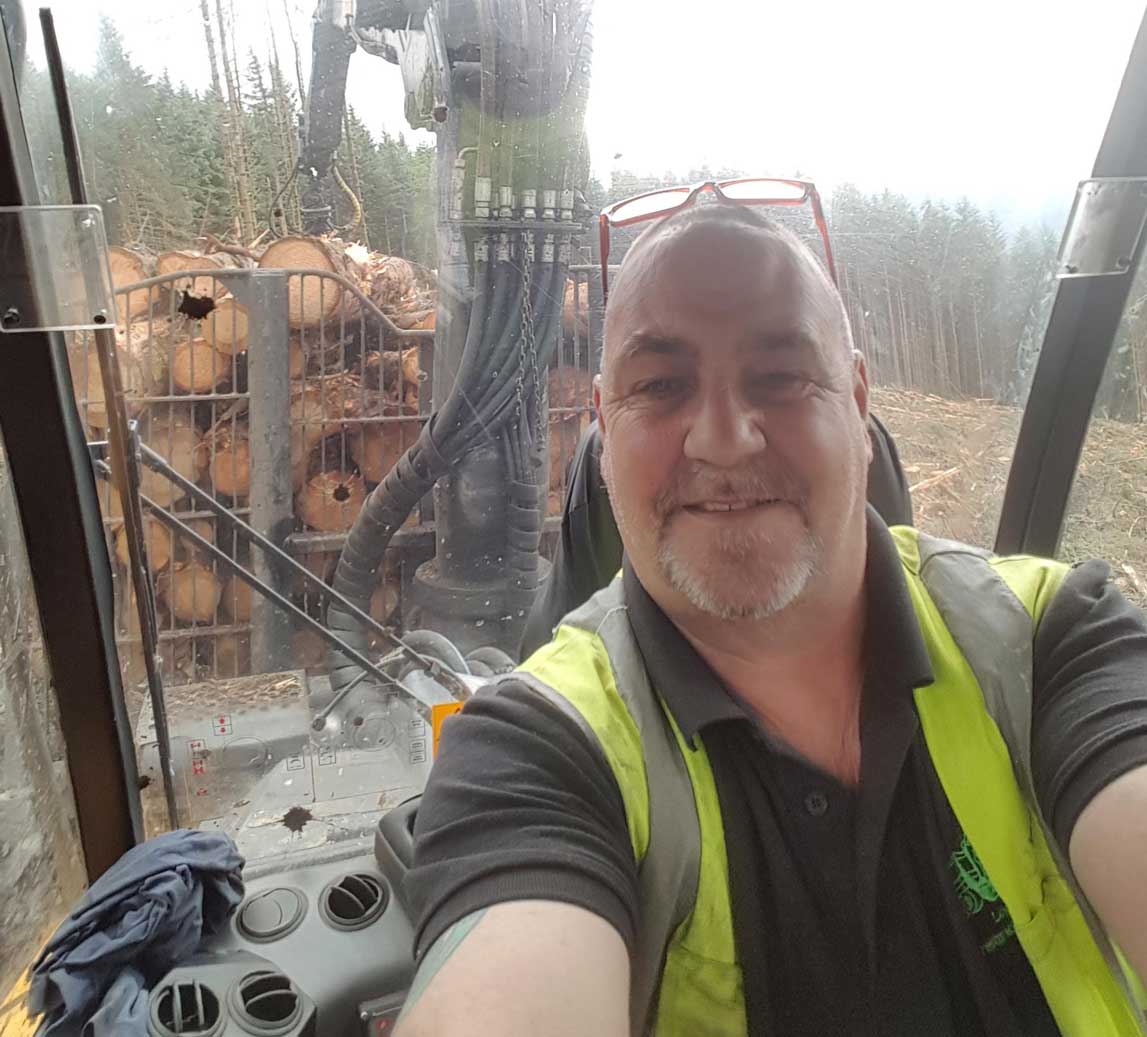
Kieran Anders is a forestry contractor working in the lake district. His work involves hand cutting and extracting timber using a skidder and tractor-trailer forwarder.
-
It is not possible to eliminate chain shot, but there are simple steps that can be taken to reduce the risk.
-
Arwel takes great pride in the fact that the mill has no waste whatsoever, “the peelings are used for children’s playgrounds, gardens and for farm animals in barns in the winter and the sawdust has multiple uses in gardens and farms as well.
-
Timber hauliers need to encourage young blood in, and also look after the hauliers we have, we need make the sector a safe and positive place to work.
FIND US ON
Woodland carbon scheme guide: start with the land
The first question is not how many tonnes a site might produce. It is whether the land can carry a sensible, compliant woodland scheme that would be planted and maintained without carbon income. Carbon projects must show additionality. In plain terms, the carbon money must be material to getting the planting done or improving its scale, specification or management.
A productive former arable field, marginal grazing block or poorly performing land parcel may have a case. Land already committed to planting through a planning condition, grant obligation or established commercial programme may not. The detail matters, particularly where public grant support is involved. Carbon and grants can often sit alongside one another, but the funding mix needs to be declared and checked so the same outcome is not paid for twice.
Site constraints remain forestry constraints. Check soil type and depth, elevation, exposure, access, drainage, archaeology, rights of way, utilities, neighbouring land and deer pressure before commissioning carbon figures. Deep peat and priority open habitats demand particular care. Planting the wrong ground simply to generate credits is bad land management and increasingly difficult to justify through the approvals process.
The proposed species mix should stand up as a woodland, not just as a model input. Productive conifers may suit parts of a commercial holding, while broadleaves, riparian planting and native woodland can be appropriate elsewhere. The trade-off is between establishment cost, predicted carbon, future timber value, resilience and the practical ability to manage the crop. A high projected figure is of little use if drought, browsing, windthrow or poor access makes the scheme expensive to establish and vulnerable to failure.
What the carbon figures actually represent
Early forecasts are estimates, not a stack of saleable credits. A project calculation predicts the net additional carbon likely to be captured over its stated period, after allowing for factors such as growth rates, management and risk. The figure will be affected by the planting design, species, yield assumptions and location.
Under the Woodland Carbon Code, early units are generally issued as Pending Issuance Units, often called PIUs. They represent a promise of future verified removals. Once the woodland has been checked and the claimed carbon has been delivered, verified units can be issued. Buyers may value those two products very differently. A landowner who budgets on the basis of a premium verified-unit price while selling PIUs upfront can be left with a sizeable gap.
Projects also carry a risk buffer. A portion of predicted carbon is set aside to cover losses across the scheme portfolio, such as fire, pests, disease or storm damage. This is sensible, but it means the headline forecast is not necessarily the volume available for sale. Ask for the gross projection, the buffer deduction, expected issuable units and the assumptions behind each figure.
Carbon prices are not fixed in the way a timber contract price is fixed for a defined period. They vary with buyer appetite, unit type, delivery date, co-benefits, contract terms and market confidence. Anyone presenting a single lifetime revenue number without explaining timing, fees, discounting and sales risk is giving only part of the picture.

Build the cashflow around real forestry costs
A carbon scheme needs a proper establishment and maintenance budget. Include ground preparation, plants, guards or fencing, planting labour, beating-up, vegetation control, road or track work where required, surveys, consultant fees, validation and verification costs, registry charges, insurance, legal work and the time spent administering the project.
Deer management is often where optimistic spreadsheets meet the real world. If a holding has resident fallow, roe, red or sika deer, the project needs a costed control plan and a clear view of who carries it out. A fence line that cannot be inspected, maintained and repaired will not protect either the crop or the carbon claim.
Consider when money arrives. Grant payments can support capital works, subject to scheme rules. Carbon income may be staged, deferred until verification, sold forward or paid under a developer agreement. These routes have different implications for working capital. A contractor planting their own ground may be comfortable with a longer return; a business funding establishment through borrowing needs firmer cashflow dates and a contingency allowance.
Do not ignore the opportunity cost of the land. If a parcel currently produces grazing, sporting income, biomass, quarry rent or a realistic development return, compare the net position over the full commitment period. For commercial forestry, model timber income as well. Carbon should not automatically rule out productive management, but felling, restocking and long-term carbon accounting must be planned from day one.
Contracts can outlast the people who sign them
The landowner must have clear, durable rights to enter the carbon arrangement. Freehold ownership is simplest, but leased ground, tenanted holdings, estates, common rights, sporting rights, mineral reservations and lender security can all complicate matters. Get the title, tenancy and finance position reviewed before a project is registered, rather than trying to remedy it when a buyer asks questions.
Read who owns the carbon units, who decides when and to whom they are sold, and who receives the proceeds. Some developers offer to fund design, registration and sales in return for a share of revenue or control of the units. That may suit an owner who wants less administration, but the percentage split is only one part of the deal. Check the minimum term, exclusivity, exit clauses, fees, sales commission, liability for under-delivery and what happens if the land is sold.
A woodland carbon commitment can affect valuation and saleability. It does not make land unsaleable, but a purchaser must accept the obligations and restrictions. Make sure the agreement explains assignment on sale, inheritance and changes of control. The same applies to access licences for monitoring teams and the records they will need.

Keep operations and compliance joined up
Once registered, a scheme requires evidence. Keep planting records, invoices, maps, species and stocking details, photographs, fencing and deer-control records, replacement-planting information and management plans in one organised file. That is basic job control, but it becomes crucial when validation or verification is due years after the original contractor has moved on.
The woodland will also need to meet the wider regulatory picture, including environmental assessment requirements, felling controls, grant conditions and any relevant designations. Carbon registration does not override normal forestry permissions. If the woodland is intended to produce timber later, build extraction routes, coupe design, water protection and restocking obligations into the plan now.
There is also a reputational point for contractors and owners supplying corporate buyers. Claims are under more scrutiny than they were a few years ago. Good documentation, credible forecasts and honest reporting of setbacks protect the project better than inflated figures ever will. If a section fails, deal with it early and record the remedial work.
Questions to put to a carbon developer or adviser
Before signing, ask for written answers on the projected units and buffer, the assumed sale price and sales route, every fee, the validation and verification timetable, the treatment of grant income, the management restrictions, and the liability if establishment or growth falls short. Ask for examples of how the proposed species mix performs on comparable ground, not just a generic model output.
It is also worth asking who will be there in year 15, 30 and 50. Carbon woodland is a long job. The strongest scheme partner is not necessarily the one offering the biggest first number, but the one whose contract, technical advice and reporting process still make sense when the crop needs attention.
A well-sited, properly costed project can add another dependable line to a forestry business and leave behind a useful woodland asset. Start with the ground, the management burden and the contract – then let the carbon calculation prove its worth.
Contact forestmachinemagazine@mail.com to get your products and services seen on the world’s largest professional forestry online news network.
#homeoflogging #writtenbyloggersforloggers #loggingallovertheworld
Written by loggers for loggers and dedicated to bringing you the latest forestry news