This is a complex question but the answer depends on how a forest is managed.
Can forests support human needs-Forest management is sometimes reduced to a simple choice: leave forests alone or cut trees. But forests are complex ecosystems and managing them means making decisions about much more than harvesting.
At its core, forest management is about maintaining forests over time — so that they can continue to provide ecological, social and economic benefits for current and future generations.
That’s a remarkable amount of work hours for a single machine, the Norcar 600 owned by Erkki Rinne is taken well care of, it even has the original Diesel engine.
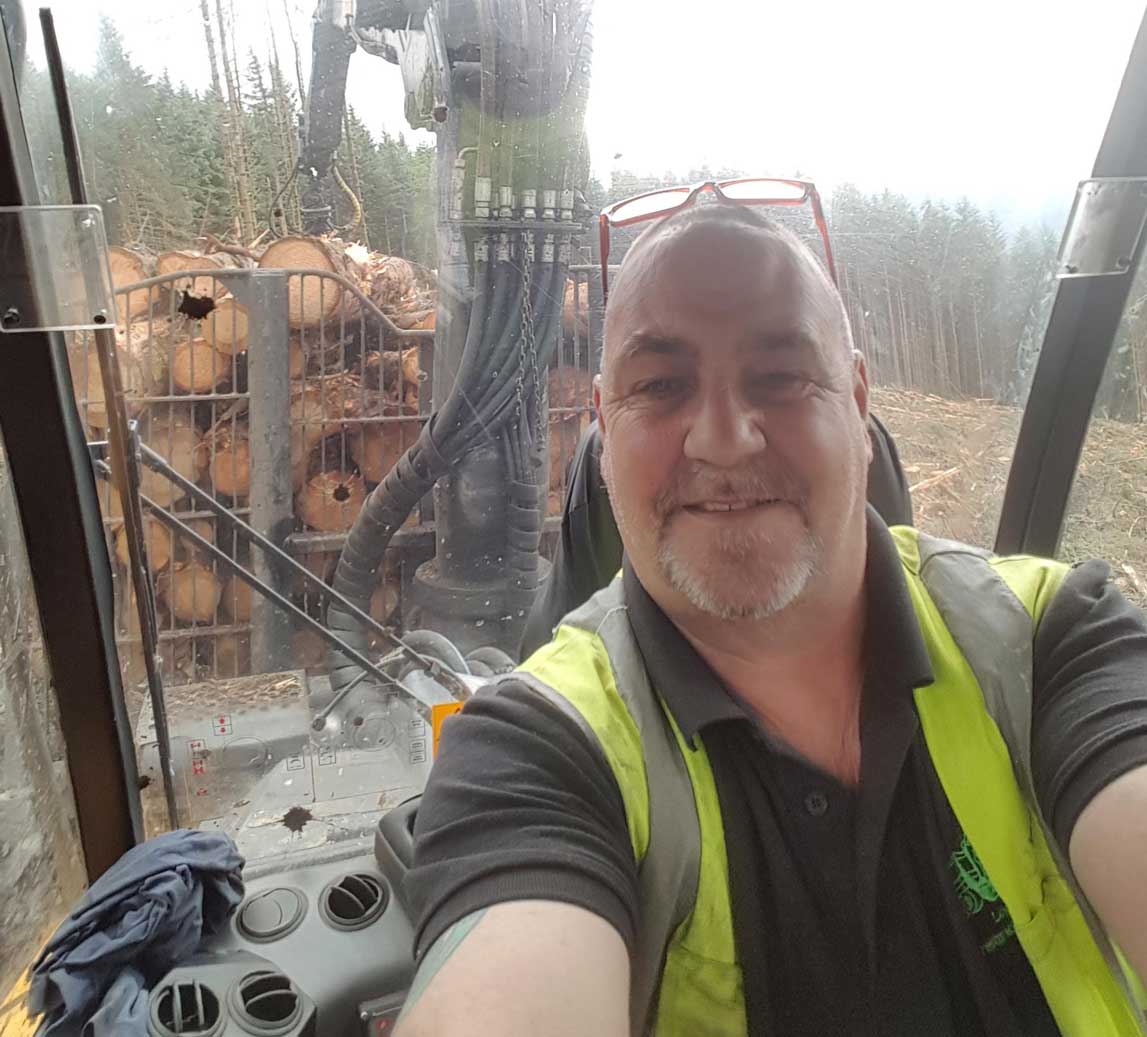
Kieran Anders is a forestry contractor working in the lake district. His work involves hand cutting and extracting timber using a skidder and tractor-trailer forwarder.
Arwel takes great pride in the fact that the mill has no waste whatsoever, “the peelings are used for children’s playgrounds, gardens and for farm animals in barns in the winter and the sawdust has multiple uses in gardens and farms as well.
Forest management is not simply about trees being cut down.
As forester Throstur Eysteinsson explains, the idea goes back to a fundamental principle of sustainability:
*From the beginning, it’s been more than just trees. It dealt with what we today call sustainability. In other words, making sure that when we utilise the forest, the forest grew back.”
That principle is still central today.
Forest management can range from very low-intensity intervention to much more intensive management. The right level depends on the forest, its condition, its surroundings, and the goals being pursued.
What can forest management involve?
It can include:
protecting habitats and biodiversity
regenerating and restoring forests
thinning dense groups of trees
reducing certain wildfire risks
protecting soils and water
providing recreation and other social and cultural benefits
producing timber and other forest products
maintaining areas where natural processes can continue with little or no intervention.
The aim is to consider these different objectives together rather than treating them as separate or competing choices.
For example, producing timber can provide income that allows forest owners to continue investing in regeneration and forest maintenance. Protecting a stream can benefit biodiversity while also safeguarding water. Maintaining different forest structures can support both ecological resilience and wildlife.
Forest management is therefore often about balancing connected objectives, rather than choosing one benefit and ignoring the others.
Different forests need different approaches
There is no single recipe for managing a forest.
A tropical forest, a boreal forest, and a temperate forest have different climates, species, ecological processes, and histories. Even two forests within the same region can have very different characteristics.
As forester Mabel Morán Guzmán explains:
“The conditions of a particular site matter when deciding what to plant and how to manage it. Not every species is suited to every forest or location.”
This is why forest management begins with understanding the forest itself.
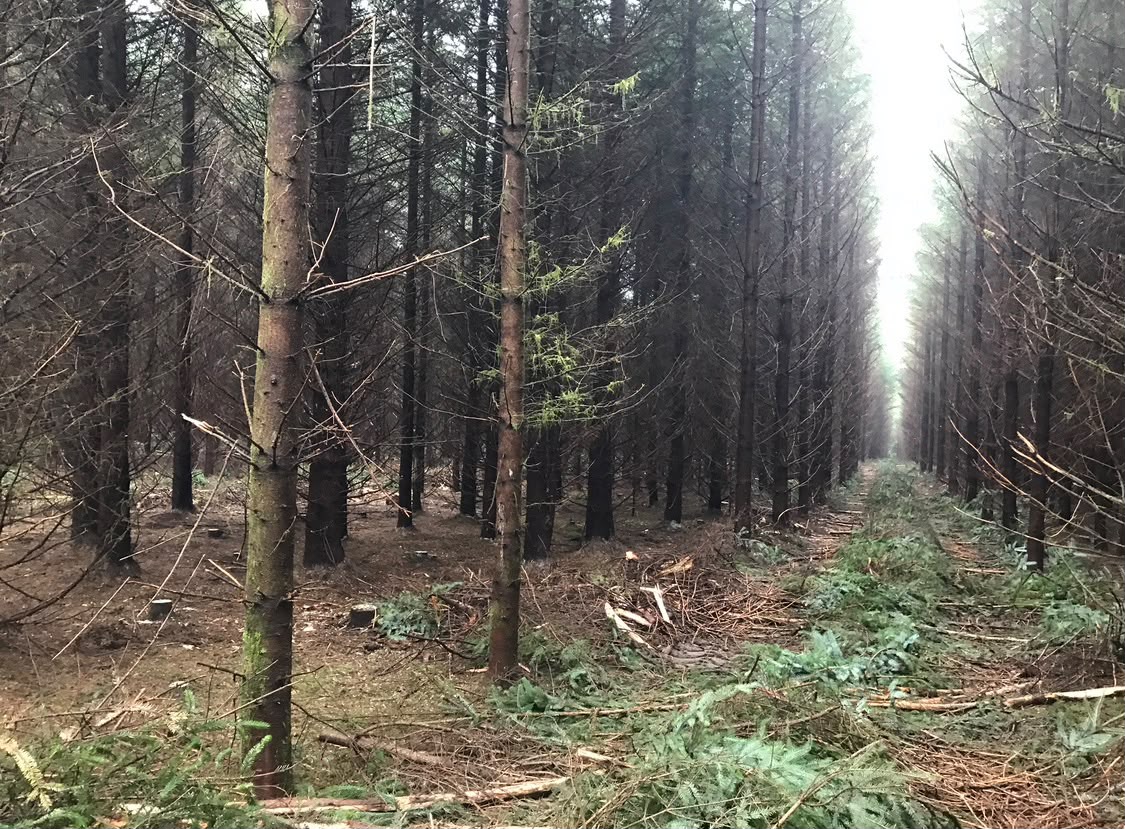
In one place, planting and active regeneration may be appropriate. In another, thinning may help create a healthier and more resilient forest structure. Somewhere else, the best decision may be to protect an area and allow natural processes to continue without intervention.
A healthy forest landscape does not necessarily look the same everywhere.
Maintaining a diversity of forest structures and habitats can itself be an important part of maintaining healthy landscapes.
Does harvesting destroy forests?
Harvesting, or removing trees to create wood products, is one of the tools that can be used in forest management. But harvesting is not the same thing as forest management and management does not end when trees are removed.
There can be ecological reasons to harvest or thin trees.
In a very dense forest, competition for resources can be high, and certain conditions can increase vulnerability to disturbances such as wildfire, insect outbreaks or drought. In some circumstances, reducing density can make a forest more resilient.
Thinning can also change the structure of a forest in ways that benefit wildlife species. Some species depend on more open conditions, while others need dense cover. Creating a variety of forest structures can therefore contribute to habitat diversity.
But the outcome depends on how harvesting is planned and carried out.
Foresters consider which trees to remove, which trees and habitats to protect, how the soil and surrounding ecosystem will be affected, and what happens afterwards.
Regeneration is part of the process.
In managed forests, harvesting is typically followed by regeneration – natural , planting, or a combination of both.
The objective is not simply to produce timber. It is to maintain the forest and its ability to provide benefits in the future.
Timber can also contribute to the long-term management of a forest in another way. Revenue from wood products can allow forest owners and managers to continue investing in regeneration, maintenance, monitoring, and protection.
In this sense, ecological, social, and economic considerations are connected. The goal is not the harvested tree itself.
As Hungarian forester Peter Hasulyó puts it:
The result of a forester’s work is the forest itself. It’s not wood. It’s not shade. It’s not carbon capture. It’s the existence of the forest.
Should forests always be left alone?
Sometimes, protection is the right approach.
There are forests and areas within forests where limiting human intervention is essential for conserving habitats, species or natural processes. Leaving a forest alone can itself be an active management decision.
But in other places, active management with intervention can help forests adapt, recover, and remain resilient.
The idea that forests are always healthiest when left completely untouched assumes that the conditions around them remain relatively stable. Today, many forests are facing rapid environmental change.
Climate change is altering temperatures, rainfall patterns ,and disturbance regimes. Forests are also affected by invasive species, pests, wildfire, and increasing pressures on land.
The pace of these changes can be faster than some species are able to adapt.
As Peter explains, forests have existed for millions of years without human intervention but the environmental conditions they experienced changed much more slowly than many of the changes we are seeing today.
This creates a new challenge.
The question is not simply:
Should we intervene, or should we leave forests alone?
It is:
When, where, and how can intervention help a forest remain healthy and resilient?
Forest management is not defined by harvesting.
It is not about controlling every aspect of nature.
And it is not always about leaving nature completely untouched.
It is about understanding the forest, its surrounding landscape, and the pressures it faces and making decisions with its future in mind.
Ultimately, successful forest management is measured not simply by how much wood is produced, how much carbon is stored, or how many trees are planted.
The result of a forester’s work is the forest itself.
It’s the existence of the forest.
Contact forestmachinemagazine@mail.com to get your products and services seen on the world’s largest professional forestry online news network.