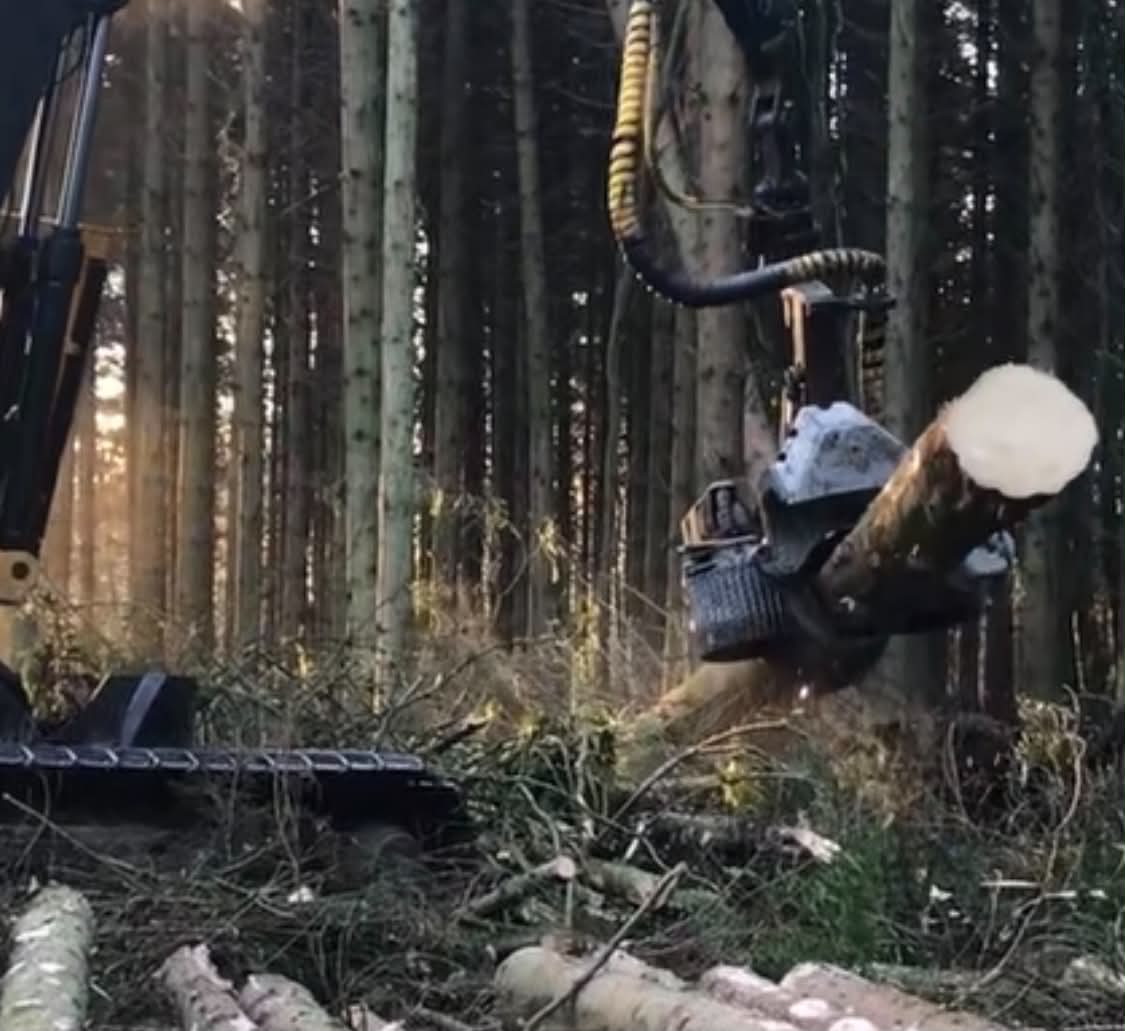
For most contractors, the decision sits on three things at once – the timber in front of you, the base machine behind the head, and the cost of keeping the whole package earning. Get those lined up and the rest becomes a lot simpler.
The first mistake buyers make is sizing from the maximum diameter alone. A harvester head may boast impressive cutting capacity, but if most of your work is first thinning or smaller second rotation softwood, that extra bulk can cost more than it returns. Added weight at the end of the crane affects reach, stability, fuel burn and slew performance, and it often slows handling in smaller timber where cycle speed matters more than headline cutting size.
-
The WeighPro Wireless Weighing Link represents a precise and dependable weighing system designed specifically for round timber, eliminating the need for re-calibration. This system offers operators minimal maintenance requirements, boasting an impressive battery life of up to two years between recharges.
-
That’s a remarkable amount of work hours for a single machine, the Norcar 600 owned by Erkki Rinne is taken well care of, it even has the original Diesel engine.
-
It is not possible to eliminate chain shot, but there are simple steps that can be taken to reduce the risk.
-
Arwel takes great pride in the fact that the mill has no waste whatsoever, “the peelings are used for children’s playgrounds, gardens and for farm animals in barns in the winter and the sawdust has multiple uses in gardens and farms as well.
-
Timber hauliers need to encourage young blood in, and also look after the hauliers we have, we need make the sector a safe and positive place to work.
FIND US ON
Equally, going too light creates a different set of problems. If you regularly work in heavy spruce, mature pine, larch or broadleaf clearfell, an undersized head will struggle for grip, feed consistency and delimbing quality. It may process the stems, but not cleanly or quickly enough to protect production.
So start with the crop you cut most often, not the odd oversized stem that turns up twice a year. Average diameter, stem form, branchiness, species mix and terrain all matter. Straight plantation softwood puts very different demands on a head than rough, tapered, heavily limbed hardwood or windblown salvage.
How to choose a harvester head for your base machine
The head and base machine have to work as one unit. That means more than simply checking that the excavator or harvester can lift the attachment. You need to consider hydraulic flow, pressure, crane tip lift, machine balance, and the actual working envelope, especially when processing at reach or on side slopes.
A head that technically fits can still leave the machine nose-heavy, slow on functions or short on usable reach. That affects productivity throughout the shift. It also affects operator confidence, which is harder to measure but obvious on-site. If the machine feels laboured with a full stem at reach, the setup is wrong.
Hydraulics are often where expectations and reality part company. Feed speed, saw performance and multi-function response all depend on the oil the base machine can actually deliver under load. A head may perform well on a manufacturer demo machine with ideal settings and fresh pumps, then feel ordinary on an older carrier in daily contract work. Buyers should be asking not only what the head requires, but how it behaves on the machine they already own.
There is also a business case in keeping the package balanced. A slightly smaller, faster head on a well-matched carrier will often out-produce a larger, more ambitious setup that is constantly working at its limit.
Feed rollers, knives and frame design decide a lot in the real world
This is where brochures rarely tell the whole story. Two heads with similar stated capacities can behave very differently once they are in dirty bark, crooked stems, or heavy branching.
Feed roller design affects grip, bark damage and feed consistency. Aggressive rollers can hold well in rough conditions, but they may mark stems more heavily and can be less forgiving where log presentation matters. Softer or more balanced roller patterns may suit cleaner production, but can lose traction on wet, icy or knotty material. There is no universal best choice. It depends on your species, product mix and ground conditions.
Delimbing knives deserve the same scrutiny. Knife geometry, pressure and travel make a major difference to how well the head cleans timber without tearing fibre or stalling in awkward form. If your work is mainly straight conifer, plenty of heads will cope. If you process bent, limby or variable stems, the difference between acceptable and good soon shows up in log quality and cycle time.
Frame design matters too. A head needs enough strength where the work happens, but overbuilding does not always mean better. Extra steel adds durability but also weight. The right frame is one that can handle your workload without handicapping the machine for the other 90 per cent of the job.
Measuring and control systems are not an afterthought
Most buying mistakes happen around steel and hydraulics, but poor measurement can be just as expensive. Length accuracy, diameter reading and calibration stability directly affect value recovery, especially where assortments are tight, and mills are unforgiving.
If you are cutting multiple products, the head’s measuring system and software need to be dependable and straightforward to calibrate. A system that is clever but awkward in the woods can become a nuisance very quickly. Operators need screens and controls that are clear, responsive and easy to adjust without digging through layers of menus in the rain.
Compatibility with your wider setup also counts. If you already run a fleet with specific software, data-handling practices, or operator preferences, switching to a head that does everything differently may cause more disruption than benefit. Standardisation across machines can make training, parts holding and troubleshooting much easier.
Think hard about the kind of work you actually tender for
A harvester head is not only a technical decision. It is a contract decision. The best head for a large clearfell contractor in Sitka spruce may be the wrong one for a mixed-operation business moving between thinning, estate work and awkward parcels.
If your work changes month to month, flexibility has a value of its own. A head that handles smaller timber efficiently but still has enough authority for occasional heavier stems may return more over a year than a specialist unit built around one ideal crop. On the other hand, if your contracts are predictable and high volume, a more purpose-built head can make sense.
This is where honest self-assessment matters. Buy for the work you are likely to do, not the work you hope to win someday. Plenty of expensive iron has been justified on future contracts that never arrived.
Dealer support and parts back-up can outweigh a small price difference
In forestry, downtime usually costs more than the savings made at purchase. That is especially true with harvester heads, where wear parts, hoses, rollers, sensors and saw components all live a hard life.

Before deciding, ask what support looks like after delivery. Not the sales pitch – the actual support. How quickly can common parts be supplied in your region? Are there field service engineers who understand the product? Can you get sensible phone support when a sensor fault stops production on a Friday afternoon? Is the dealer carrying stock, or ordering everything in?
The same goes for routine maintenance. Some heads are simply easier to live with. Daily greasing points, hose routing, access to valves, chain tensioning, roller changes and knife replacement all affect workshop time and operator goodwill. A head that saves half an hour a day in checking and servicing soon earns that back.
New, used or rebuilt – each has its place
New kit offers a warranty, current software, and usually better financing options. It also comes with the highest entry cost. For businesses with steady work and a long replacement plan, that can be justified.
Used heads can offer strong value, but condition matters far more than age alone. Hours, frame wear, pin-and-bush play, roller motor condition, measuring wheel wear, saw unit history, and previous welding repairs all need a proper look. A tidy paint job means very little if the structure or hydraulics are tired.
Rebuilt heads sit somewhere between the two. If the rebuild has been done properly, with documentation and reputable components, they can be a sensible route into a higher-spec model without full new price. But a vague rebuild claim is not enough. Buyers need invoices, parts detail and a clear view of what has and has not been replaced.
A practical way to make the final call
If you are narrowing down two or three heads, compare them against the same job profile. Look at the timber you cut most, the machine you will mount it on, expected annual hours, local support and the operators who will actually run it. Then weigh production, fuel use, service access and likely resale value together.
A demo in representative timber is worth more than a thick specification sheet. Better still, if your own operator can run it. They will usually spot balance, visibility, feed behaviour and control feel within a few stems.
Forest Machine Magazine readers know most machinery decisions are won or lost in the margins rather than the headline figures. Choosing a harvester head is no different. The right one is not the biggest, newest or cheapest. It is the head that suits your crop, suits your career, and keeps earning when the weather turns, the timber changes, and the contract still has to be finished by Friday.
If you can walk away from the buying process knowing exactly why that head fits your work, you are probably looking at the right machine.
Sign up for our free monthly newsletter here
Contact forestmachinemagazine@mail.com to get your products and services seen on the world’s largest professional forestry online news network.
#homeoflogging #writtenbyloggersforloggers #loggingallovertheworld
Written by loggers for loggers and dedicated solely to the equipment used in forestry operations.