
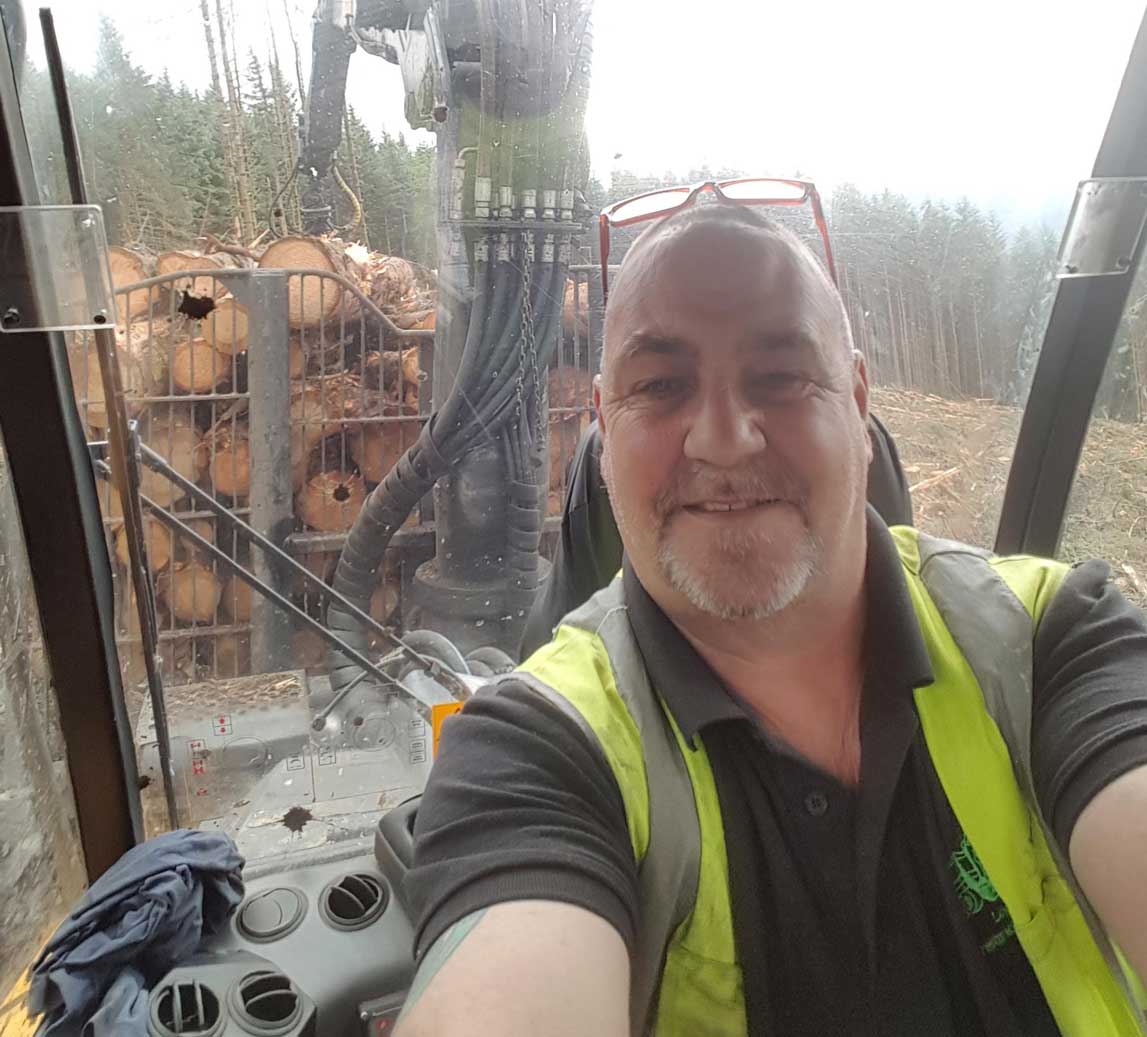
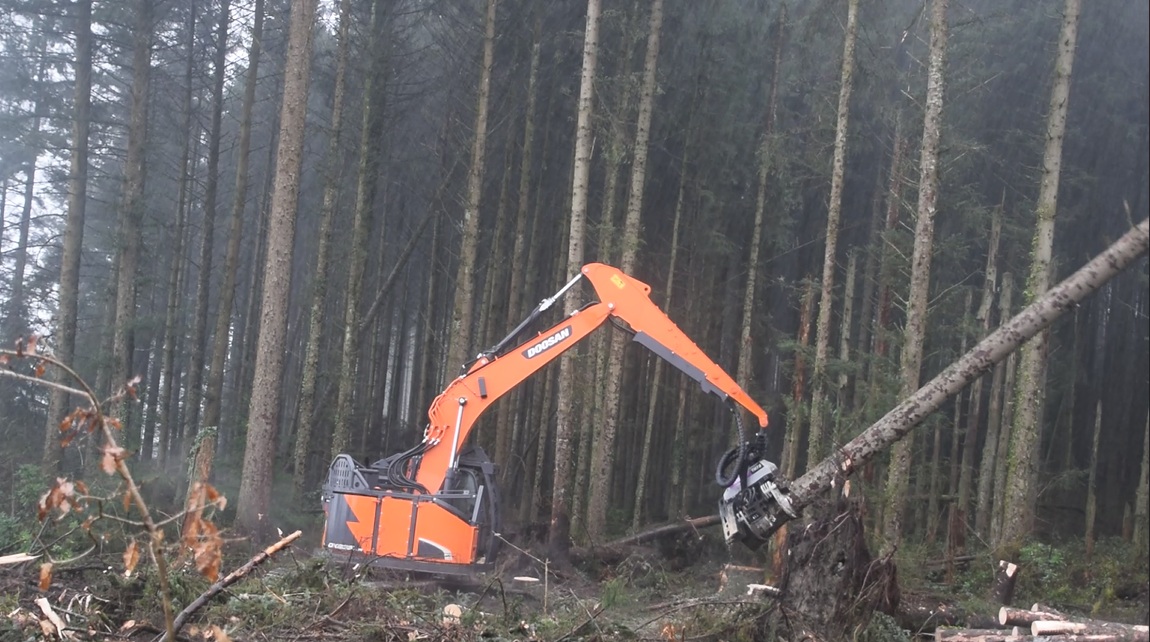
A harvester stopped at the stump is not just an inconvenience. It is lost production, a waiting forwarder, a haulage plan slipping by the hour and a contractor still carrying the same finance, fuel and labour costs whether timber moves or not.
If you want to know how to reduce harvesting downtime, the answer is rarely one big fix. It usually comes from tightening the whole operation, from workshop routines to extraction planning.
Downtime in forestry has a habit of looking like bad luck when it is often process failure. A burst hose, a chain issue, a head sensor fault or a machine bogged in poor ground can all feel unavoidable on the day. In reality, many stoppages are predictable, or at least easier to recover from quickly if the business is set up properly.

-
That’s a remarkable amount of work hours for a single machine, the Norcar 600 owned by Erkki Rinne is taken well care of, it even has the original Diesel engine.
-
Kieran Anders is a forestry contractor working in the lake district. His work involves hand cutting and extracting timber using a skidder and tractor-trailer forwarder.
-
It is not possible to eliminate chain shot, but there are simple steps that can be taken to reduce the risk.
-
Arwel takes great pride in the fact that the mill has no waste whatsoever, “the peelings are used for children’s playgrounds, gardens and for farm animals in barns in the winter and the sawdust has multiple uses in gardens and farms as well.
-
Timber hauliers need to encourage young blood in, and also look after the hauliers we have, we need make the sector a safe and positive place to work.
FIND US ON
How to reduce harvesting downtime starts before the machine moves
The biggest gains are usually made before the machine leaves the yard. A machine that arrives on site with worn feed rollers, tired hoses, poor bar stock control or overdue servicing is already halfway to a stoppage. Preventive maintenance is not exciting, but it is cheaper than losing a shift waiting on a fitter or parts delivery.
That means daily checks need to be more than a box-ticking exercise. Operators should be looking properly at bar and chain condition, hose chafing, hydraulic leaks, track or tyre damage, saw unit wear, grease points and guarding. Small issues picked up at first light are often sorted before they become half-day failures.
Service intervals matter as well, but they need to reflect real operating conditions. A harvester working in steep ground, heavy brash or dirty timber may need closer attention than the book suggests. Manufacturers give a baseline. Good contractors adjust from experience.
A clean machine is easier to inspect and safer to work on. It also runs cooler. Packed debris around the engine bay, coolers, and belly plates can cause overheating and make faults harder to spot. Cleaning is often the first job dropped when everyone is busy. It should be treated as part of uptime protection.
The real causes of downtime on harvesting sites
Mechanical breakdown gets most of the attention, but it is only one part of the picture. Harvesting downtime also comes from poor site layout, weak timber presentation, extraction bottlenecks, weather exposure, fuelling delays and simple communication failures.
A harvester can be mechanically sound and still lose hours because stacks are not being cleared, the forwarder is tied up elsewhere or the lorry schedule has fallen apart. In that case, the machine is waiting rather than broken, but the cost to the contractor is much the same.
Ground conditions are another common factor. If the site has not been properly assessed for access, brash management, and extraction routes, machines end up working more slowly than they should or getting stuck altogether. The temptation is to blame the weather. Sometimes that is fair. Sometimes, the job was always going to be marginal once the rain arrived.
Operator habits make a bigger difference than most firms admit
The same make and model can yield very different uptime figures between two operators. One machine will run cleanly through the contract with minor wear items and planned stops. Another will chew through bars, chains, hoses, and bearings because the operator is pushing too hard, using poor technique, or skipping checks.
Good operators reduce downtime by the way they handle the machine. They avoid unnecessary strain on the crane, monitor head alignment, keep the saw unit operating properly, and detect changes in performance before alarms or failures occur. They also report defects early, rather than nursing a problem until it becomes a recovery job.
That said, training is often treated as optional once someone can produce. That is short-sighted. Experienced operators still benefit from machine-specific refresher work, especially when new software, new heads or different timber conditions are involved. A contractor paying for proper familiarisation will usually get it back in lower wear and fewer stoppages.
Parts control and workshop support win time back
One of the fastest ways to lose production is to depend on next-day parts for items you already know will fail at some point. Bars, chains, sprockets, filters, common hoses, sensors, solenoids and electrical connectors should not all be ordered reactively. Critical spares need to be held in stock, either in the yard or in a well-managed service vehicle.
The exact stock level depends on fleet size, dealer proximity and how remote the contract is. A contractor working deep into rural sites cannot operate on the same assumptions as a business ten minutes from dealer support. Holding parts ties up cash, but waiting two days for a modest component is usually far more expensive.
Workshop support also needs to match the scale of the operation. Some smaller firms rely heavily on operator maintenance and dealer call-outs, which can work if the fleet is modest and local backup is strong. Larger contractors generally need dedicated in-house support to stay ahead. There is no universal model, but there is a clear rule: if breakdown response is regularly slow, the support structure is too thin.
Site planning is as important as machine reliability
A reliable machine on a poorly organised site will still underperform. Good planning reduces non-productive time by keeping the harvesting flow steady. That includes sensible rack layout, extraction distances that match the ground and machine mix, clear stack locations and realistic handover between harvesting, forwarding and haulage.
At thinning sites, poor timber presentation can significantly slow processing. On clearfell, the issue is more often stack management and keeping product streams separated without choking the working area. Either way, the aim is the same – keep the machine cutting rather than waiting, repositioning excessively or cleaning up avoidable site disorder.
Fuel and consumables planning should be part of the same conversation. If fuelling means stopping at awkward times or losing long periods to support vehicle delays, the site system is not doing its job. Efficient operations treat fuel, oil, grease and saw consumables as uptime items, not background admin.
How to reduce harvesting downtime with better data
Most contractors know which machine is troublesome, but fewer track why downtime happens in enough detail to fix it properly. Recording stoppages by cause gives a much clearer picture. You can then separate wear-related failures from operator-related damage, supplier delays, site access issues and plain bad luck.
Modern telematics can help, particularly for fault codes, idle time, fuel burn and service scheduling. But the value depends on whether someone actually reviews the information and acts on it. Data on its own does not improve uptime. It only helps if it changes maintenance timing, operator behaviour or job planning.
Simple records still matter. A notebook in the workshop or a shared downtime log can quickly reveal patterns. If the same hose route keeps failing, the issue may be installation or guarding. If one site repeatedly causes saw damage, timber condition, or cutting practice may be the real culprit.
Dealer relationships and supplier choice still matter
Price matters in contracting, but the cheapest buying decision can become the most expensive during a busy harvesting window. Machine brand, dealer support, parts availability and fitter response all affect downtime exposure. That does not mean the most expensive machine is always the safest bet. It means after-sales support should carry real weight when making a purchase.

The same goes for consumables and wear parts. Cheap bars, chains, filters or hydraulic components may look attractive on paper, but false economy shows up quickly in reliability. Forestry is hard on equipment. Components that cannot stand the work will not save money for long.
This is one area where experienced buyers usually think beyond the list price. Uptime support, service access and product consistency are commercial issues, not extras.
Build slack into the system where it counts
Every contractor wants full utilisation. The problem is that a schedule with no slack leaves no room to recover when something goes wrong. If one machine stops, the whole chain starts backing up. That is when downtime becomes expensive across the business, not just on one unit.
A bit of spare capacity in labour, backup equipment or service cover can look inefficient until the first major stoppage. Then it becomes the reason the contract stays on track. Not every firm can justify keeping spare machines, but most can improve resilience by better planning for support and avoiding overcommitting the fleet.
Forest Machine Magazine readers will know there is no magic answer here. Some downtime comes with the territory, especially in tough ground, foul weather and demanding timber. But the firms that lose the least production are usually not the luckiest. They are the ones that maintain hard, plan honestly, train properly and treat every lost hour as something worth investigating.
If you want fewer stoppages this season, do not wait for the next breakdown to start asking why the machine is standing still.
Sign up for our free monthly newsletter here
Contact forestmachinemagazine@mail.com to get your products and services seen on the world’s largest professional forestry online news network.
#homeoflogging #writtenbyloggersforloggers #loggingallovertheworld
Written by loggers for loggers and dedicated solely to the equipment used in forestry operations.