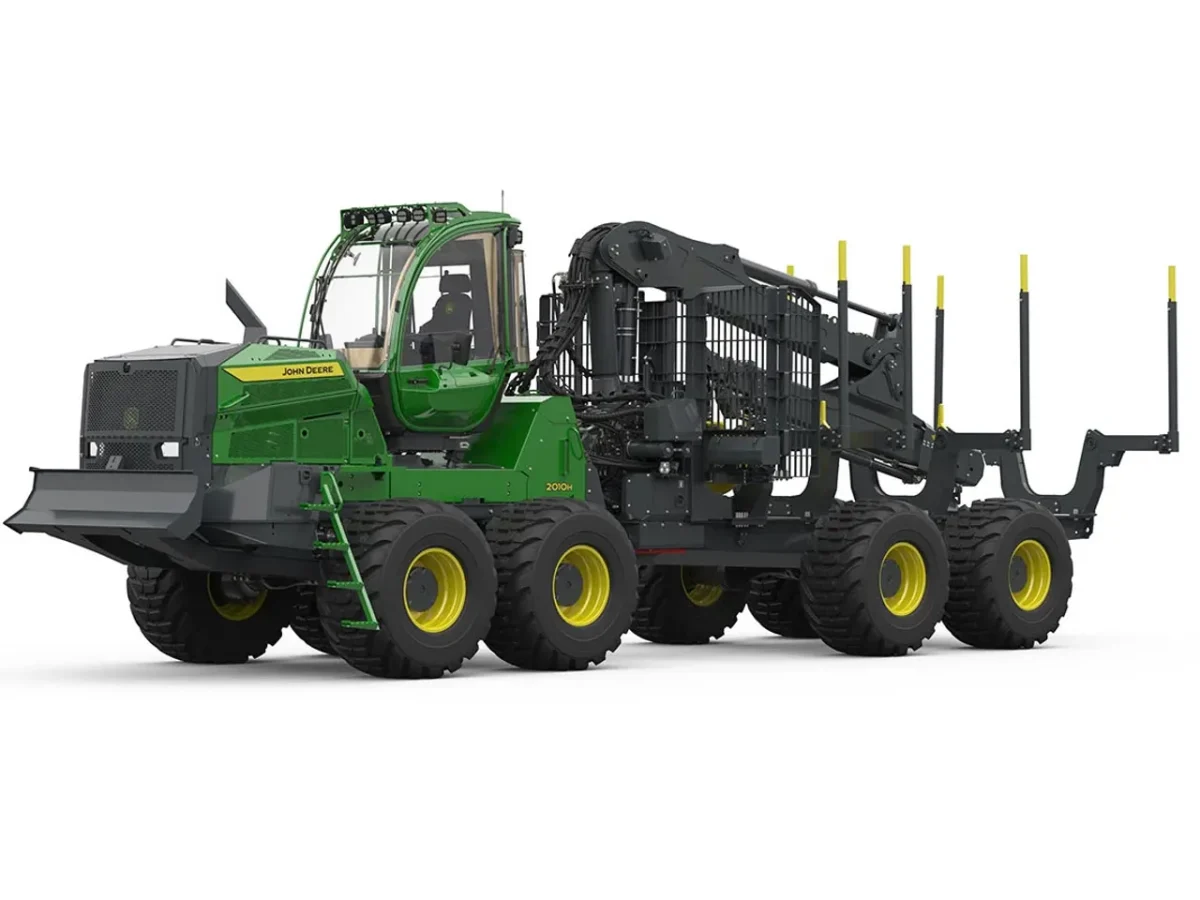
Challenging terrain and weather conditions place high demands on forest machines in Norway. The winter testing period demonstrated how the 2010H forwarder’s new technology and operator support solutions improve productivity and make everyday work easier.
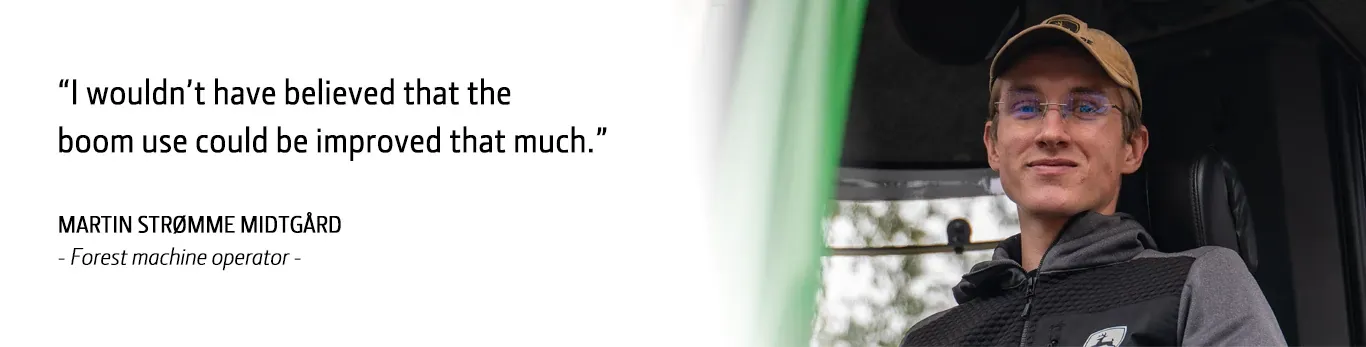
“When I was asked if I wanted to drive the John Deere 2010H test machine, I felt privileged. It felt like recognition for always doing my best at work,” says 26-year-old Norwegian forest machine operator Martin Strømme Midtgård.
“The whole experience was amazing. I sent my comments to John Deere in Finland and Norway, and they listened to me. The job as a test operator felt very meaningful.”

-
The WeighPro Wireless Weighing Link represents a precise and dependable weighing system designed specifically for round timber, eliminating the need for re-calibration. This system offers operators minimal maintenance requirements, boasting an impressive battery life of up to two years between recharges.
-
That’s a remarkable amount of work hours for a single machine, the Norcar 600 owned by Erkki Rinne is taken well care of, it even has the original Diesel engine.
-
It is not possible to eliminate chain shot, but there are simple steps that can be taken to reduce the risk.
-
Arwel takes great pride in the fact that the mill has no waste whatsoever, “the peelings are used for children’s playgrounds, gardens and for farm animals in barns in the winter and the sawdust has multiple uses in gardens and farms as well.
-
Timber hauliers need to encourage young blood in, and also look after the hauliers we have, we need make the sector a safe and positive place to work.
FIND US ON
Martin’s current work machine is a 1910G forwarder. Compared to that, the 2010H felt like a whole new generation to him.
“Now both the operator and the forest have the best possible machine available. It helps overcome all challenges and supports productivity. The best thing is the new technology. The machine’s systems are on a whole new level,” he says.
The best machine on rocky terrain
Martin works in the mountainous regions of central Norway where the terrain is wet. The area is mainly covered with naturally grown spruce and pine trees, but there are also some gnarled birch trees, which make the work more challenging.
“The terrain is so rocky that I wouldn’t want to drive here with machines from other manufacturers. The suspension of the 2010H makes for a comfortable and fast ride,” says Martin
There is little cultivated forest in the area, and the quality of the timber to be harvested is not the best possible. Therefore, it is mainly used for pellet production.
Many features that make everyday life easier
Martin tested the 2010H a year ago in the winter. Since it was a test machine, it hadn’t been completely finalized yet. The test period got off to a challenging start when the machine did not initially perform as expected in the steep Norwegian terrain, and Martin was frustrated.
However, the situation quickly improved when a group of engineers came from Finland to adjust the machine on site. The Norwegian has fond memories of the encounter.
“When I drove to the meeting place, the Finns had already arrived. They were all wearing the same kind of clothes: yellow jackets and black and yellow pants, as well as hats and gloves. They surrounded the machine and spoke Finnish among themselves. They looked just like a bunch of characters from the Minions animated movie,” Martin says and laughs.
After the engineers’ visit, the test machine was also suitable for Norwegian conditions, and testing got underway in earnest. In Martin’s experience, the boom of the 2010H, for example, was strong and powerful, yet easy to use.
“IBC 3.0 is a really big improvement. I wouldn’t have believed that the boom use could be improved that much. The larger load space is also a really good feature.”
Winter weather highlights the importance of the details of the 2010H. When it’s -20° outside, it’s a big advantage if you only have to step outside the warm cabin occasionally. Operators will appreciate the spacious fuel tank, which reduces the number of refueling stops.
“For example, checking the engine oil is easy through a small hatch. Keyless ignition is also a nice feature on cold mornings,” Martin notes.
Interested in the big picture
“I like the forest and the peace and quiet. For me, it’s not about driving big machines, but how everything is connected. What kind of timber does the forest industry need today, and what are the modern ways of producing it? When the expertise of people working in the forestry sector develops, it means caring for nature in a way that gives forest owners a good return,” says Martin.
He believes that the best operators are committed to their work. They care about both the forest and the quality of their work.
“It’s important to me that John Deere employs skilled engineers who I can discuss things with and even ask dumb questions. They increase my knowledge about the machines and the forest industry. I want to do my job well and think about how things can be done even better.”

Source; deere.com
Sign up for our free monthly newsletter here
Contact forestmachinemagazine@mail.com to get your products and services seen on the world’s largest professional forestry online news network.
#homeoflogging #writtenbyloggersforloggers #loggingallovertheworld
Written by loggers for loggers and dedicated solely to the equipment used in forestry operations.