Finance is not just a way to get a machine through the gate. The term, deposit, residual value and repayment profile all affect what work you can take on and how much pressure sits on every load leaving site. The best deal is rarely the one with the lowest monthly figure.
Forest Machine Finance Guide
Before discussing finance, put a hard number on the work the machine is expected to do. Estimate productive hours, likely standing time, fuel burn, operator costs, maintenance, transport and the rate you can realistically secure. Base it on contracts you hold or have a firm route to win, not on a best-case annual production figure.
-
The WeighPro Wireless Weighing Link represents a precise and dependable weighing system designed specifically for round timber, eliminating the need for re-calibration. This system offers operators minimal maintenance requirements, boasting an impressive battery life of up to two years between recharges.
-
That’s a remarkable amount of work hours for a single machine, the Norcar 600 owned by Erkki Rinne is taken well care of, it even has the original Diesel engine.
-
It is not possible to eliminate chain shot, but there are simple steps that can be taken to reduce the risk.
-
Arwel takes great pride in the fact that the mill has no waste whatsoever, “the peelings are used for children’s playgrounds, gardens and for farm animals in barns in the winter and the sawdust has multiple uses in gardens and farms as well.
-
Timber hauliers need to encourage young blood in, and also look after the hauliers we have, we need make the sector a safe and positive place to work.
FIND US ON
Start with the work, not the machine
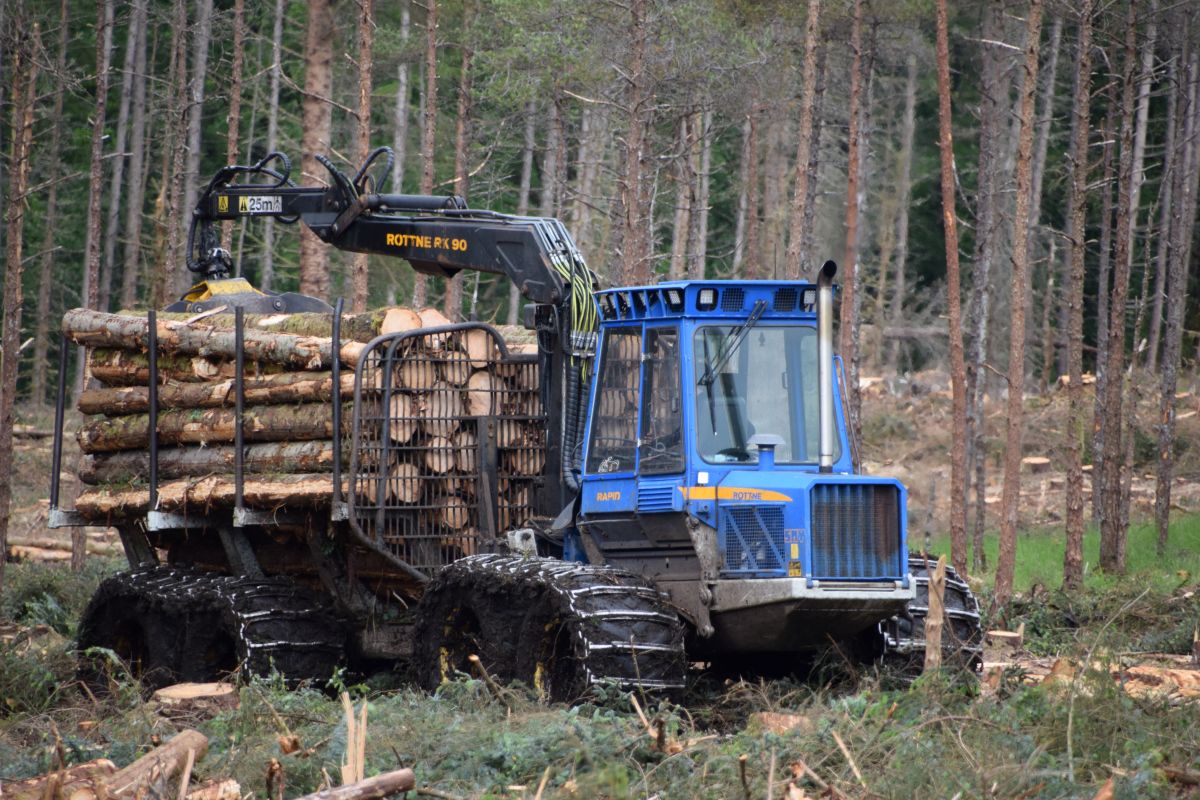
A forwarder bought for a long thinning programme has a different risk profile from a harvester intended to chase short-term clearfell work. Equally, a machine working mainly on private estates may see more uneven payment patterns than one tied into a regular supply agreement with a large timber buyer.
Build the forecast around a poor month as well as a good one. Wet weather, weight restrictions, breakdowns, delayed harvesting permissions and soft timber markets can all cut production. If the repayment only works when the machine is flat out for every available hour, the facility is too tight.
Do not forget the full package. A harvesting head, tracks, chains, guarding, measuring system upgrades, low-ground-pressure equipment, trailer, service cover and delivery can add a serious amount to the invoice. So can the first set of wearing parts that are needed before the machine has earned a pound.
Forest machine finance guide: know the main routes
For most forestry businesses, hire purchase remains the straightforward route to ownership. You pay a deposit, make fixed instalments over an agreed period and own the equipment once the final payment and any option-to-purchase fee are settled. It suits contractors planning to run a machine for several years and retain a saleable asset at the end.
The advantage is clarity. You know the balance, the term and generally where you stand. The trade-off is that ownership risk sits with you. If machine values drop, hours build faster than expected or the work changes, you still have to clear the agreement.
Finance lease arrangements can reduce the upfront outlay and may offer more flexibility at the end of term, depending on the agreement. They are often worth considering where a contractor expects to replace equipment on a planned cycle, but the wording matters. Understand who carries residual-value risk, what end-of-term options are available and whether an early settlement will be realistic if a contract ends.
Operating leases and rental-style arrangements can work for specialist attachments, short-duration requirements or businesses wanting a known cost without retaining the asset. They are less common as a universal answer for high-hour forestry machinery, particularly where site conditions, damage risk and non-standard specifications affect the funder’s appetite. Still, they can be useful where flexibility has more value than eventual ownership.
Refinance is another tool, not a sign that a business has failed. If a machine is owned outright or has sufficient equity, refinancing can release capital for a deposit, a major repair, a second unit or a period of tight cashflow. It should be used with care. Turning an owned machine back into monthly debt can solve an immediate problem while creating a longer one.
Read the quote beyond the monthly payment
A low monthly repayment can be created by stretching the term, increasing a final balloon payment or reducing the deposit. That may be sensible, but it is not automatically cheaper or safer.
Ask for the total amount payable, the interest rate or equivalent annual rate, all documentation and option fees, and the cost of settling early. Check whether the rate is fixed for the full term. If the facility includes a balloon, establish exactly what has to happen at the end: pay it, refinance it, sell the machine or trade it in.
A balloon should be supported by a conservative view of future value. A well-supported, sought-after machine with sensible hours, a clean service history and strong dealer backing may justify one. A highly specialised setup, a hard-worked ex-demonstrator or equipment entering a weak second-hand market needs more caution. Do not let an optimistic trade-in figure make an unaffordable machine appear affordable.
Also check what is being financed. Some funders will finance the machine, head and approved attachments together. Others may treat consumables, transport, installation, insurance or software subscriptions differently. A quote that appears to cover the full package can leave a contractor finding cash for several sizeable extras before first production.
Protect working capital and VAT planning
A deposit demonstrates commitment and reduces the amount financed, but draining the bank account for the biggest possible deposit is not always good business. Forestry contractors need cash for fuel accounts, operator wages, chains and bars, tyres or tracks, repairs, lorry costs and the lag between invoicing and being paid.
VAT is often a key pressure point. Depending on the deal structure and the business’s VAT position, VAT may be payable upfront or handled differently within the agreement. Get the timing clear before signing, then match it to your VAT return cycle and available funds. Do not assume a VAT reclaim will arrive in time to cover the first repayment.
Where income is seasonal, discuss whether repayments can be structured to reflect the business. Some funders can offer seasonal profiles or an initial repayment holiday, although neither makes the debt disappear. A reduced payment period must usually be recovered elsewhere in the term, and interest continues to matter.
Insurance is another non-negotiable cost. Confirm the funder’s requirements for comprehensive cover, hired-in plant cover where relevant, security, tracking and the named interested party. A machine off the road after theft or fire is bad enough. Finding that the policy did not meet the finance condition is worse.
Match the term to the machine’s earning life
The finance term should broadly reflect the period in which the machine will earn reliably for your business. Extending a deal beyond the likely replacement point may reduce the monthly cost, but it can leave you paying for a machine that is becoming expensive to keep productive.
For a newer harvester or forwarder with dependable dealer support, a longer term may suit a stable workload. For an older machine, the calculation needs more margin. Older kit can be a sound buy when the price is right and the operator knows it, but repair risk and downtime need to be funded alongside the repayment.
Service history is finance information as much as it is workshop information. Hour records, maintenance invoices, condition reports and a realistic assessment of undercarriage, crane, head and hydraulics all affect value. On used equipment, an independent inspection can be cheaper than one unexpected transmission, slew-ring or hydraulic bill.

Give lenders a proper forestry case
A lender unfamiliar with the sector may see a forest machine as unusual plant. Make the case easy to understand. Present recent accounts or management figures, current commitments, a summary of contracts and expected production, details of the machine, and the deposit source.
Explain the operator experience and the maintenance plan. If the machine replaces hired-in capacity, show the saving. If it allows you to add a second shift or bring forwarding in-house, show the likely benefit without exaggerating it. Good information will not turn a weak proposal into a strong one, but it can prevent a sound forestry business being judged on incomplete paperwork.
Be honest about existing commitments. Finance on harvesters, forwarders, excavators, lorries and trailers can stack up quickly, particularly where several agreements mature at different times. Keep a simple schedule showing monthly payments, final balloons, expiry dates and security held over assets. It is one of the quickest ways to spot a cashflow pinch before it becomes a difficult conversation.
Questions worth asking before signing
The agreement should be clear on whether you can settle early, sell the machine with the funder’s consent, transfer it within the business, or use it outside the original expected work. Ask what happens if the machine is written off and the insurance payment is lower than the outstanding balance. Gap cover may be relevant, but read its exclusions rather than treating it as a blanket answer.
If the supplier offers manufacturer-backed finance, compare it with an independent specialist quote. Dealer finance can be competitive and convenient, particularly where it is tied to a service package or campaign rate. An independent broker or lender may be better placed on used machinery, mixed assets or an unusual business structure. The right route depends on the machine, the security and the strength of the business, not the logo on the paperwork.
A finance agreement should leave room for forestry to behave like forestry. Keep enough cash back for the rough weeks, cost the machine against real production, and make sure the final payment is a plan rather than a hope. Productive kit earns its keep in the stand, but sensible finance is what keeps it working when the site, weather or market turns against you.
Contact forestmachinemagazine@mail.com to get your products and services seen on the world’s largest professional forestry online news network.
#homeoflogging #writtenbyloggersforloggers #loggingallovertheworld
Written by loggers for loggers