
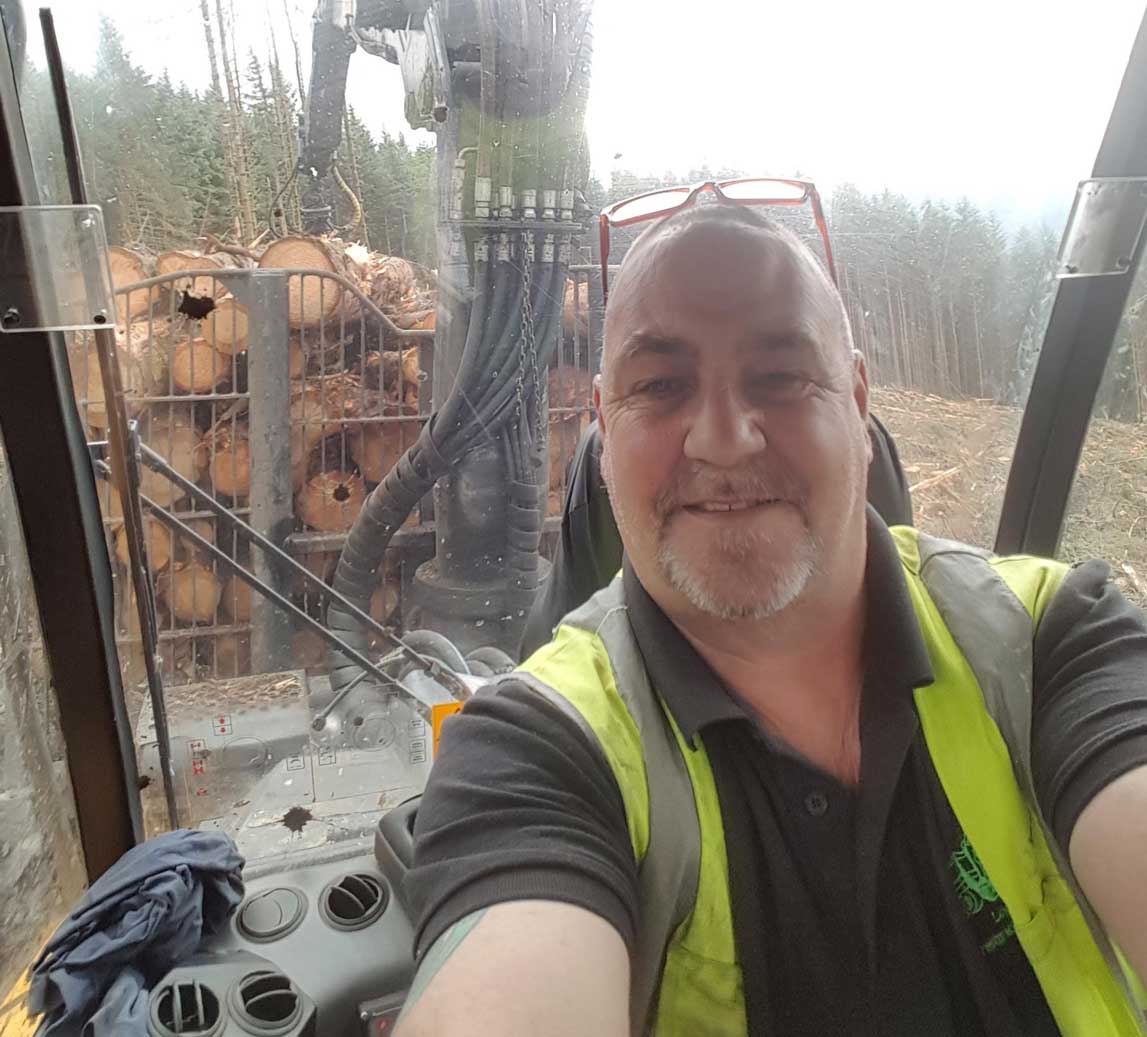

A grant-funded job can look attractive on paper, then turn awkward when the specification starts dictating machine access, timing and paperwork
Forestry grants can put real money into woodland creation, restocking, infrastructure and habitat work, but they are rarely a blank cheque for a contractor’s next purchase. The operators and businesses that get value from them understand the conditions before the chainsaws, harvesters and timber lorries arrive.

-
The WeighPro Wireless Weighing Link represents a precise and dependable weighing system designed specifically for round timber, eliminating the need for re-calibration. This system offers operators minimal maintenance requirements, boasting an impressive battery life of up to two years between recharges.
-
That’s a remarkable amount of work hours for a single machine, the Norcar 600 owned by Erkki Rinne is taken well care of, it even has the original Diesel engine.
-
It is not possible to eliminate chain shot, but there are simple steps that can be taken to reduce the risk.
-
Arwel takes great pride in the fact that the mill has no waste whatsoever, “the peelings are used for children’s playgrounds, gardens and for farm animals in barns in the winter and the sawdust has multiple uses in gardens and farms as well.
-
Timber hauliers need to encourage young blood in, and also look after the hauliers we have, we need make the sector a safe and positive place to work.
FIND US ON
For woodland owners, managers and contractors across Great Britain, the opportunity is not just in winning a payment. It is in using public funding to make a site productive, safer to work and commercially viable for the long term. That may mean building an all-weather forest road, addressing deer pressure, restoring a failed crop or making a difficult block manageable.
What forestry grants are really designed to fund
Most forestry grant schemes focus on public outcomes rather than a contractor’s capital needs. Governments and public bodies want more resilient woodland, improved biodiversity, better water protection, productive timber resources, carbon benefits and access where it is justified. The payment is attached to specified work and an agreed result.
That distinction matters. A woodland owner may receive support for planting, fencing, tree protection, access infrastructure or management operations. A harvesting contractor may benefit indirectly because the funded work creates a tendered package, improves the road network or releases future timber. But a new forwarder, harvester head or timber lorry is not automatically eligible simply because it will be used in the woods.
There can be exceptions. Some rural development or business-support programmes have offered capital support for processing, biomass, innovation, safety or environmental improvements. Eligibility, intervention rates and application windows change regularly, so equipment buyers should never assume a previous round will return on the same terms. Build an investment case that works without grant money, then treat any confirmed award as support rather than the foundation of the deal.
Forestry grants differ across Great Britain
Forestry is devolved, and the scheme landscape is not identical in England, Scotland and Wales. The broad principles are familiar, but payment rates, application routes, approved activities, technical standards and priorities can differ markedly.
In England, woodland creation and management support is commonly tied to approved designs, species choice, environmental safeguards and long-term maintenance. Scotland has its own forestry grant framework, with strong emphasis on productive forestry alongside wider environmental outcomes. Welsh applicants work under a separate set of woodland and rural support arrangements. Northern Ireland also operates its own forestry support system.
For a contractor working near a border or across the country, this is more than an administrative detail. The same activity – for example, access road formation or restocking after felling – may need a different specification, evidence trail or approval process depending on where the site sits. Before pricing work, establish who is funding it, what has been approved and who carries the risk if the work falls outside the agreement.
Where funded work creates real operational value
The strongest grant cases tend to address a constraint that has been holding a woodland back. That could be poor establishment following windblow or clearfell, no practical extraction route, excessive browsing, unstable tracks, invasive species or a neglected crop that needs bringing back into management.

Forest roads are a clear example. A properly designed and consented road can reduce rutting, shorten extraction distances, keep haulage moving in poorer weather and make future thinning possible. It also has to be right. Culverts, drainage, aggregate specification, gradients, turning space and environmental controls all affect whether the asset performs over its working life. A cheap road that fails after the first hard winter is no saving.
Woodland creation can generate substantial work too, but it is often more demanding than a simple planting rate suggests. Ground preparation, plants, guards, fencing, beat-up requirements and maintenance all need allowing for. On exposed ground, establishment risk can be high. A contractor who prices only the first pass may find that repeated visits and remedial work wipe out the margin.
Management grants can also support thinning, ride widening, coppicing, rhododendron control and habitat work. These jobs may be smaller and less mechanised than a clearfell contract, but they can fill gaps in the programme and build local relationships. The key is to be honest about access, extraction volume and the time needed to meet the site specification.
Read the agreement before you price the job
A grant agreement should be treated much like a machine finance document: read every condition, not just the headline figure. The funded work may prescribe species, stocking density, fence type, road dimensions, timing restrictions, protection measures, inspection stages and maintenance periods. It may also state what evidence must be retained before a claim is paid.
For contractors, the practical questions need answering before mobilisation. Is the consent in place? Are ecological surveys complete? Who marks boundaries, exclusions and retained trees? Is there a haulage route that will take loaded timber lorries without causing a dispute with the highway authority or neighbours? Has the client allowed for VAT, design fees, planning, surveys and contingencies where these are not covered?
Do not assume that a grant award means the site is ready to work. An approved application can still be held up by nesting bird constraints, wet ground, archaeological features, utility crossings or a landowner who has not secured access. If the programme is tight, put responsibilities and delay provisions into the contract rather than leaving them to a verbal understanding at the gate.

Build costs from the ground up
Grant rates are often fixed or capped. Your costs are not. Diesel, haulage, operator time, wear parts, insurance, machine transport and downtime must still be recovered. This is why a rate that looks generous to a client can be unworkable for the business delivering it.
Walk the site with the proposed operation in mind. Measure extraction distance rather than estimating it from a map. Check bearing capacity at loading points. Identify where the low-loader can get in and turn, where fuel will be stored and whether there is reliable communications coverage for lone operators. A road job may also need imported stone, geotextile, drainage materials and specialist plant that must be scheduled around other work.
Where a specification is unclear, price the assumptions separately. State the number of passes, volume of material, distances, stump treatment requirement, fencing detail and any allowance for brash handling. That is not being difficult. It is the difference between a controlled job and a dispute when the inspector asks for something neither party included.
Evidence and inspections are part of the job
Grant-funded work carries more record-keeping than many private commercial contracts. Keep dated photographs before, during and after the operation. Retain delivery tickets for plants, stone, fencing and other materials. Record weather delays, machine hours where relevant, site meetings, variations and any instruction from the client or forestry agent.
Good evidence protects everyone. It helps the applicant submit a clean claim, gives the contractor proof of what was done, and makes it easier to resolve a query months later. Photographs should show scale and location, not just a close-up of a new culvert or a line of guards. A simple site plan and consistent photo points can save a lot of argument.
Inspections can happen before payment, after completion or during a maintenance period. If work is rejected because it does not meet the approved standard, the question of who funds remedial work quickly becomes a commercial issue. Contractors should make clear that they are pricing to the issued specification, while clients must provide accurate plans and obtain any required approvals.
Common mistakes that cost applicants money
The first is treating the grant as the project budget. A payment rate is not the same as a fully costed work plan. The second is leaving contractors out until the application is already drafted. A machine operator or experienced road builder can often spot an impossible access arrangement, an underestimated haul distance or a drainage problem before it becomes expensive.
Another regular mistake is underestimating aftercare. Tree planting does not end when the last bundle is lifted off the trailer. Weed control, beating up, guard checks, fence repairs and deer management can determine whether the grant-funded woodland actually establishes. The same applies to roads, where drains and culverts need maintaining if the formation is to survive extraction traffic.
Finally, avoid chasing a grant that does not suit the woodland. Productive forestry, native woodland, riparian planting, restoration and amenity work all have different objectives. Forcing the wrong prescription onto a site can reduce both the grant outcome and the future timber value.
Make grant work part of the long game
The best forestry grants support work that would be sensible even without the paperwork: access that improves extraction, restocking that protects a future crop, and management that leaves a block safer and more productive. For contractors, early involvement is where the value lies. Bring practical costs, machine limits and site reality to the table before the application is signed, and the funded job stands a far better chance of paying for itself when the work starts.
Contact forestmachinemagazine@mail.com to get your products and services in front of the world’s largest professional forestry online news network.
#homeoflogging #writtenbyloggersforloggers #loggingallovertheworld
Written by loggers for loggers and dedicated to bringing you the latest forestry news