
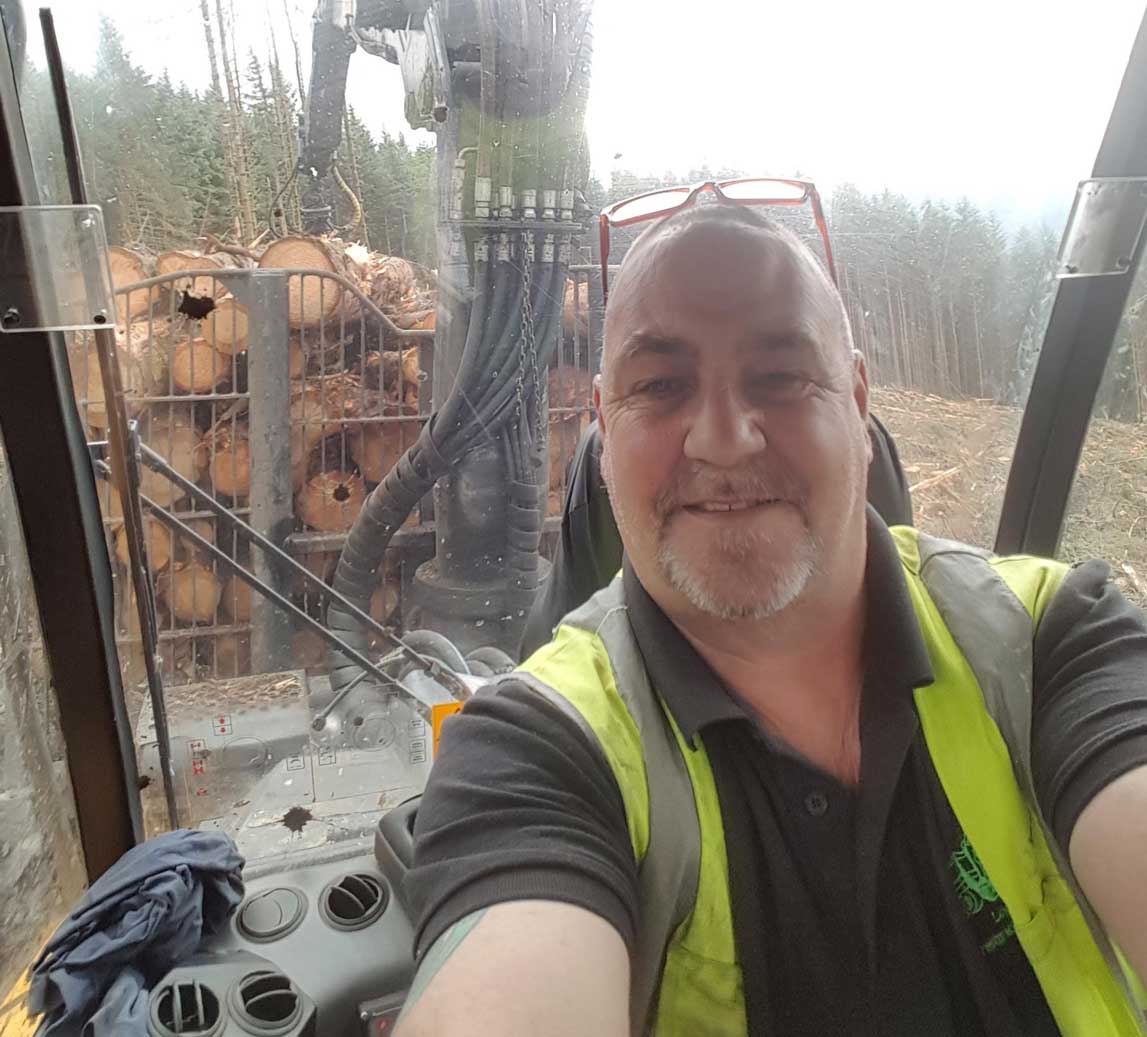
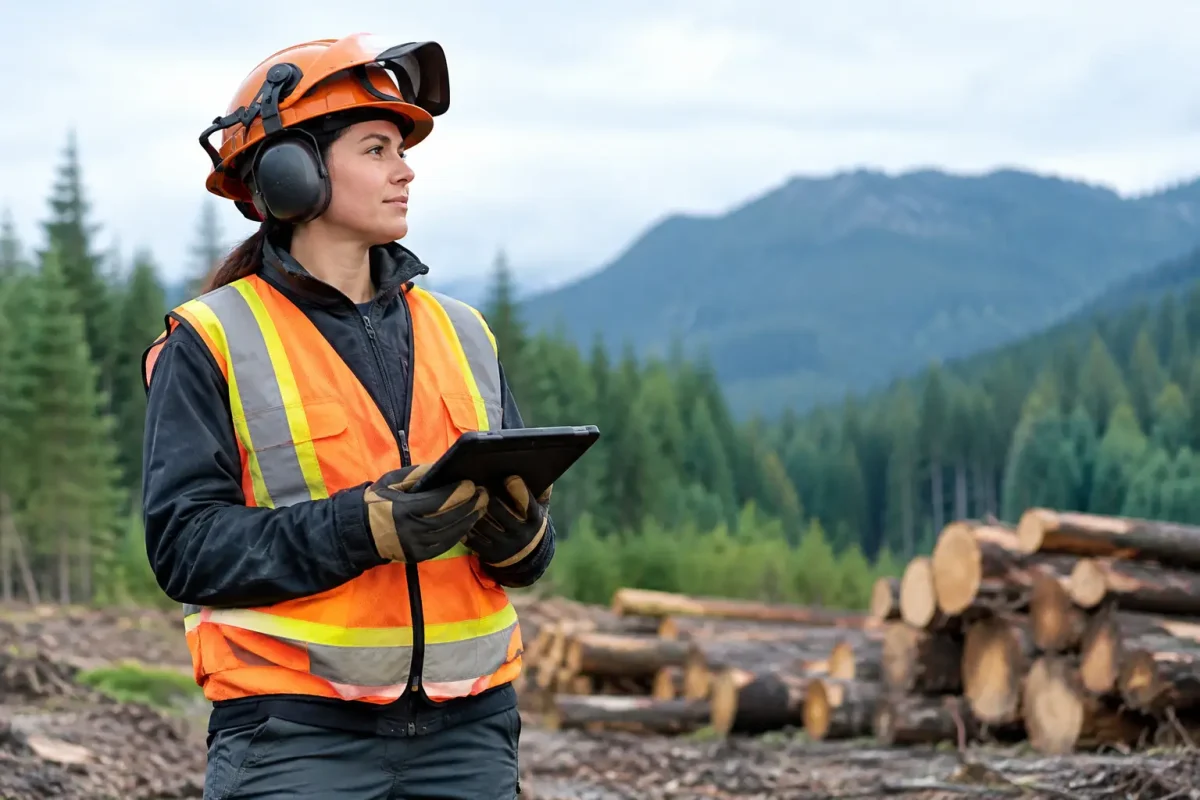
A machine can be in first-class order, the job can be priced properly and the timber can be moving, yet one weak point in operator competence can stop the whole site.
Guide for Safer Forestry Harvesting Sites-A forest operator competency guide is not a folder exercise for the office. It is the working standard that shows whether people can carry out their role safely and efficiently, without creating risk for the rest of the harvesting team. For contractors, site managers, and principal contractors, competence must hold up when conditions change. A ticket proves that training took place. It does not automatically prove that the operator remains capable on a steep, wet site, working beside live haulage, dealing with difficult timber or operating an unfamiliar machine.
-
The WeighPro Wireless Weighing Link represents a precise and dependable weighing system designed specifically for round timber, eliminating the need for re-calibration. This system offers operators minimal maintenance requirements, boasting an impressive battery life of up to two years between recharges.
-
That’s a remarkable amount of work hours for a single machine, the Norcar 600 owned by Erkki Rinne is taken well care of, it even has the original Diesel engine.
-
It is not possible to eliminate chain shot, but there are simple steps that can be taken to reduce the risk.
-
Arwel takes great pride in the fact that the mill has no waste whatsoever, “the peelings are used for children’s playgrounds, gardens and for farm animals in barns in the winter and the sawdust has multiple uses in gardens and farms as well.
-
Timber hauliers need to encourage young blood in, and also look after the hauliers we have, we need make the sector a safe and positive place to work.
FIND US ON
What operator competence means on a working site
Competence combines training, practical ability, experience, supervision, and judgement. In forestry, that judgement matters because the job rarely stays as planned. Ground conditions deteriorate, extraction routes cut up, timber quality changes and machine downtime puts pressure on the programme.
A competent harvester operator understands more than the controls. They can assess whether the machine is stable, choose a sensible working position, maintain exclusion distances, and recognise when a stem, stack, or slope has become unsafe. A forwarder operator needs the same awareness, alongside load security, route selection, ground protection and the discipline to stop before a rut becomes a recovery job.
The standard should apply across the site, not only inside the cab. Chainsaw users, banksmen, fuel operatives, mechanics, and visiting drivers all need a clear understanding of their work limits and the hazards others create. No one should have to guess where the extraction route runs, where timber is stacked, or when a machine is about to swing.
Forest operator competency guide: start with the role
The quickest way to create a meaningful competency system is to define each role as it is actually carried out on your sites. Generic descriptions are rarely enough. A contractor working mostly on roadside thinning has different demands from one running a harvester and forwarder on remote upland clearfell.
For each role, set out the machine or equipment used, the tasks expected, the risks involved and the level of independence required. A newly qualified operator may be capable of routine work but still need close supervision around steep slopes, overhead hazards, difficult hardwood or public access routes.
Training certificates and relevant competency cards belong in the record, but they are only the starting point. Check that certification is current, appropriate to the equipment and relevant to the task. If an operator has been trained on a base machine but is now using a new head, winch-assist system, or specialist attachment, determine what familiarisation and additional instruction are required.
Practical familiarisation is not optional
New machinery can change the job considerably. A larger harvester may bring different reach, tail swing and ground pressure. A new control system can alter how the operator sets up, measures timber or responds to alarms. A higher-capacity forwarder may encourage overloading if the operator has not been properly briefed on stability and route limits.
Record familiarisation, but make it practical. Give the operator enough time to inspect the machine, work through controls, understand daily checks and discuss the manufacturer’s operating limits. Pairing a less experienced operator with a proven hand for the first shifts is usually cheaper than repairing damaged guarding, recovering a machine or explaining an incident.
Assess what people do, not what they say
The most useful competence assessments happen on site, during normal work. They should assess preparation, operation, and shut-down rather than a short conversation in the yard.
An assessor or competent supervisor should watch how an operator completes pre-start checks, reports defects and checks the work area before starting. During the shift, focus on machine positioning, safe distances, communication, production choices, and reactions to changing conditions. At the end of the job, check parking, isolation, refuelling arrangements, and how defects are handed over.

Avoid making assessment a hunt for minor faults. The purpose is to establish whether someone can work safely and consistently, then identify what support is needed. An operator may be quick and technically skilled but poor at reporting damage. Another may be cautious and reliable but need coaching on log presentation, sorting or reducing unnecessary travel. Both points affect the business.
Good evidence can include observation records, training certificates, induction records, toolbox talks, maintenance reports and supervisor sign-off. Keep it proportionate. The record needs to demonstrate competence and action taken, not bury the site team in paperwork they will stop reading.
Refresh competence before the job catches you out
No single refresher interval suits every forestry operation. The right frequency depends on the role, the risk, how often the work is carried out and whether the operator is regularly observed. High-risk tasks, long gaps away from a machine and repeated near misses all justify earlier reassessment.
A refresher is particularly sensible after a serious incident, a change in work method, the introduction of new equipment or a return from extended absence. It is also worth acting when a supervisor sees standards slipping. Late defect reporting, damaged handrails, poor stacking, routine overreach and casual radio discipline are usually early warnings, not isolated habits.
Toolbox talks have a place here, provided they deal with the actual site. A short discussion about brake checks, machine access, windblow, fuel spill response, or separation from timber lorries can reinforce standards when tied to the day’s work. Reading out a generic sheet every Monday will not improve decisions in the cab.
Supervision must match experience and risk
One supervisor cannot watch every machine all day, especially across a spread-out harvesting site. That does not remove the need for supervision. It means the site plan must be realistic about who needs support, when checks will take place and how operators can raise concerns.
New starters, agency workers and operators moved onto unfamiliar work deserve more contact in the first days. Check-ins should cover more than production figures. Ask whether the route is holding, visibility is adequate, the machine is operating within its limits, and the team understands the day’s separation arrangements.
Experienced operators should not be treated as beyond scrutiny. They often work independently and carry substantial responsibility for production, machine condition and site safety. Their knowledge is valuable, but it needs to sit within agreed rules. A long incident-free record is a good sign, not a reason to ignore changing conditions.
Build competence into commercial decisions
Competence is often discussed after an incident, when it should be considered at the planning and pricing stage. If a contract allows no room for proper induction, machine familiarisation, supervision or refresher training, the cost has simply been pushed into risk.
The same applies to labour cover. Bringing in an operator at short notice may keep the shift moving, but only if you’ve checked their tickets, experience, and machine knowledge. A few hours spent confirming suitability is better than discovering halfway through a shift that the operator hasn’t used that head, doesn’t know the radio protocol, or is unfamiliar with the site emergency arrangements.
For business owners, a clear competency record also makes it easier to deploy people sensibly. You can see who is ready for more responsibility, who needs mentoring and where skills are concentrated in one individual. That matters when a key operator is off sick, a new contract starts, or a machine is replaced.
Make the standard visible in the forest
The best competency systems are not hidden in a compliance folder. They show up in tidy machine checks, clear exclusion zones, sensible extraction routes, proper defect reporting and operators willing to stop work when conditions are wrong.
Keep the process practical, review it after difficult jobs and let experienced operators help shape it. Forestry competence is earned shift by shift, and the strongest sites are those where people have the skill, authority, and backing to make the safe call before the job gets away from them.
Contact forestmachinemagazine@mail.com to get your products and services in front of the world’s largest professional forestry online news network.
#homeoflogging #writtenbyloggersforloggers #loggingallovertheworld
Written by loggers for loggers and dedicated to bringing you the latest forestry news