
James Jones & Sons Engineering Division played an essential role in forestry history, with its well-known brands, Highlander and Highland Bear, gaining worldwide recognition.
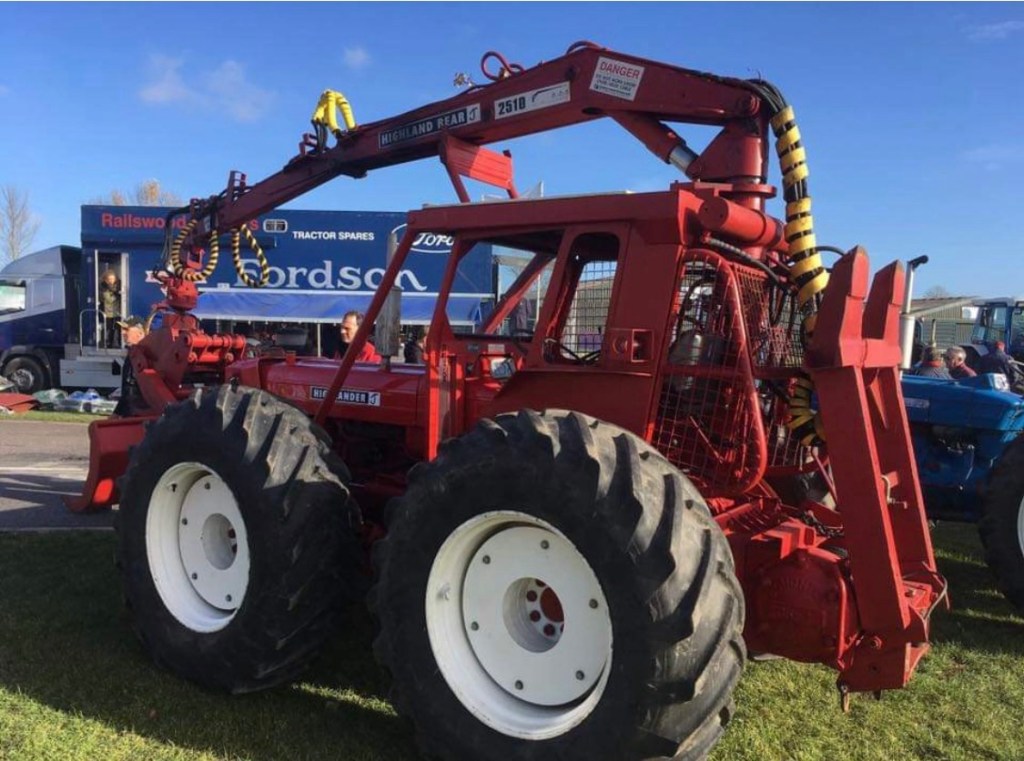
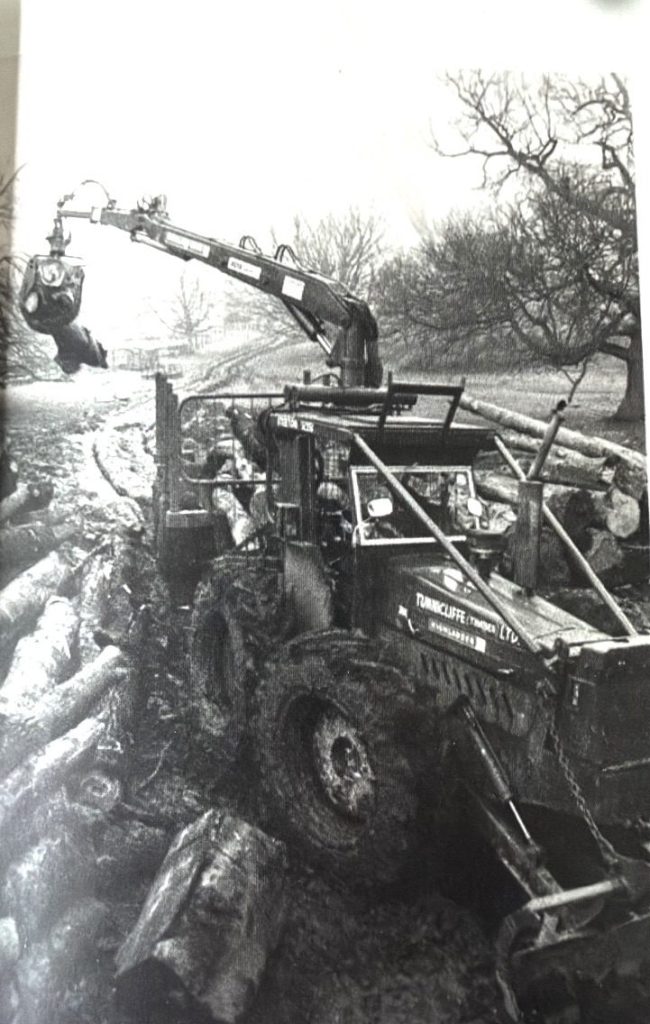
In 1976, as I embarked on my journey in forestry, one company clearly emerged as the leader in forest machinery sales and tractor conversions: James Jones and Sons from Larbert. Their “Highlander” tractors and “Highland Bear” loaders became iconic across the UK, celebrated for being the go-to brand during the 70s and 80s

-
The WeighPro Wireless Weighing Link represents a precise and dependable weighing system designed specifically for round timber, eliminating the need for re-calibration. This system offers operators minimal maintenance requirements, boasting an impressive battery life of up to two years between recharges.
-
That’s a remarkable amount of work hours for a single machine, the Norcar 600 owned by Erkki Rinne is taken well care of, it even has the original Diesel engine.
-
It is not possible to eliminate chain shot, but there are simple steps that can be taken to reduce the risk.
-
Arwel takes great pride in the fact that the mill has no waste whatsoever, “the peelings are used for children’s playgrounds, gardens and for farm animals in barns in the winter and the sawdust has multiple uses in gardens and farms as well.
-
Timber hauliers need to encourage young blood in, and also look after the hauliers we have, we need make the sector a safe and positive place to work.
FIND US ON
Not long after launching my magazine in 2016, I had the privilege of meeting an extraordinary individual, James V Stronach, who I was lucky enough to call a friend. He was a treasure trove of knowledge about James Jones & Sons Engineering Division. James worked under the talented chief engineer, Bill Baillie, and quickly became involved in designing their Highlander skidders and forwarders. Bill was a hands-on leader, and it wasn’t long before James found himself in the workshop, bringing some of his own designs to life.
Unfortunately, James passed away this year, and I, for one, miss him terribly.

Most people in the industry know James Jones and Sons as one of the largest family-owned timber processing companies in Europe, with annual sales well in excess of £140 million, but the company’s history is much broader, with a long association with the foundry and shipbuilding industries.
The company’s roots go back to 1838, when Thomas Jones started it after learning his trade as a boat builder from his father, John. Carpenters usually bought timber from the woods, and Thomas became an expert at assessing and valuing trees; within a few years, he established his own timber business in the small town of Camelon, close to Larbert.

In 1840, James was born, and as he grew up, he dedicated several years to learning the timber business from his father. The company has been passed down through five generations of the Jones family and has diversified into sectors beyond saw-milling and timber engineering, including shipbuilding (Jones Buckie), a foundry (Tones & Campbell), an engineering division, and the production of telegraph and transmission poles and nails.
In the 1950’s JJ&S were actively involved in the engineering side of the forestry business and the two men who were to have a major impact on pushing the engineering department forward were Bill Nicoll who started as an apprentice in 1946 and Bill Baillie who was appointed to look after the fleet of motor vehicles and mechanical plant.
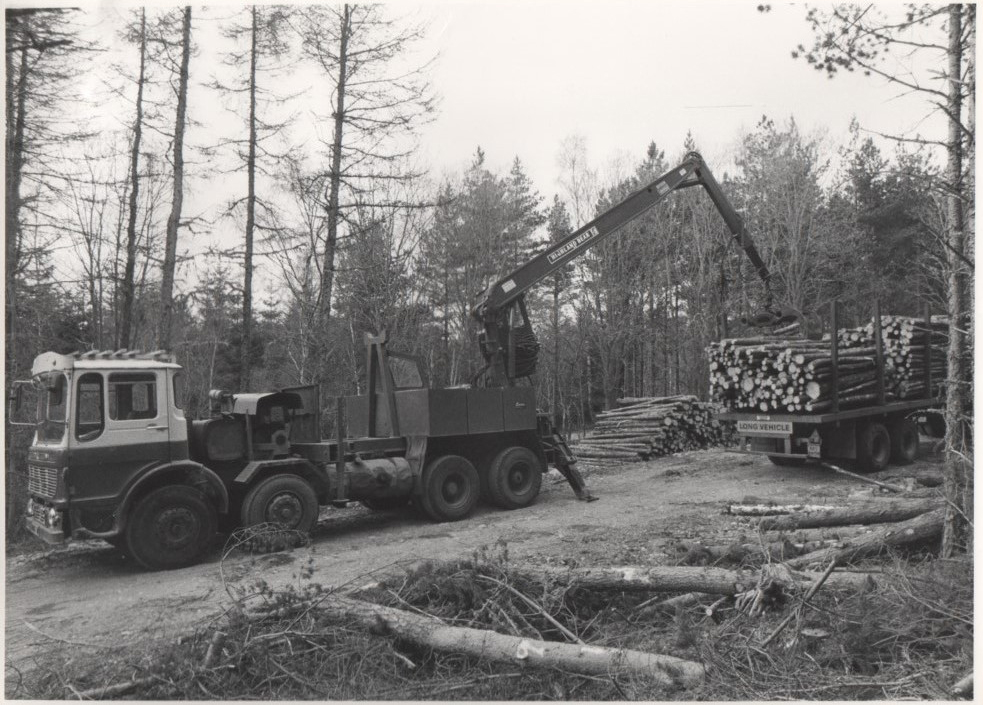
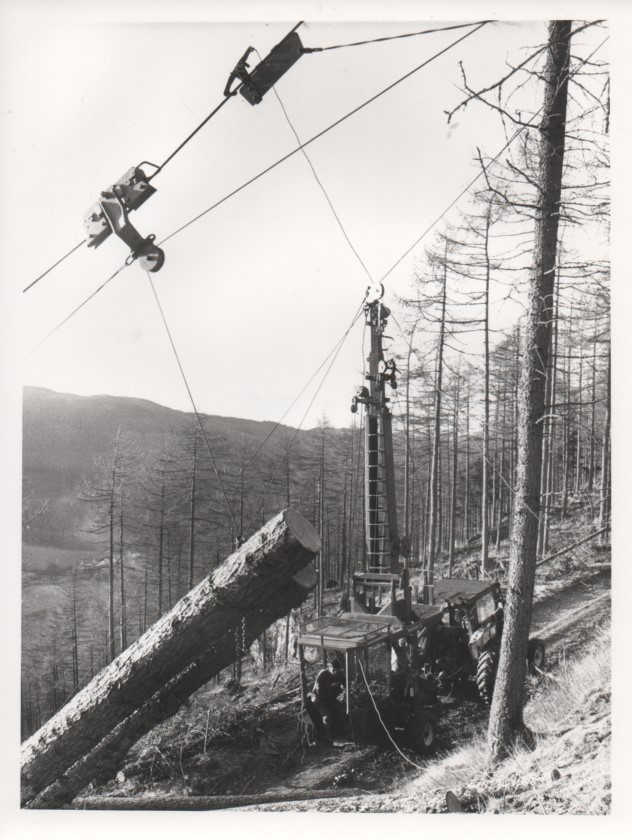
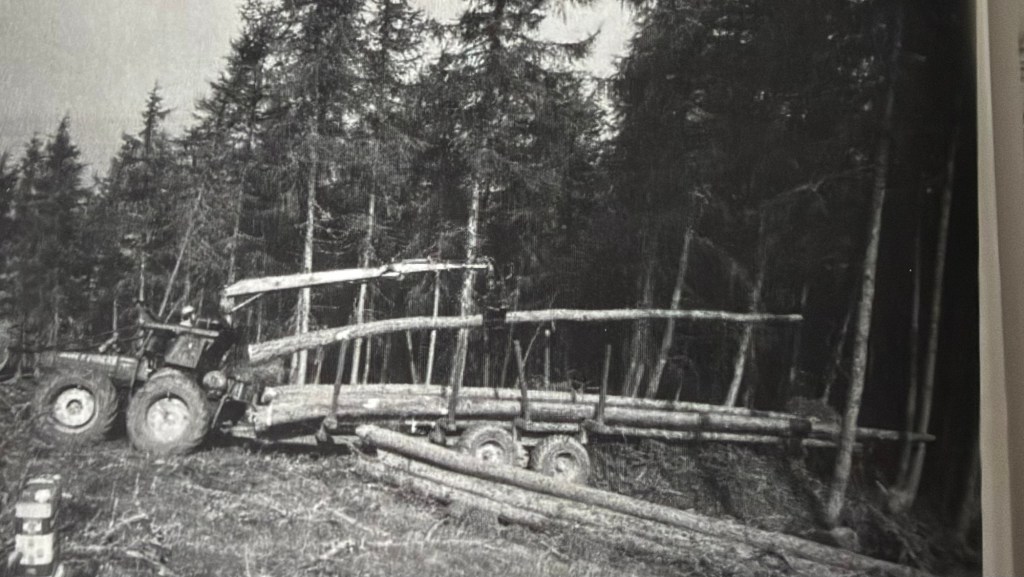
Up to this point most timber was being extracted by Crawler tractors which were slow and expensive and Bill started replacing them with four wheel drive vehicles and small tractors with winches which greatly improved production.
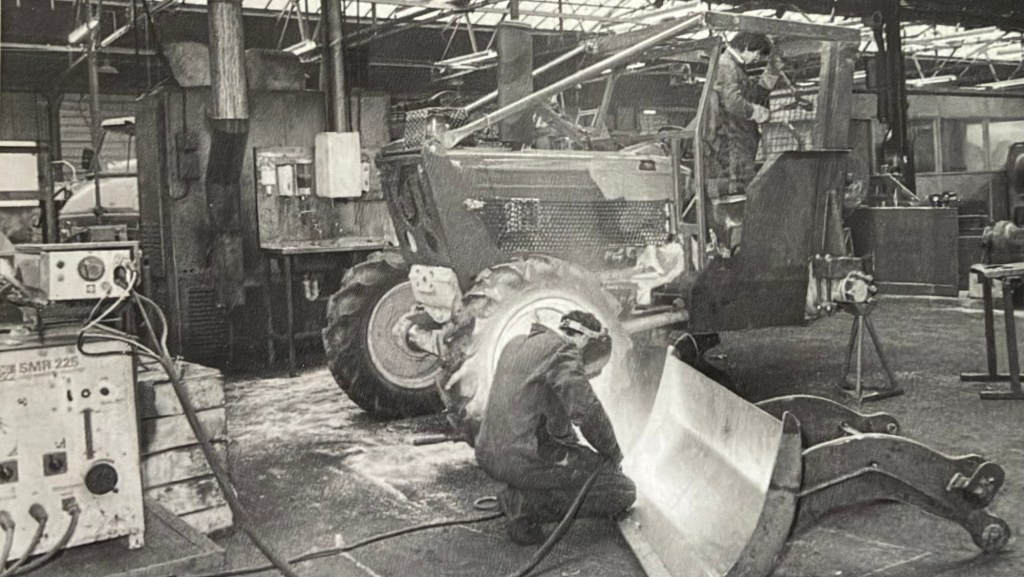
They started converting Ex-Army vehicles from petrol to diesel and adding winches so they could be used for loading the logs in the forest.
The engineering division under Bill Baillie’s leadership became a highly successful and vital part of
JJ&S and they capitalised on this by selling their services and products outside the company.
IIn 1966, the engineering division became a distinct entity within JJ&S, focusing on modifying overseas harvesting equipment that had previously been unsuitable for the specific conditions of Scottish forestry. During this period, they began collaborating with foreign manufacturers to improve components for Scottish timber applications.
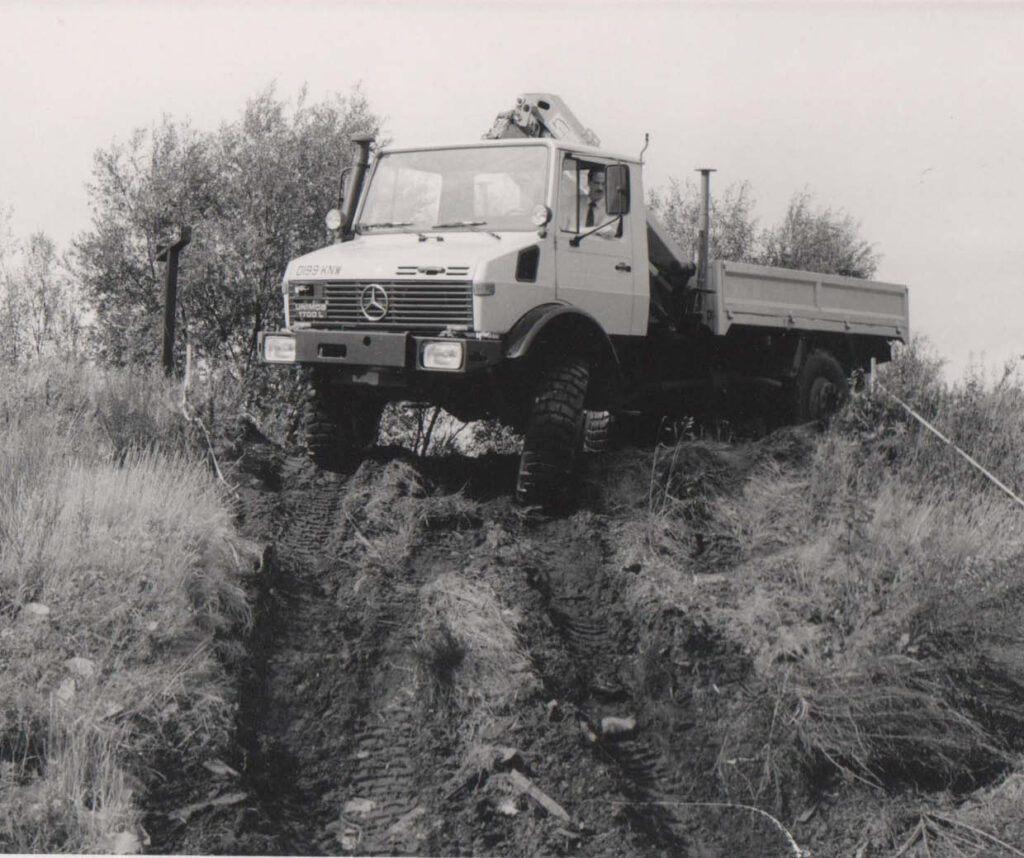
They were awarded several franchises including Mercedes Benz Unimog and Igland winches, they adapted the Unimog for forestry conditions with the winches fitted and offered operator training courses.
The engineering division continued to steadily flourish until 1968 when central Scotland was hit with the worst natural disaster since records began.
Hurricane Low Q hit Scotland in mid January and left devastation in its wake, winds up to 134 mph
were recorded with 20 people killed and more than 700 homeless. Half the council houses in Glasgow
were damaged and “Europe’s tallest flats”, at that time, were evacuated as they started to sway. The hurricane had felled over 8,000 hectares of trees, this resulted in 1.6 million cubic meters of timber which had to be salvaged.
Although this was a natural disaster in Scotland it was to be a great opportunity for the J&S engineering division as demand for harvesting and timber handling equipment rocketed.
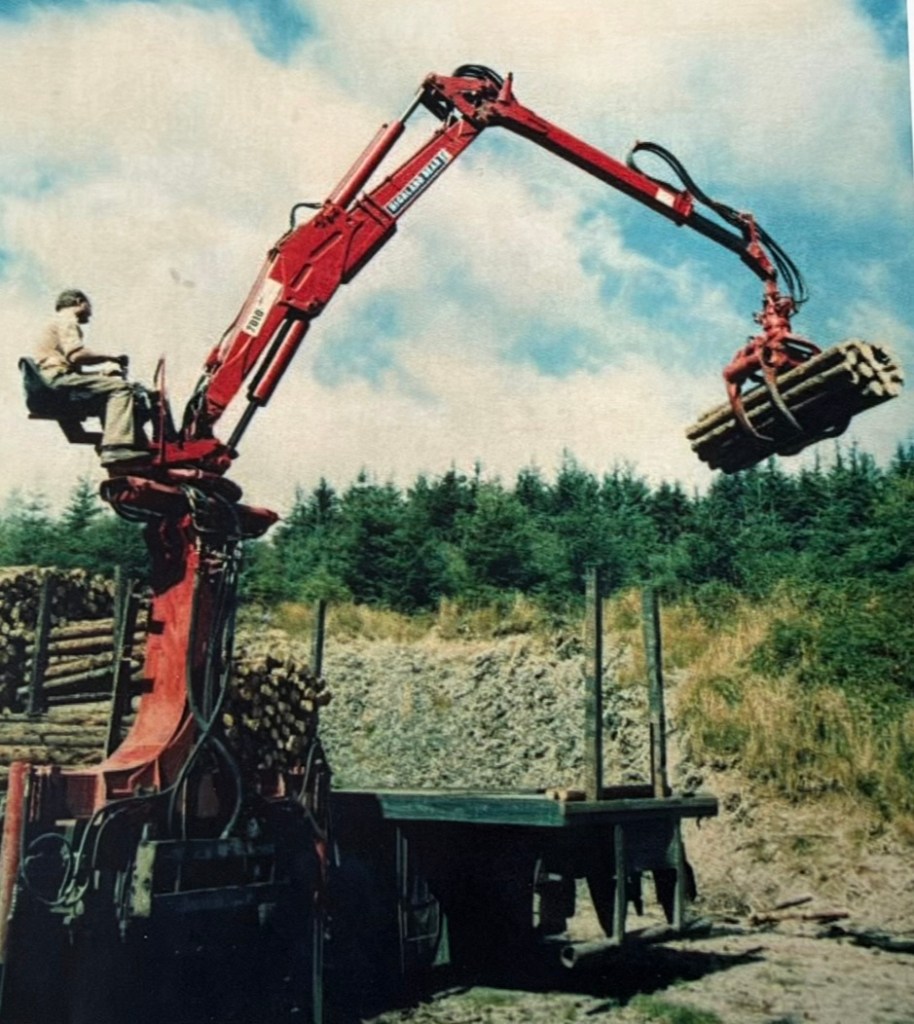
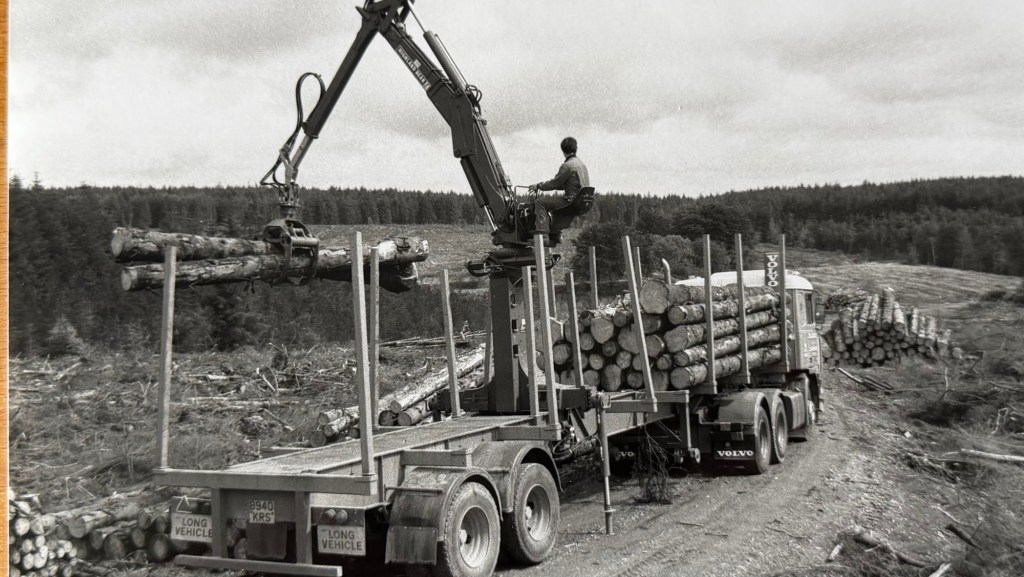
The coming years saw more franchises taken on by JJ&S which included Cranab Loaders (“Highland Bear” 6010 was the market leader from 1960 to 1985), Timberjack, Ford County, Normet Farmi, Steyr Pinzgauer to name a few.
The engineering department, led by Bill Baillie and Bill Nicol, was busy designing and building a distinct line of timber machinery, which many other companies began to replicate. In fact, most machinery used for softwood harvesting in the UK either originated from JJ&S designs or featured components they sold.
In 1977 Airlie Bruce Jones became managing director of the engineering division and at this point they had captured 80% of the UK market and had great success selling their products overseas with new markets opening up all over Europe, Australia, Canada, Guatemala, South Africa, Israel, Malawi and Thailand. The engineering workshop at JJ&S was making headlines worldwide for its ingenuity and a lot of one-off machines were built, Airlie also had an agreement with Igland and a new business Igland-Jones was set up to sell Igland products throughout the English speaking world.
The 1980’s saw a big downturn in the fortunes of the engineering department as other manufacturers inspired by J&S success started to market and sell their own products in the UK and abroad. The recession in the early 1980’s was another difficult time for the Engineering department, and from 1981 onwards they were never able to regain their foothold in the forestry market.
It became clear that the engineering division’s best days were over, and the board decided in 1994, after 4 years of losses, that it had to return a profit within 2 years. Unable to do this, and with large losses in 1996, Airlie Bruce-Jones resigned as joint managing director of JJ&S, leaving Tom Bruce-Jones as sole director. Airlie remained as a non-executive director of the company.
The overall business was restructured and the engineering department had very little connection with the rest ]J&S operations so a management buy-out was arranged by Wilson Paton and his colleagues in 1990 and they renamed the company OUTREACH.
The final instalment will be released next Saturday, November 7, 2026.
Contact forestmachinemagazine@mail.com to get your products and services in front of the world’s largest professional forestry online news network.
#homeoflogging #writtenbyloggersforloggers #loggingallovertheworld
Written by loggers for loggers and dedicated to bringing you the latest forestry news