
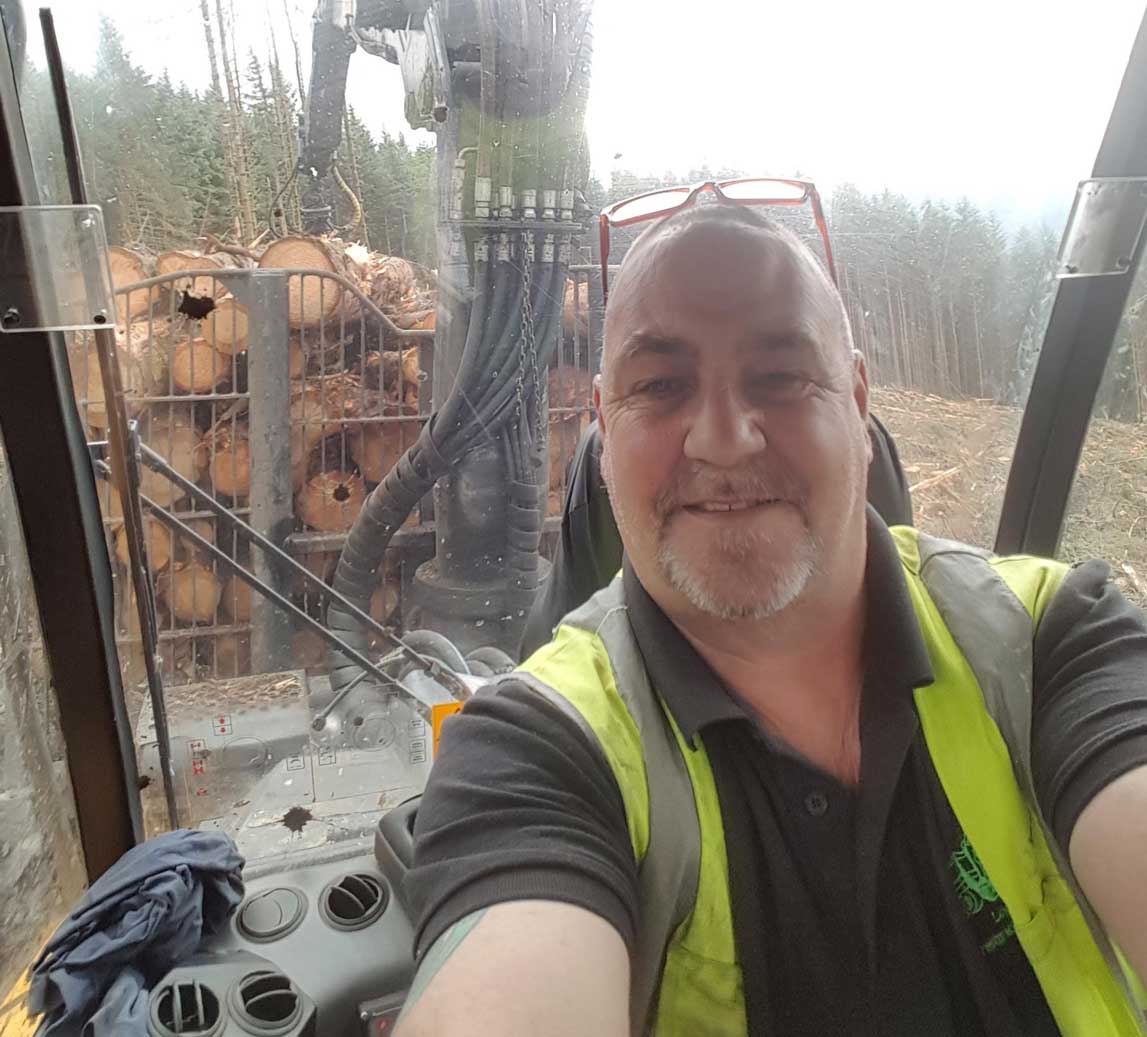
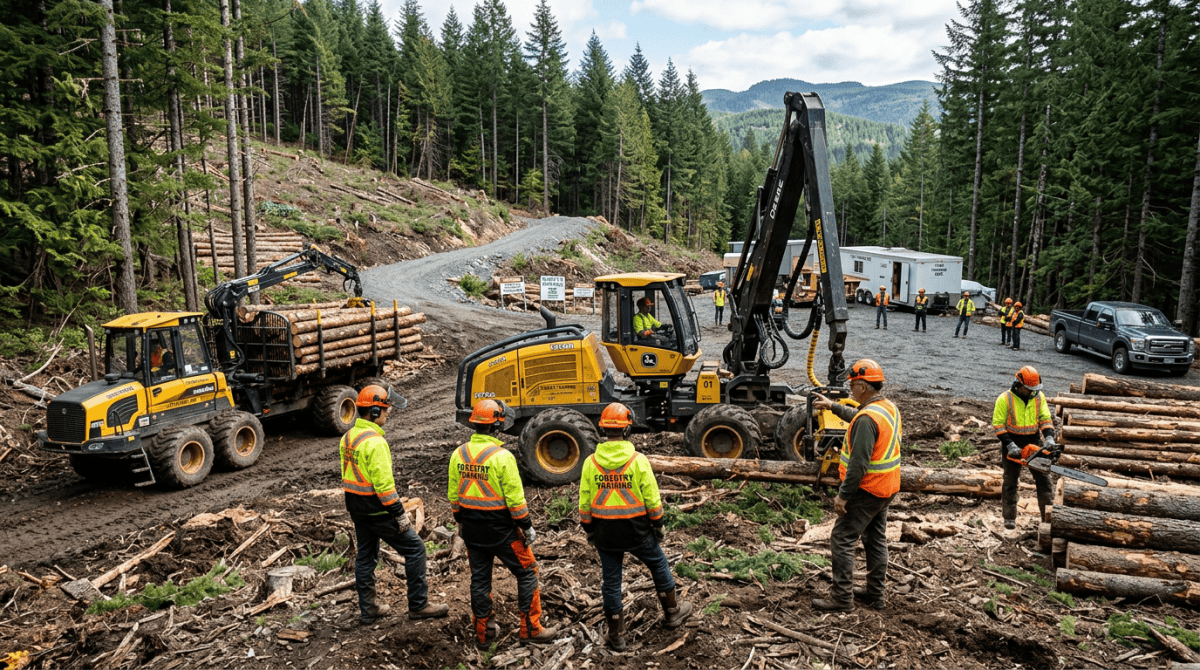
The state of our forestry workforce is raising alarm bells. As we explore this pressing issue further, it is clear that these challenges are not only concerning but also alarming for the future of our forests and timber needs.
A capable harvester operator can keep a high-value harvesting system moving. Lose that operator, or pair a new recruit with inadequate support, and the cost soon shows up in production figures, fuel use, machine damage, downtime and missed haulage slots.
The problem is not simply that forestry needs more people. It needs people with the right mix of practical judgement, machine awareness, safety discipline and willingness to work in difficult ground and changing weather. Those skills are built over time. A modern harvesting head may measure, cut and record volumes with impressive accuracy, but it still depends on an operator who can read timber, protect the machine and make sound calls when the plan meets the real forest.
-
The WeighPro Wireless Weighing Link represents a precise and dependable weighing system designed specifically for round timber, eliminating the need for re-calibration. This system offers operators minimal maintenance requirements, boasting an impressive battery life of up to two years between recharges.
-
That’s a remarkable amount of work hours for a single machine, the Norcar 600 owned by Erkki Rinne is taken well care of, it even has the original Diesel engine.
-
It is not possible to eliminate chain shot, but there are simple steps that can be taken to reduce the risk.
-
Arwel takes great pride in the fact that the mill has no waste whatsoever, “the peelings are used for children’s playgrounds, gardens and for farm animals in barns in the winter and the sawdust has multiple uses in gardens and farms as well.
-
Timber hauliers need to encourage young blood in, and also look after the hauliers we have, we need make the sector a safe and positive place to work.
FIND US ON
Forestry workforce trends are changing the job
The Forestry sector is managing an ageing pool of experienced workers while competing for recruits with construction, agriculture, utilities, transport and engineering. Many of those industries can offer clearer entry routes, more predictable working patterns, or a better-understood career path. Forestry often demands early starts, travel, wet ground, remote sites, and a high level of personal responsibility before a recruit has fully seen where the trade can lead.
At the same time, the work itself has become more technical. Mechanised harvesting crews need operators comfortable with machine control systems, daily checks, production data, digital mapping, and increasingly sophisticated diagnostics. Forwarder and harvester work remains physically demanding, even from the cab. Long shifts, rough access roads, vibration, concentration and the pressure to meet a lorry loading window all take their toll.
That does not mean hand-felling, chainsaw work and manual extraction have disappeared. Far from it. Steep ground, small parcels, windblow, sensitive sites and awkward roadside layouts still require highly competent chainsaw and extraction skills. But the workforce challenge varies by operation. A contractor running two cut-to-length systems faces a different recruitment problem than a small woodland business doing thinning, firewood, and conservation work.
Experience is leaving faster than it is replaced
The most damaging gap is often not at entry level. It sits in the middle: experienced operators, fitters, foremen and drivers who can make a day work when a hose bursts, a track comes off, timber quality changes or a site condition needs reconsidering.
A good operator develops a feel for the job that cannot be downloaded with a software update. They know when to stop before a fault becomes expensive, how to handle poor stem form without punishing the head, when a forwarder route will start to rut, and when a production target asks too much of the ground or the crew. When those people retire, move to another sector or set up on their own, their knowledge can leave with them.
This puts pressure on established contractors to bring trainees through without treating them as cheap labour. A new recruit may hold the necessary tickets, but competence in a live commercial operation comes from supervised repetition. Training needs time in the cab, time on maintenance, time with timber stacks, and time to understand why a particular extraction route or sorting plan has been chosen.
There is a hard trade-off here. Taking an experienced operator off the machine to mentor someone will reduce short-term output. Failing to do it creates a permanent dependency on a shrinking group of people who already know the work.
The site supervisor role needs proper recognition
Many businesses still rely on an informal senior hand to organise the site, speak to the manager, deal with haulage, keep the machinery moving and coach less experienced staff. That person does more than operate a machine. They manage production, safety, communication, and customer confidence.
Contractors that recognise this role with authority, pay and time are more likely to retain their best people. Calling someone a lead operator while expecting them to carry every extra responsibility for little return is a quick way to encourage them to look elsewhere.
Pay matters, but so does the shape of the job
Rates must reflect skill, responsibility and the cost of staying in the trade. An operator who can run a harvester efficiently, complete first-line maintenance, identify faults and work independently is not an entry-level employee. Businesses that set pay solely against yesterday’s rates will struggle to compete when other employers offer better terms.
But pay is only one part of retention. Workers also judge whether machines are fit for purpose, whether servicing is planned or constantly reactive, whether transport is sensible, and whether a site has enough welfare and communication. A man or woman who spends every day fighting poor access, unreliable kit and unclear instructions will not stay simply because the hourly rate is acceptable.
Predictable rotas can make a difference, particularly for workers with family commitments. That is not always easy in forestry. Weather, breakdowns, markets and haulage availability do not follow a neat timetable. Even so, giving people notice of likely working patterns and avoiding unnecessary last-minute changes shows basic respect.
The same applies to weather downtime and machine moves. A contractor cannot control every lost day, but can explain the plan honestly. Good crews are more likely to stick with a business that tells them where they stand than one that leaves them waiting for a Sunday evening message.

Training must match real forestry work
Formal qualifications and refresher training remain essential. They provide a safety baseline and a route into the sector. However, tickets alone do not produce a productive operator, a reliable timber lorry driver or a safe chainsaw worker in complex conditions.
The strongest training arrangements combine recognised courses with structured site mentoring. New starters need to understand pre-start checks, isolation procedures, fuel and oil discipline, machine cleaning, reporting defects and working around other plant. They also need to learn the commercial side: why accurate assortment sorting matters, why rejected loads cost money, and why a rushed stack can cause trouble for the loader driver and haulier later.
Manufacturers and dealers have a useful role here. Machine familiarisation, telematics support and diagnostic training can shorten the learning curve, particularly as electronic systems become more central to uptime. Yet contractors should be wary of assuming supplier training replaces site-specific supervision. Someone may know the controls but still need guidance on local harvesting prescriptions, ground protection, and the rhythm of a working crew.
For smaller businesses, shared training days can be practical. Bringing together operators, mechanics, chainsaw staff, and hauliers around subjects such as machine safety, load security, biosecurity, or incident reporting can spread costs while improving working relationships across the supply chain.
Mechanisation changes the recruitment offer
Modern machinery can help make forestry more attractive, but it is not a cure for labour shortages. A comfortable cab, better visibility, effective camera systems and intelligent machine control reduce fatigue and improve safety when used properly. They also raise the level of technical skill expected from the operator.
There is an opportunity to present forestry as a serious technical career rather than a vague outdoor job. Young people who enjoy engineering, GPS, hydraulic systems, computers and practical problem-solving may be drawn to harvesting machinery if they can see a credible route from trainee to skilled operator, technician, supervisor or business owner.
The message needs to be honest. Forestry is not a video game with a joystick. Operators still work alone for long periods, take responsibility for expensive kit and deal with difficult material in challenging locations. For the right recruit, that responsibility is exactly the attraction. It gives the job weight.
Better planning protects the people you already have
Workforce pressure often exposes weak planning. When crews are thin, every absence becomes a crisis and the temptation is to stretch shifts, defer maintenance or ask one capable person to cover too much. That may keep production moving for a week. Over a season, it increases fatigue, errors and turnover.
Contractors need a realistic view of capacity before taking on more work. That includes relief cover, planned holidays, machine servicing, training days and the time required for moves between sites. A contract that looks profitable on a spreadsheet can become a loss if it depends on one operator never being ill and one machine never needing more than a quick grease-up.
Clear communication with woodland managers and timber buyers matters here. The best commercial relationships allow for ground conditions, environmental restrictions and labour reality rather than demanding output that only works on paper. Good planning also supports safety. Crews who know the work sequence, exclusion zones, haulage arrangements, and emergency procedures make better decisions under pressure.
Building a workforce worth keeping
The sector does not need glossy recruitment slogans. It needs employers and principal contractors who show that forestry is skilled work with a future. That means decent machinery, fair rates, proper mentoring, realistic production expectations and respect for the people who keep timber moving.
For Forest Machine Magazine readers, the practical question is worth asking before the next contract or machine purchase: does this decision make the job more workable for the crew? If the answer is no, the saving may prove expensive. The contractors who retain good people will be the ones still able to deliver when the next difficult site lands on the desk.
Contact forestmachinemagazine@mail.com to get your products and services in front of the world’s largest professional forestry online news network.
#homeoflogging #writtenbyloggersforloggers #loggingallovertheworld
Written by loggers for loggers and dedicated to bringing you the latest forestry news