
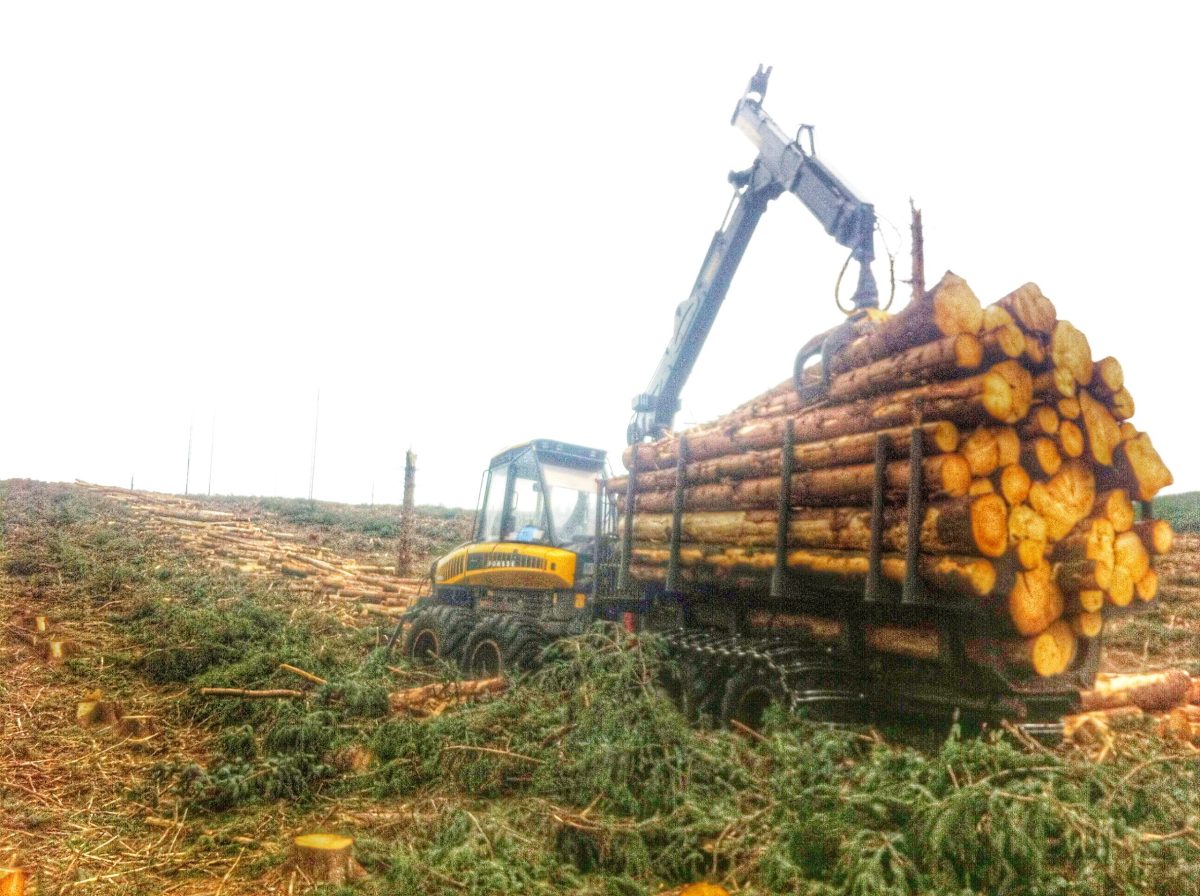
A brash mat is the working platform beneath the harvester and forwarder; it is the first defence against rutting and often the difference between a productive wet-weather operation and a costly recovery job
To manage brash mats safely, workers need to treat mat construction, machine loading and route planning as one job, not three separate decisions made as the site develops.
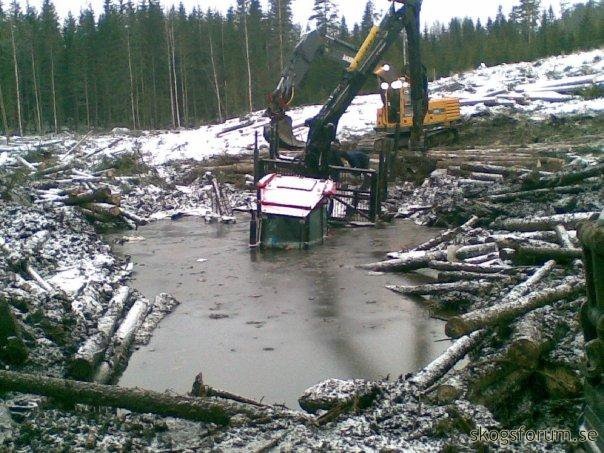
Poor mats create problems quickly. Machines lose stability, tracks punch through to mineral soil, the forwarder starts dragging brash aside instead of consolidating it, and an extraction rack can become unsafe before anyone notices the first signs. The pressure to keep timber moving is real, particularly where haulage slots, roadside capacity and weather windows are tight. But a damaged mat rarely gets better by running more weight over it.

-
The WeighPro Wireless Weighing Link represents a precise and dependable weighing system designed specifically for round timber, eliminating the need for re-calibration. This system offers operators minimal maintenance requirements, boasting an impressive battery life of up to two years between recharges.
-
That’s a remarkable amount of work hours for a single machine, the Norcar 600 owned by Erkki Rinne is taken well care of, it even has the original Diesel engine.
-
It is not possible to eliminate chain shot, but there are simple steps that can be taken to reduce the risk.
-
Arwel takes great pride in the fact that the mill has no waste whatsoever, “the peelings are used for children’s playgrounds, gardens and for farm animals in barns in the winter and the sawdust has multiple uses in gardens and farms as well.
-
Timber hauliers need to encourage young blood in, and also look after the hauliers we have, we need make the sector a safe and positive place to work.
FIND US ON
Start with the ground, not the machine
Before production starts, the site manager and operators should be clear on what lies under the crop. Peat, flushed ground, wet mineral soils, steep cambers, deep brash from previous operations and old drainage lines all change how a mat performs. A route that carries a harvester comfortably in dry conditions may not carry a loaded forwarder after two days of rain.
Walk the intended extraction routes where practical. Look for soft shoulders, hollows that will hold water, ditches, culverts, buried stumps and sharp breaks of slope. It is far easier to move a rack ten metres at the planning stage than to recover a bogged machine from a route that was poor from day one.
The mat needs to match the operation. Light thinning with a small harvester and compact forwarder places different demands on the ground than clearfell using a large wheeled or tracked harvesting system. Species and piece size matter too. Fine conifer brash can pack down well in volume, while larger, rigid material may bridge uneven ground but leave voids if it is not worked in properly.
Build the brash mat before it is needed
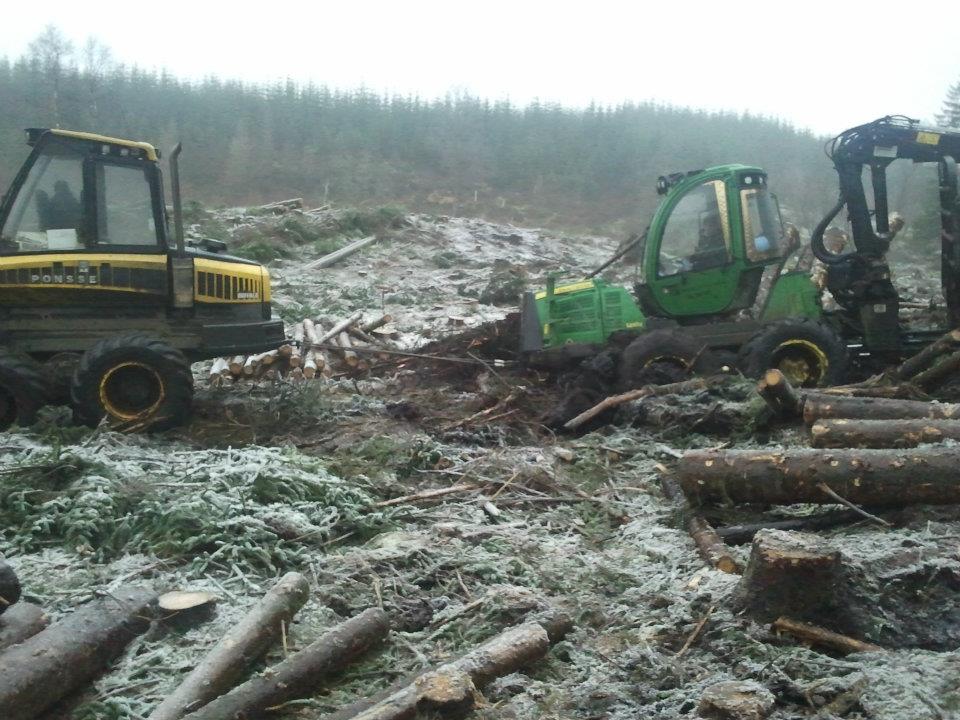
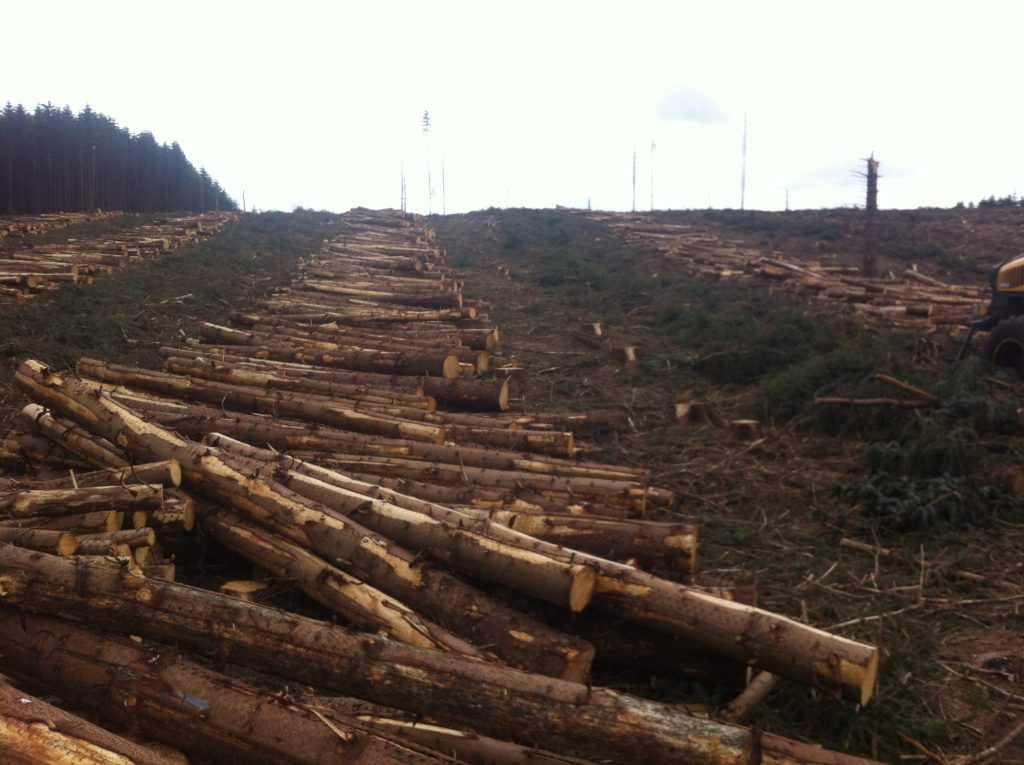
The most common mistake is expecting a mat to form under traffic. By the time a machine struggles for grip or leaves ruts, the material has already been displaced and compacted in the wrong places. The aim is to lay a continuous, sufficiently thick running surface before repeated passes begin.
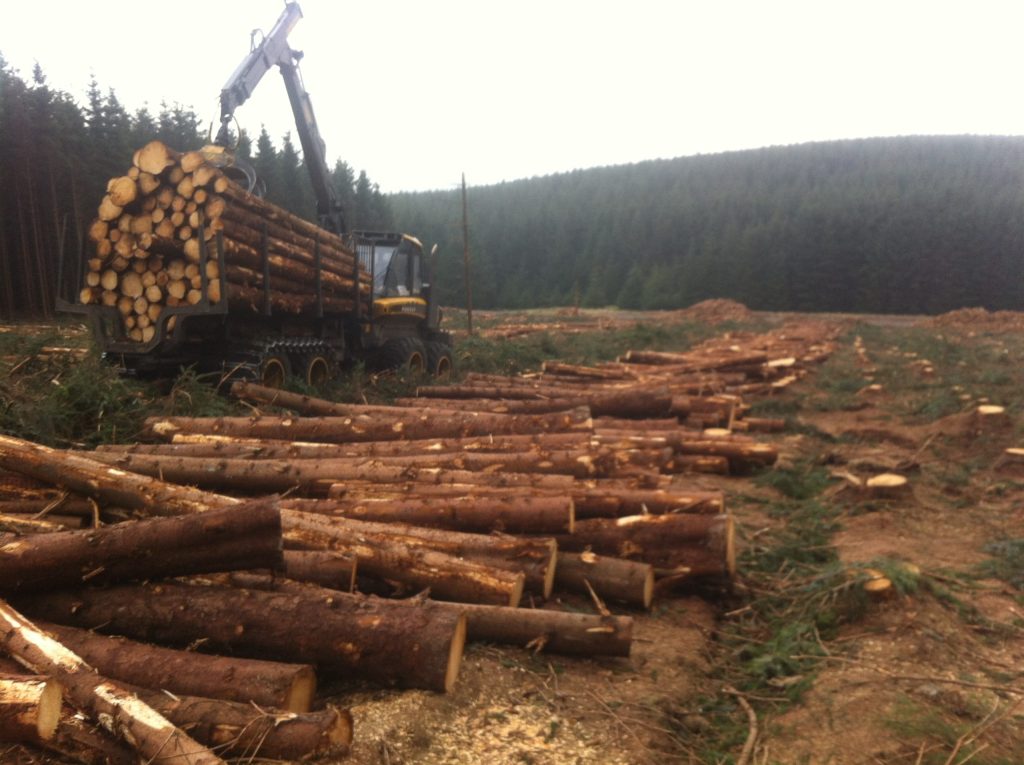
The harvester operator sets the standard. Keep processing heads and feed paths arranged so limbs are placed across the direction of travel where possible, rather than pushed into narrow windrows at the rack edge. Spread material to the full intended width of the running track. A mat that is generous in the centre but thin at the edges encourages machines to drop a wheel or track into weak ground when turning, passing obstacles or correcting line.
No fixed depth suits every site. The right thickness depends on soil bearing capacity, moisture content, machine weight, tyre or track set-up, traffic frequency and the quality of available brash. The practical test is performance: the mat should support the machine without excessive rutting, lateral movement or exposure of mineral soil. If it is visibly pumping, opening up, or being dragged apart, it needs immediate attention.
On wet sites, consider retaining the better brash for the main routes and known soft spots rather than distributing it evenly everywhere. A small reserve can keep an extraction route open late in the job, but only if you haven’t already squandered it on ground that would have carried itself.
Keep traffic disciplined
A good mat will not survive undisciplined traffic. Every unnecessary pass breaks down the structure, especially where loaded forwarders turn, reverse and climb. Agree the travel direction, turning points, passing places and loading areas early. Then stick to them unless conditions force a change.
Forwarder operators should avoid working right on the outer edge of a mat. Where the ground is weak, a loaded machine can roll the mat sideways and expose the soft shoulder in one pass. Smooth, controlled travel also matters. Sudden steering inputs, wheelspin and aggressive turns scour brash away from the contact area and make the next journey worse.
Machine set-up is part of the decision. Tracks, chains and tyre pressures can improve flotation and grip, but they do not turn a poor route into a safe one. Fitting traction aids may also alter steering feel, increase stress on tyres or make accumulated brash more likely to wrap around running gear. Operators need to inspect regularly and work within the manufacturer’s guidance.
On steeper ground, keep the route as straight and predictable as the terrain allows. Side-slope travel is particularly unforgiving when a mat is thin or wet. If the machine is crab-walking, sliding or forcing the operator to make constant correction, stop and reassess rather than trying to power through.
Watch the warning signs on every shift
Brash mats deteriorate progressively, and the warning signs are usually visible before the situation becomes a recovery. Fresh mineral soil appearing in the wheel tracks, water rising through the mat, broken brash being pushed into ridges, deepening ruts and a machine beginning to pitch or list are all reasons to pause.
Operators are best placed to spot changes in ground behaviour, but they need room to report them without being treated as an obstacle to production. A short conversation between harvester and forwarder operators can prevent a full shutdown later. If the forwarder is struggling, the harvester may be able to supply more material, alter the rack position or build a reinforcement section before the route fails completely.
A useful start-of-shift check should cover four practical points:
- inspect main extraction routes, turning areas and known wet patches;
- check for ruts, exposed soil, standing water and displaced brash;
- confirm whether overnight rain or frost has changed ground conditions;
- agree any altered travel routes, loading points or exclusion areas.
This is not paperwork for its own sake. It gives the crew a shared picture of where the risk sits before the first load is lifted.
Manage interfaces between machines and people
Brash management is often discussed as a ground-protection issue, but it is also a people-and-machine safety issue. Building or repairing mats brings machines into areas where chainsaw teams, surveyors, ground staff and visiting contractors may be working. Clear communication is essential when the harvester is swinging, the forwarder is reversing or material is being pushed into place.
Do not assume anyone on foot can judge the safe position around a working machine, particularly in dense crop or poor visibility. Exclusion zones, agreed radio channels and positive confirmation before anyone enters an active work area are basic controls. A machine operator cannot safely manage a brash mat while also tracking people appearing at the rack edge.
Take particular care at roadside interfaces. Brash dragged onto public-road approaches can create a skid hazard, while contaminated material at a loading point can affect timber cleanliness and site presentation. Keep the transition from forest track to stacking area defined and maintain it throughout the job.
Know when to stop and change the plan
At some point, adding more brash is no longer a sensible fix. If the mat is sinking into saturated ground, machines are losing stability, or rutting is causing environmental damage, the right call may be to stop extraction, redirect traffic or wait for conditions to improve. That can be an expensive decision in the moment, but recovering a machine, repairing a damaged route and answering questions after a pollution incident costs far more.
Alternatives depend on the site. A shorter forwarding distance to a temporary stack, a different extraction line, reduced payloads, additional brash from another area, or a planned weather hold may all work. Each option has a trade-off. Reducing payloads protects the route but increases passes; moving the route may save the main rack but create fresh disturbance elsewhere. The answer should come from the ground conditions and the site plan, not from habit.
Leave the site in a condition you can stand behind
As the job closes out, inspect the racks and extraction route before machinery leaves. Where brash needs redistributing, do it while the correct machine and operator are still on site. Check drains and watercourses for blocked flow, clear road approaches, and record any areas requiring reinstatement or monitoring.
A well-managed mat does more than keep production moving. It protects soil structure, reduces the chance of machine incidents, supports compliance with the site’s environmental controls and leaves a better result for the next rotation. The useful question at every soft patch is simple: will the next loaded pass make this safer, or make it worse? If the answer is worse, deal with it before the forwarder commits.
Contact forestmachinemagazine@mail.com to get your products and services in front of the world’s largest professional forestry online news network.
#homeoflogging #writtenbyloggersforloggers #loggingallovertheworld
Written by loggers for loggers and dedicated to bringing you the latest forestry news