
Bioenergy is not an abstract decarbonisation story. It is another outlet competing for roundwood, residues, machine time, storage space and transport capacity.
Where the bioenergy industry fits in the timber chain
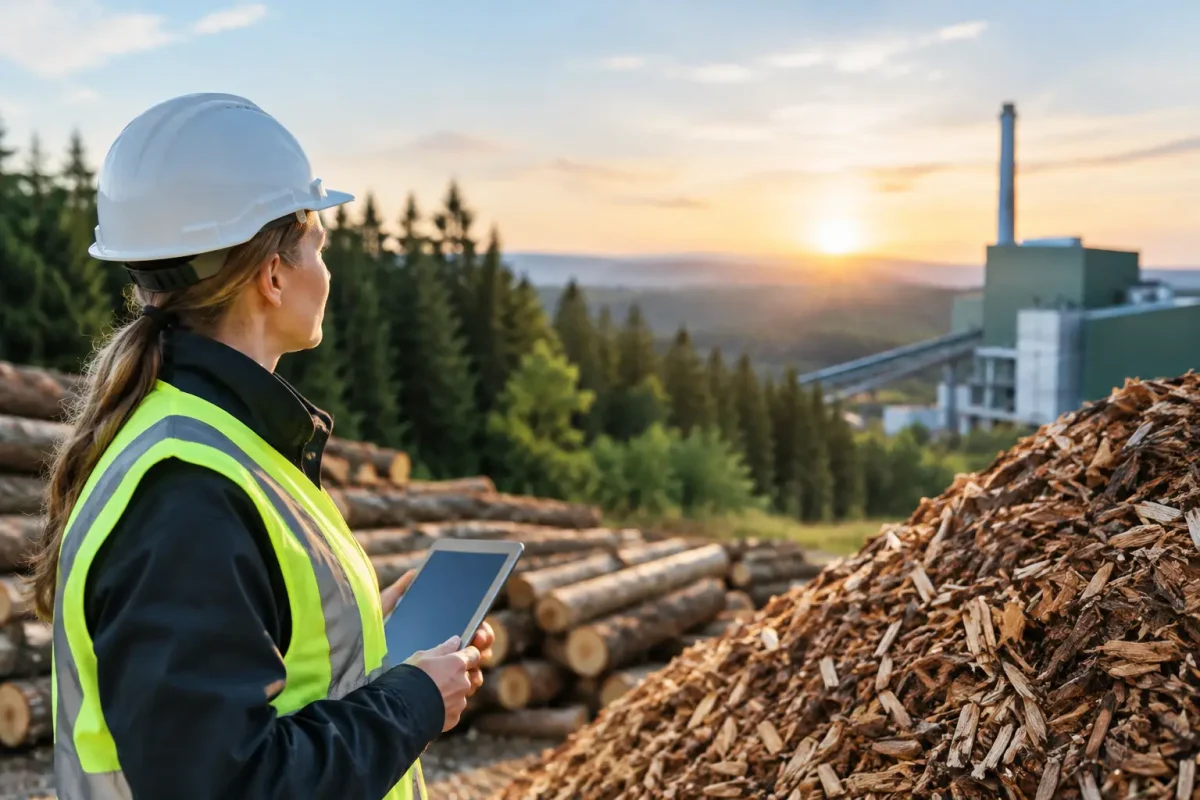
The bioenergy industry uses a range of feedstocks, from sawmill residues and clean recycled wood through to forest chips, energy crops and purpose-grown material. Forestry’s role varies by region, species mix and the needs of local heat and power users.

-
The WeighPro Wireless Weighing Link represents a precise and dependable weighing system designed specifically for round timber, eliminating the need for re-calibration. This system offers operators minimal maintenance requirements, boasting an impressive battery life of up to two years between recharges.
-
That’s a remarkable amount of work hours for a single machine, the Norcar 600 owned by Erkki Rinne is taken well care of, it even has the original Diesel engine.
-
It is not possible to eliminate chain shot, but there are simple steps that can be taken to reduce the risk.
-
Arwel takes great pride in the fact that the mill has no waste whatsoever, “the peelings are used for children’s playgrounds, gardens and for farm animals in barns in the winter and the sawdust has multiple uses in gardens and farms as well.
-
Timber hauliers need to encourage young blood in, and also look after the hauliers we have, we need make the sector a safe and positive place to work.
FIND US ON
At the higher-value end of the chain, good sawlogs belong in the sawmill market. Small roundwood may have outlets in panel products, fencing, pulp or packaging before energy is considered. Biomass commonly provides a home for harvesting residues, undersize material, damaged timber, and low-grade assortments with limited alternatives. That distinction matters. A healthy biomass market can support thinning, improve site access and help make smaller parcels commercially workable. It should not be used as an excuse to burn material that could deliver better value or longer-lived carbon storage elsewhere.
For many woodland owners, the strongest case is not a large export market but a nearby heat customer. A school, estate, factory, poultry unit or commercial premises with a properly sized chip boiler can create predictable demand within practical haulage distance. Heat applications can use each tonne of fuel more efficiently than electricity-only generation, but the economics still depend on annual demand, boiler uptime, and a supplier capable of maintaining specification through winter.
Residues are not free feedstock
Brash, tops and limbwood have a value, but they also perform work on site. They carry nutrients, protect soils from trafficking and can support habitat. On some sites, recovering a portion of residues is sensible. On poor, sensitive or heavily cropped ground, taking too much can be the wrong call.
Operators need a site-specific plan, not a blanket rule. Consider soil type, slope, extraction route, restocking method, nutrient status and weather risk before committing residues to a chip contract. The cost of repairing ruts, reinstating drainage or dealing with failed establishment will soon wipe out a modest biomass return.
Fuel quality decides whether the contract pays
Wood chip is not a single commodity. A boiler operator may require a tight fuel specification covering particle size, moisture content, fines, ash and contamination. A load acceptable for one installation may cause bridging, poor combustion, excess ash, or an unplanned shutdown at another.
Moisture is usually the big one. Fresh chip contains a large amount of water, and hauling water is expensive. Wet material reduces usable energy per tonne, can freeze or bridge in handling systems, and is more likely to deteriorate in storage. Leaving whole residues or roundwood to season before processing can improve fuel quality, but it ties up space and needs careful stack management. The right approach depends on species, season, intended boiler and how long the material can be kept clean and dry.
Contamination is equally unforgiving. Soil picked up during forwarding, stone from poor stacking, plastic, wire and metal can damage chippers and cause expensive problems at the receiving end. The basics are familiar to any professional operation: keep stacks off dirty ground where possible, avoid dragging material through brash and mud, clearly separate roadside piles, and inspect loads before they leave.
Chip suppliers also need to be honest about what their equipment can produce. A chipper running at full output doesn’t automatically produce the grade a customer has bought. Knife condition, screen selection, feed consistency and operator discipline all affect the result. Sampling and written load records may feel administrative, but they protect both sides when a quality dispute arrives.
Haulage can swallow the margin
Bioenergy moves bulky, comparatively low-value material. That makes distance a hard commercial limit. A lorry carrying chips needs volume as well as payload, while moisture, access restrictions, and waiting time can quickly erode the return.
The first calculation should be based on delivered energy and net dry tonnes, not just a green-tonne roadside price. Include forwarding or extraction, chipping, loading, storage losses, haulage, weighbridge charges, administration and contingency. Then test the figures against wet-weather access, a rejected load and a period when the chipper is needed elsewhere. If the deal only works in ideal conditions, it is not a dependable outlet.
Good logistics can change the answer. Larger, well-organised stacks reduce machine moves. Backloading opportunities help. A chip store close to the customer can reduce winter pressure, provided it is designed to manage moisture and fire risk. But every additional handling stage costs money and can increase fines and contamination.
Site access needs the same scrutiny as any timber movement. Can an articulated walking-floor trailer turn safely? Is there enough hard standing? Will overhead lines, narrow lanes, weak bridges, or school-time traffic restrict deliveries? A biomass customer who has not thought through vehicle movements can turn a sound supply agreement into a daily operational headache.
Carbon claims need evidence, not assumptions
The environmental case for forest bioenergy is increasingly under scrutiny. That is not going away, and forestry businesses should expect customers, regulators and funders to ask harder questions about origin, transport, forest management and carbon accounting.

Sustainability requirements apply to many larger energy installations and support schemes. The precise obligations depend on the plant and its support route, but traceability is becoming a normal commercial requirement. Suppliers may need to show where material came from, what it was, how it was transported and whether it meets the customer’s sustainability criteria.
For domestic forestry, good records are the sensible starting point. Keep felling permissions and management documentation in order, identify the source woodland, record species and volumes, and retain delivery information. Chain-of-custody systems and recognised certification can ease market access, although they add cost and paperwork. Whether that cost is worthwhile depends on the customer base and the volume being handled.
The broader point is straightforward: bioenergy performs best where it uses genuine residues, supports active woodland management and displaces fossil fuels in efficient applications. Long-distance movement of wet chip, unnecessary harvesting, or poor combustion performance quickly weakens the case.
Machinery choices should follow the feedstock
There is no universal biomass setup. A contractor processing clean conifer brash for a local heat network has different needs from a business handling stemwood for industrial chip. Drum versus disc chippers, screen options, crane reach, infeed design, and discharge arrangement must suit the material and final specification.
Output figures deserve a hard look. High hourly production is valuable only if enough material is prepared, enough lorry capacity is available, and a buyer can receive it. Downtime from blunt knives, worn anvil settings, hydraulic issues or contaminated feedstock is costly because chipping crews often involve several machines and men waiting on one bottleneck.
Fire prevention also belongs in the operating plan. Chip piles can self-heat, particularly where material is wet, fine and stored in large heaps. Keep stock rotation clear, monitor pile condition, maintain access for fire services and avoid treating a temporary roadside stack as a long-term store.
Build supply agreements around real operating conditions
A usable biomass contract should state the fuel specification, measurement method, moisture basis, delivery window, rejection process and payment terms. It should also say who carries the cost when access fails, the boiler is down or the customer cannot accept a booked load.
Price mechanisms matter because diesel, labour, haulage and machine costs do not stand still. A fixed price can offer certainty, but it can become dangerous in a long agreement if costs move sharply. Indexing, review dates and minimum call-off volumes may be more practical than chasing a headline rate.
Do not overlook seasonality. Heat customers often need their greatest volumes during the same period that wet weather makes harvesting, extraction and chipping more difficult. Building dry stock through the summer can reduce pressure, but it requires capital, space and disciplined stock control.
The bioenergy industry can be a valuable part of the forestry economy when it pays properly for difficult material and respects the realities of site work. The best operators will treat it like any other serious timber market: know the product, protect the ground, measure the costs and only promise the tonnes they can deliver well.
Contact forestmachinemagazine@mail.com to get your products and services in front of the world’s largest professional forestry online news network.
#homeoflogging #writtenbyloggersforloggers #loggingallovertheworld
Written by loggers for loggers and dedicated to bringing you the latest forestry news