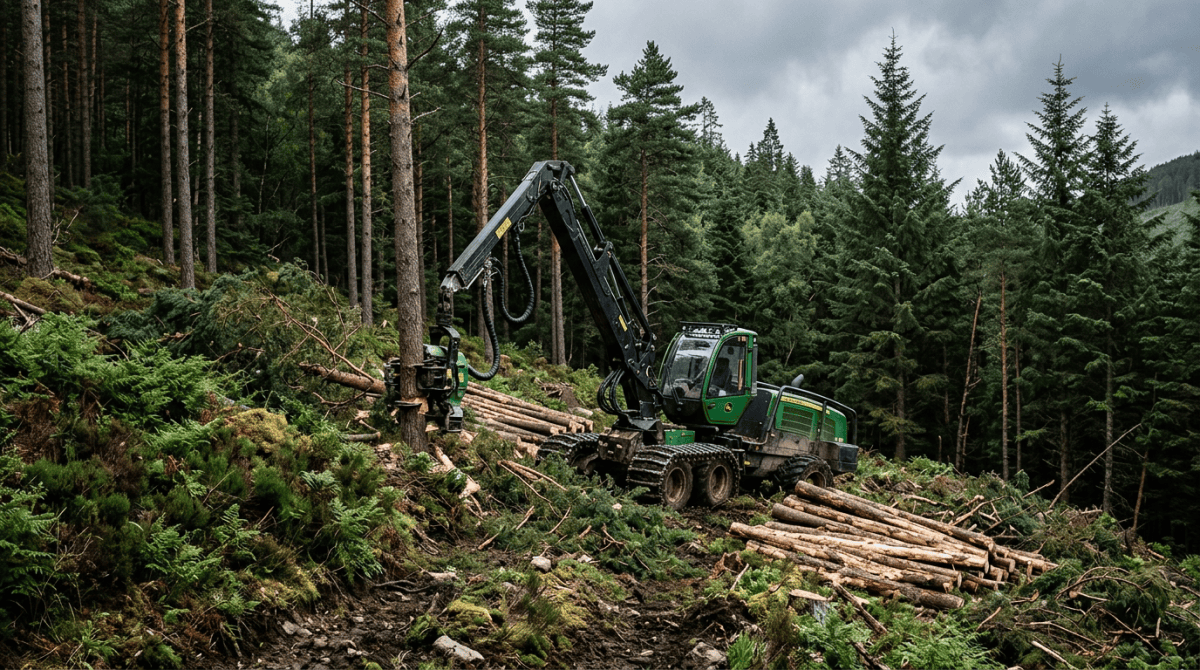
A harvester can be working faultlessly at 10 am and be on its side in a ditch before lunch. A hydraulic hose can burst over a watercourse, or a machine can disappear from an isolated compound over a weekend. That is why a forestry machine insurance guide needs to start with the job itself, not a cheap headline premium.
For contractors, forestry machine insurance is not a box-ticking exercise. It protects the asset that earns the day rate, and often the finance agreement behind it. The right policy should reflect where the machine works, who operates it, how it is moved and what happens when an incident stops production.

-
The WeighPro Wireless Weighing Link represents a precise and dependable weighing system designed specifically for round timber, eliminating the need for re-calibration. This system offers operators minimal maintenance requirements, boasting an impressive battery life of up to two years between recharges.
-
That’s a remarkable amount of work hours for a single machine, the Norcar 600 owned by Erkki Rinne is taken well care of, it even has the original Diesel engine.
-
It is not possible to eliminate chain shot, but there are simple steps that can be taken to reduce the risk.
-
Arwel takes great pride in the fact that the mill has no waste whatsoever, “the peelings are used for children’s playgrounds, gardens and for farm animals in barns in the winter and the sawdust has multiple uses in gardens and farms as well.
-
Timber hauliers need to encourage young blood in, and also look after the hauliers we have, we need make the sector a safe and positive place to work.
FIND US ON
Forestry machine insurance guide: start with the work
An insurer needs a clear picture of the operation. A harvester working steep, wet ground in Cumbria faces a different loss profile from a processor stationed on a firm, managed yard in East Anglia. Neither is automatically uninsurable, but vague information at the quotation stage is a poor foundation for a later claim.
Be precise about the machines on cover, including make, model, serial number, year, replacement value and attachments. Heads, grapples, winches, cranes, tracks, tyre chains, fire suppression systems and GPS equipment can represent a serious proportion of the machine’s value. If an attachment is not declared correctly or falls under a low single-item limit, a settlement may not put the outfit back to work.
Also explain whether plant is owned outright, on hire purchase, leased or hired in. Finance providers commonly require their interest to be noted. Hired-in plant is another regular blind spot. A contractor may assume the hire company’s insurance covers every eventuality, only to find the hire terms place much of the risk back on the user.
Physical damage cover is only the first layer
Most contractors will look for plant cover against accidental damage, theft, fire and vandalism. In forestry, accidental damage needs close reading. Test the policy wording against the real causes of loss: overturning on slopes, impact with stumps and standing timber, falling trees, flood damage, fire, malicious damage, and losses during loading or unloading.
Wear and tear, gradual deterioration and mechanical or electrical breakdown are usually not insured under a standard plant policy. A final drive failure or an engine seizure may therefore be outside cover unless a specialist breakdown extension has been agreed. This is a sensible dividing line in many cases, but operators should not assume a major repair is covered simply because the machine was insured.
The settlement basis matters just as much. New-for-old cover can be valuable on newer machines, but it normally has conditions around age, maintenance and replacement availability. Market value cover is more common on older equipment and may leave a contractor short if used-machine prices have risen sharply. Agree the value properly at inception and revisit it at renewal. Underinsurance can reduce a claim payment, even where the loss itself is accepted.
Liability cover needs to match forestry risk
Machine insurance and liability insurance are related but separate issues. A damaged harvester is one problem. Injury to a third party, damage to a neighbouring property or a contamination incident is another.
Employers’ liability is generally required where staff are employed, including many casual and seasonal arrangements. Public liability is vital where forestry work could affect landowners, members of the public, utilities, neighbouring crops or other contractors. The indemnity limit should reflect the sites being worked and the contracts being signed, rather than simply accepting the lowest limit offered.
Environmental liability deserves particular attention. Fuel, hydraulic oil and AdBlue spills can lead to clean-up costs, especially near drains, watercourses and sensitive sites. A standard policy may provide limited pollution cover only for sudden, accidental releases. Slow leaks, poor storage, or deliberate discharge are different matters. Check the wording, the excess, and any conditions on spill kits, bunding, and incident reporting.
Where timber is being hauled, do not assume the forestry plant policy extends to the lorry, trailer, timber load or road traffic liabilities. Haulage needs its own properly arranged motor, goods-in-transit and liability protection. The same applies to low-loader movements. Check damage sustained while loading a machine, securing it, or transporting it between sites against both the plant and motor policy wordings.
Road use can create an unexpected gap
Forestry machines occasionally need to cross or travel on public roads between blocks, yards or loading areas. The legal position and insurance requirement depend on the machine, its use, registration and journey. Do not rely on a general assumption that a plant policy includes road risk.
Ask the insurer or broker, in writing, whether cover applies on public roads, during road crossings and while the machine is loaded on a transporter. Confirm who may drive it, whether there are age or experience restrictions, and whether escort arrangements or journey limits apply. If this is left unclear, a short road move can become the most expensive part of the day.
The exclusions worth reading before a loss
Policy schedules look straightforward. The detail is often in the endorsements, exclusions and conditions. These are the areas that frequently deserve a direct question before signing:
- theft requirements, including immobilisers, trackers, keys, secure storage and notification times;
- unattended plant rules, particularly in remote woodland or on roadside jobs;
- operator qualifications, training records and any named-driver restrictions;
- recovery costs after rollover, bogging-in or access failure; and
- increased costs of working, such as hiring a replacement machine after an insured loss.
Recovery is a good example of why forestry cover must be specialist. Extracting a disabled machine from a difficult compartment can involve another forwarder, winch assistance, temporary access work, low-loader recovery and hours of labour before repairs even begin. Some policies include reasonable recovery following insured damage, while others limit it heavily or treat it as a separate cost. Ask for a figure, not a general assurance.
Business interruption is another area where the answer depends on the operation. A larger contractor may be able to redeploy machines. A one-harvester business with a committed harvesting programme may lose income immediately. Loss-of-hire or increased-costs cover can help, but waiting periods, daily limits and maximum indemnity periods need to be realistic. A replacement machine may not be available at short notice in peak season.

Build a claim file before you need one
Good records will not prevent an accident, but they make the claims process less painful. Keep dated photographs of machines and attachments, service records, inspection sheets, finance documents, purchase invoices and a current asset register. Photograph serial numbers and security markings. If machinery is fitted with telematics, retain location and operating data where practical.
After an incident, protect people first, then prevent further damage if it is safe to do so. Photograph the scene, preserve damaged parts where possible, record the time and weather, and notify the insurer promptly. Avoid authorising major repairs or disposal before the insurer has had the opportunity to inspect, unless immediate work is necessary to prevent further loss or meet a safety requirement.
For theft, report it to the police straight away and keep the crime reference number. Provide keys, tracker information and security evidence when requested. Delays and missing documentation can complicate a legitimate claim, particularly where plant has been left on a remote site.
Buying on price alone is a false economy
Premium matters, especially when machines, vehicles and liability cover are all due together. But the cheapest quote may carry a higher excess, a lower recovery limit, restrictive theft conditions or no meaningful replacement-cost support. Compare the total cost of being unable to work, not just the annual premium.
Use a broker or insurer that understands forestry plant, and give them the operational detail they need. A policy arranged around excavators on a building site may not properly reflect a harvester working deep in a commercial crop, travelling between blocks or carrying a costly specialist head.
Before renewal, walk round the fleet, update values, list every attachment and review what changed during the year. One new machine, a move into haulage, more subcontract labour, or a change in overnight storage can materially alter the risk. The best time to find a gap in cover is in the yard with the schedule in hand, not on a wet hillside after the machine has stopped earning.
Contact forestmachinemagazine@mail.com to get your products and services in front of the world’s largest professional forestry online news network.
#homeoflogging #writtenbyloggersforloggers #loggingallovertheworld
Written by loggers for loggers and dedicated to bringing you the latest forestry news