

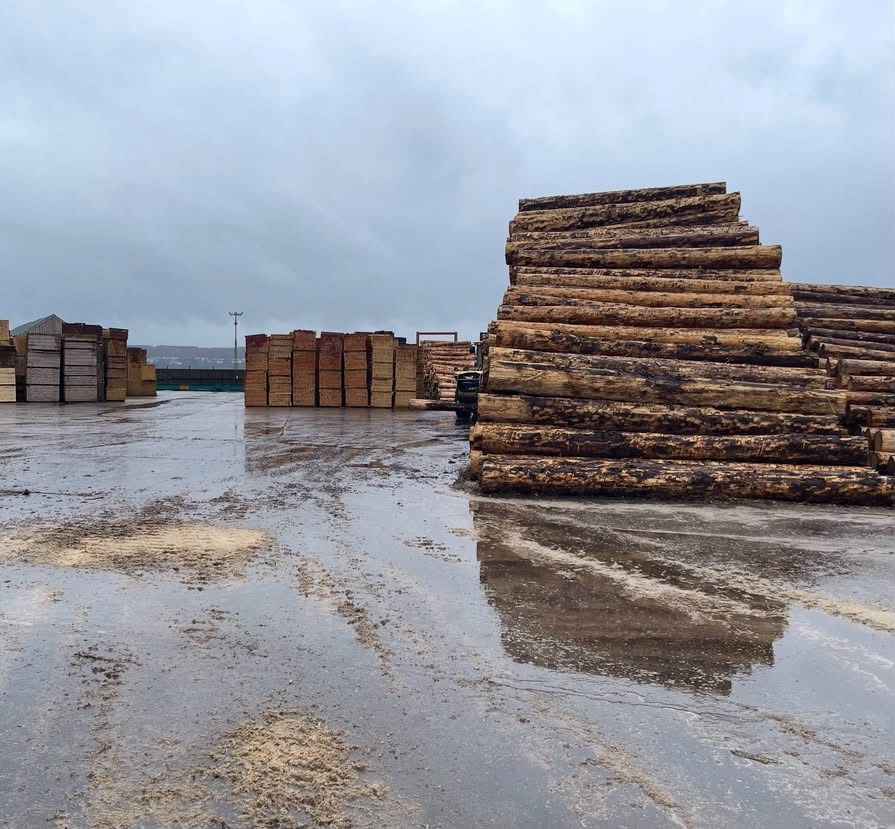
Italian sawmills are currently facing a challenging situation characterised by significantly reduced profit margins, reaching near zero. This confluence of adverse factors has created a ‘perfect storm’ for the industry, impacting operations and profitability.
Italian sawmills are facing extremely low or even negative profit margins due to a significant increase in Gulf container freight costs, which have risen from $500 to as much as $4,000 per container. Meanwhile, log prices in the DACH region—comprising Germany, Austria, and Switzerland—remain at €148 per cubic meter. This information comes from the latest report by the Conlegno Study Centre, published on Tuesday, May 5. The report warns that the ongoing conflict in Iran, which has closed the Strait of Hormuz, along with rising roundwood prices and escalating energy costs, is undermining profitability for over 2,000 member companies.

-
The WeighPro Wireless Weighing Link represents a precise and dependable weighing system designed specifically for round timber, eliminating the need for re-calibration. This system offers operators minimal maintenance requirements, boasting an impressive battery life of up to two years between recharges.
-
That’s a remarkable amount of work hours for a single machine, the Norcar 600 owned by Erkki Rinne is taken well care of, it even has the original Diesel engine.
-
It is not possible to eliminate chain shot, but there are simple steps that can be taken to reduce the risk.
-
Arwel takes great pride in the fact that the mill has no waste whatsoever, “the peelings are used for children’s playgrounds, gardens and for farm animals in barns in the winter and the sawdust has multiple uses in gardens and farms as well.
-
Timber hauliers need to encourage young blood in, and also look after the hauliers we have, we need make the sector a safe and positive place to work.
FIND US ON
Despite weak demand in Europe and an oversupply of raw materials typically leading to lower prices, log values have remained historically high across the region. This situation has left Italian sawmills struggling with high input costs while facing limited pricing power for their products. Conlegno describes this dynamic as a divergent binary effect, where soft demand does not translate into lower roundwood costs, effectively squeezing profit margins for every cubic meter processed.
Italy requires approximately four million cubic meters of softwood each year to support its construction and packaging sectors. However, Italian forests cover only about 20% of the necessary supply, with the remainder imported from Germany, Austria, and the Czech Republic. The recent challenges posed by Storm Vaia and a bark beetle infestation severely impacted Trentino’s log supply, which dropped from 500,000 cubic meters to as low as 250,000 cubic meters. Projections for 2025 indicate that production could reach only 450,000 cubic meters, significantly below Trentino’s post-Vaia milling capacity of 1.25 million cubic meters.
The Strait of Hormuz, a critical chokepoint that transports approximately a quarter of the world’s seaborne oil, has placed global fuel markets in a precarious situation. As a result, industrial diesel prices across Asia have surged by 140%, and container surcharges for Gulf transit trade routes have reached up to US$5,000.
This significant increase in prices followed the action taken by the Iranian Revolutionary Guard, which led to the closure of the Strait of Hormuz on February 28. In response, Maersk has requested an emergency bunker surcharge from US regulators, amounting to US$200 per twenty-foot equivalent unit (TEU) on head-haul routes and US$100 per TEU on backhaul routes. As of April 2, Drewry’s World Container Index stood at US$2,287 per 40-foot container.
Royal Dekker expressed concern last week, stating, “The consequences on the timber supply chain are being severely underestimated.”
Robbert Jan Dekker, director of Dutch tropical hardwood importer Royal Dekker, warned that the timber-chain consequences of the 28 February Strait of Hormuz closure are being severely underestimated as the freight shock reaches European softwood mills
The Hormuz crisis has caused Asian panel prices to increase by 15%. In response, Indian wood panel manufacturers have raised their prices by 5% to 15%. A survey by the Federation of Malaysian Manufacturers revealed that nine out of ten firms are either currently affected by the crisis or expect to feel its impact within four weeks. The International Tropical Timber Organization indicates a widespread adjustment in prices from Kuala

Lumpur to Bangalore and Ho Chi Minh City. In Italy, panel prices have risen by 5% to 10%, which is about half the increase seen in Asia.
On April 14, 2026, the European Commission announced a decision to finalize definitive anti-dumping duties of 5.4% on Brazilian softwood plywood. This decision affects the EU softwood plywood market, which is valued at €600 million annually, of which €216 million was previously imported from Brazil. While this measure has reduced low-cost competition for Italian and other European panel manufacturers, the relief has been overshadowed by significant increases in costs for logs, energy, and glue. Since the beginning of the year, the price of oriented strand board (OSB) has risen by approximately 10%, with the prices of particleboard and pine plywood also increasing across European mills.
Despite the modernization of Italian sawmills through Industry 4.0 investments and enhanced processing flexibility over the past 15 years, the broader European sector is still facing ongoing structural pressures related to raw material costs. The European Organisation of the Sawmill Industry highlighted these challenges at the International Softwood Conference in Oslo last October, warning that rising input prices are negatively impacting profitability across the continent. Tommi Sneck, president of the European Organisation of the Sawmill Industry, informed delegates, “Raw material prices have increased across Europe, denting profitability in the industry.”
Sign up for our free monthly newsletter here
Contact forestmachinemagazine@mail.com to get your products and services seen on the world’s largest professional forestry online news network.
#homeoflogging #writtenbyloggersforloggers #loggingallovertheworld
Written by loggers for loggers and dedicated solely to the equipment used in forestry operations.