

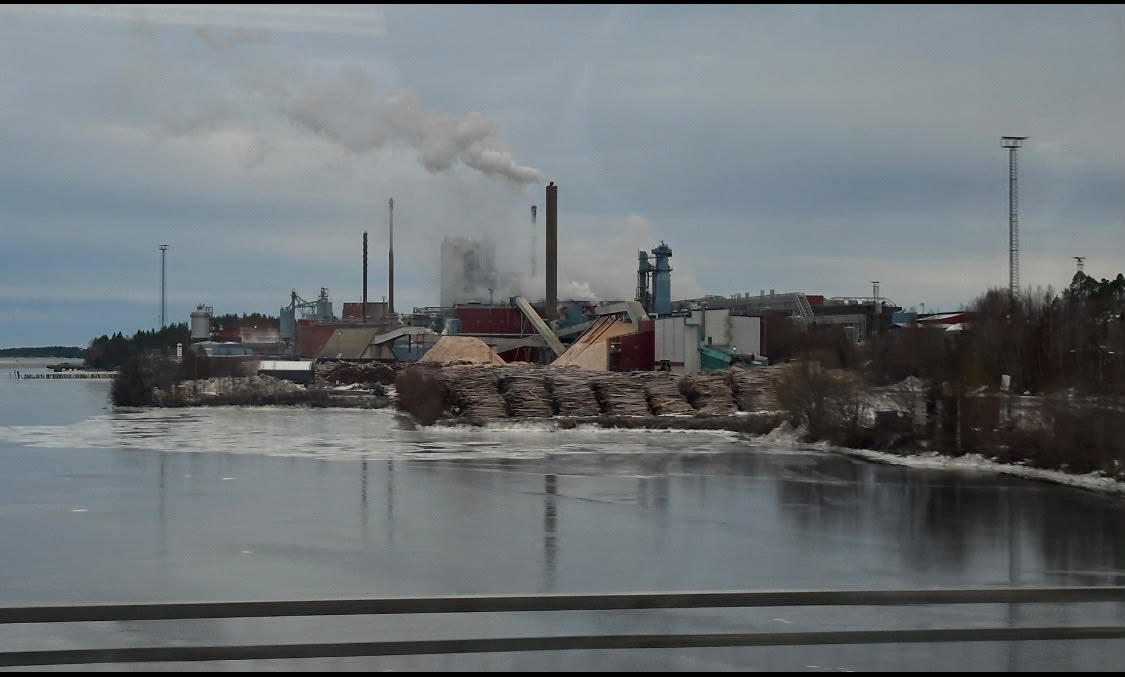
Nordic sawmills are facing challenges in competing with the lower priced spruce from Germany and Austria.
In a significant shift within the timber market, Central European producers have successfully regained their cost advantage over Nordic sawmills in just fourteen weeks. This turnaround comes on the heels of an assessment that indicated the salvage surplus, initially reported in April, was not retaining its value as expected. As a result, Nordic suppliers are now finding it increasingly difficult to compete on price. The analysis suggests that rising production costs and market dynamics have allowed Central European producers to offer more competitive pricing, leading to a notable challenge for their Nordic counterparts in the current economic landscape.

-
That’s a remarkable amount of work hours for a single machine, the Norcar 600 owned by Erkki Rinne is taken well care of, it even has the original Diesel engine.
-
Kieran Anders is a forestry contractor working in the lake district. His work involves hand cutting and extracting timber using a skidder and tractor-trailer forwarder.
-
It is not possible to eliminate chain shot, but there are simple steps that can be taken to reduce the risk.
-
Arwel takes great pride in the fact that the mill has no waste whatsoever, “the peelings are used for children’s playgrounds, gardens and for farm animals in barns in the winter and the sawdust has multiple uses in gardens and farms as well.
-
Timber hauliers need to encourage young blood in, and also look after the hauliers we have, we need make the sector a safe and positive place to work.
FIND US ON
Mills in Germany and Austria are currently offering spruce at prices that are up to €20 per cubic metre lower than those in Nordic regions. End users have reported receiving daily solicitations from Central European suppliers eager to secure their business. This information was provided by Tuomo Neuvonen and Cat Vitale, commodity analysts who published a European sawn timber price assessment on Monday.
The April edition had noted that the surplus of Central European salvage timber was nearly exhausted just 14 weeks prior, with German mills struggling to procure materials from depleted forest resources as the availability of roundwood diminished. Conversely, Nordic producers maintained a pricing advantage during this period.
One market source characterised the activities of Central European sellers, who are actively pursuing end users, as “attempting to capture volumes.” This situation illustrates a market inundated with spruce, leading to a shift in purchasing behaviors.
In eastern Finland, redundancies have already occurred, with Binderholz Nordic initiating statutory change negotiations affecting its entire workforce of 250 employees at its facilities in Lieksa and Nurmes as of July 17. The proposed measures include no more than ten permanent dismissals and temporary layoffs extending for 90 days.
Joonas Vitri, the Managing Director of Binderholz Nordic, commented to Lieksan Lehti that the cost of raw materials has become unsustainably high. He cited the cessation of Russian imports as a contributing factor to the increase in sawlog prices, as well as the ongoing conflict in Iran, which has driven up energy costs at a time when demand is declining.
Both mills are owned by Binderholz, which is recognised as Europe’s largest sawmiller. The annual sawlog consumption at these two Finnish locations is nearly one million cubic meters, with a combined capacity of 450,000 cubic meters. This acquisition occurred when the group purchased the mills from Vapo Timber in 2016.
As of now, neither the company nor the Finnish media outlets that reported on the negotiations have disclosed any outcomes. The consultation period, which lasted for two weeks, concluded at the end of July.
Finnish roundwood costs have been on the rise recently, according to the Natural Resources Institute Finland, which reported that in June, pine sawlogs were priced at 78.52 euros per cubic metre and spruce at 83.65 euros. This marks an increase of 7.3 percent and 8.4 percent from their lows in January, respectively.
One market contact noted the challenges in Northern Europe, stating, “It’s a better situation in southern regions.” This geographical divide is reflected in the market flows, with the UK barely accounting for 1 percent of EU log procurement, while central and eastern Europe have captured a larger share.
Nordic major companies are already feeling the impact, as evidenced by their financial reports. Södra’s sawmills reported a loss of 215 million kronor for the second quarter, and SCA’s wood division saw its operating profit plummet to 17 million kronor— a striking 93 percent drop—due to a 12 percent decline in deliveries.
The UK was the only country that experienced significant price changes, as imported pine grades declined while domestic spruce prices remained steady at their May levels. The upper limits of the assessed price ranges for Pine US 50x150mm and Pine grades V and VI decreased by 5 euros per cubic metre, resulting in a midpoints drop of between 0.8 and 1.1 percent.
Meanwhile, some Swedish producers have continued to offer competitively priced material to maintain production volumes and ensure liquidity. However, reports from these producers acknowledge that some sales are falling below profitable levels, and there seems to be no agreement among market participants on how to resolve this ongoing issue.

Contact forestmachinemagazine@mail.com to get your products and services seen on the world’s largest professional forestry online news network.
#homeoflogging #writtenbyloggersforloggers #loggingallovertheworld
Written by loggers for loggers and dedicated to bringing you the latest Forestry News