
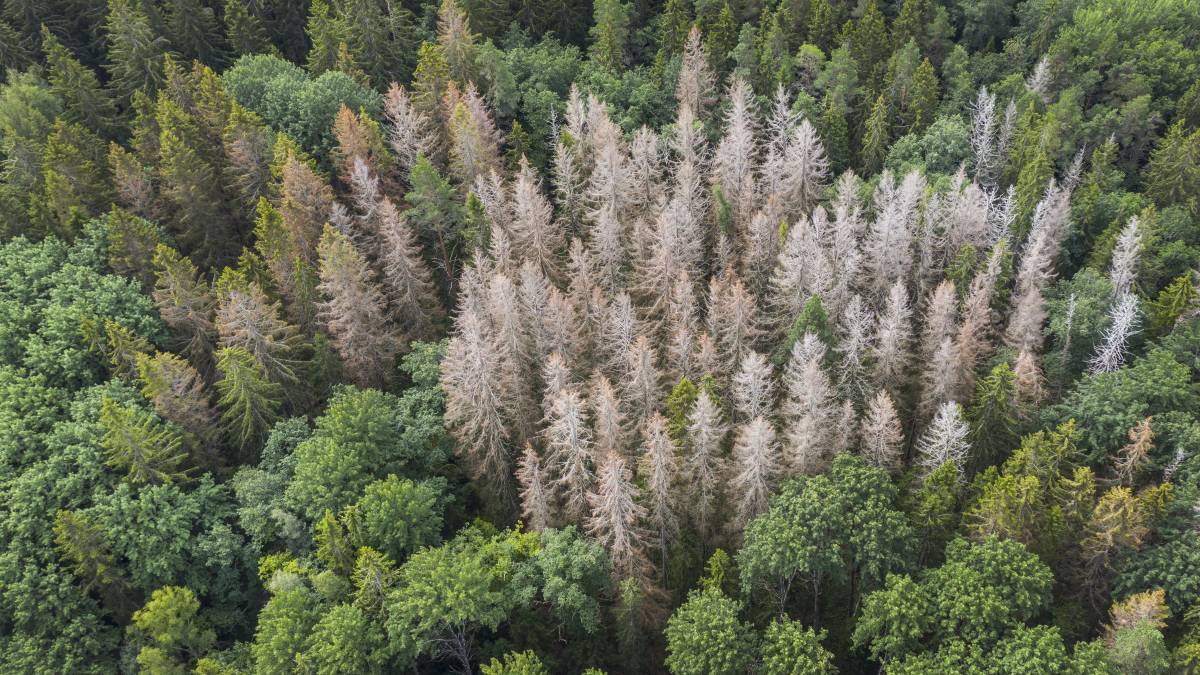
The spruce’s resistance to spruce bark beetle varies over the years and season. New research shows that the effects of extreme drought can persist for several years, but that defenses are gradually recovering.
Drought and bark beetle – a long-term connection
The extreme drought in the summer of 2018 contributed to the largest spruce bark beetle outbreak in Sweden in modern times. Millions of cubic metres of spruce died in the years that followed. A key question for forestry is how long the spruce’s defences are reduced after such a drought stress, and what factors affect the recovery.
An important element of the spruce bark beetle’s infestation is its interaction with pathogenic fungi. When the bark beetle attacks the spruce, fungal spores are introduced into the tree and trigger a local defence in the form of necrosis in the inner bark and wood. The size of these fungal necroses is used in research as a measure of the tree’s defense capacity: smaller necroses are interpreted as a more effective defense than larger ones.

-
That’s a remarkable amount of work hours for a single machine, the Norcar 600 owned by Erkki Rinne is taken well care of, it even has the original Diesel engine.
-
Kieran Anders is a forestry contractor working in the lake district. His work involves hand cutting and extracting timber using a skidder and tractor-trailer forwarder.
-
It is not possible to eliminate chain shot, but there are simple steps that can be taken to reduce the risk.
-
Arwel takes great pride in the fact that the mill has no waste whatsoever, “the peelings are used for children’s playgrounds, gardens and for farm animals in barns in the winter and the sawdust has multiple uses in gardens and farms as well.
-
Timber hauliers need to encourage young blood in, and also look after the hauliers we have, we need make the sector a safe and positive place to work.
FIND US ON
How the spruce’s defenses were investigated
The study was conducted on three trial sites in southern and central Sweden. Spruces were inoculated with the bark beetle-associated fungus Leptographium europhioides:
- on four occasions during the growing season (May–August)
- for two years, 2019 and 2021
- on a total of 480 trees
Two groups of spruce provenances were compared:
- Swedish provenances with early shooting
- Eastern European provenances with late firing
One month after inoculation, the area of the fungal necrosis formed under the bark was measured.
Water shortage can delay effects on spruce defences
The results show that the spruce’s defenses responded to water-related conditions, but that the correlations were not unambiguous. Differences in the size of the necrosis linked to soil moisture only appeared in certain comparisons and varied between sites and years.
A more consistent result was a correlation between dry conditions in the fall of the year prior to inoculation and a weaker defense the following summer. This suggests that water deficiency can give rise to delayed effects on the spruce’s defences, rather than that the defence capacity is controlled solely by current soil moisture at the time of attack.
Weakest defence in early summer
Granen’s defense varied clearly over the season:
- Larger necrosis appeared early in the summer, especially in June.
- The defense was generally stronger later in the growing season.
This seasonal variation was more consistent than differences related to soil moisture. The result is consistent with the theory that trees distribute their resources between growth and defense, where intense growth early in the season can limit the resources that can be allocated to defense.
Recovery over several years
On medium-moist (healthy) soils, necrosis was smaller in 2021 than in 2019, three years after the extreme drought in 2018. This indicates that the spruce defences had partly recovered over time. At the same time, clear differences between years remained, which shows that defence capability continues to be affected by variations in weather and water conditions several years after an extreme drought.
Provenance played less of a role
In this study, no clear differences in necrosis size were found between provenances with early and late shooting. Environmental and annual effects were more important for the defence response than phenological differences between provenances. However, the result does not mean that provenance is of no importance in general, but that no such effect could be demonstrated under the conditions studied here. However, another study from the Forestry Research Institute (Early shooting – a welcome weapon against spruce bark beetle infestation) showed differences and thus that early shooting can be a welcome weapon against spruce bark beetle infestation.

What does this mean for forestry?
Impacts of extreme droughts can persist for several years and should be taken into account in risk assessments even after normal weather conditions have returned.
The spruce’s defences are particularly weak early in the growing season, which coincides with periods of high bark beetle activity (Combating the spruce bark beetle in June when the spruce is most susceptible – Skogforsk).
Water-related factors affect defence capability, but the results show that the effects are context-dependent and interact with annual and seasonal variations.
Facts about the spruce bark beetle
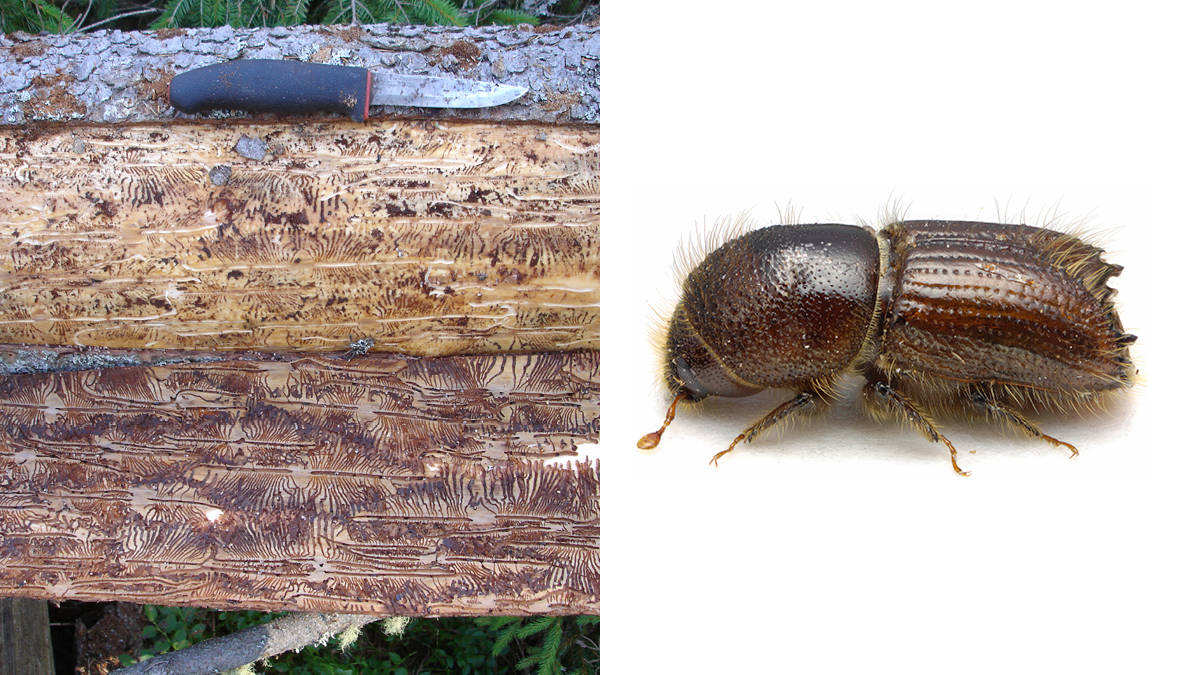
- The spruce bark beetle (Ips typographus) attacks spruce trunks and can breed both in standing trees and lying fresh wood. It prefers weakened spruces with healthy and thick bark, but can also multiply en masse and attack healthy trees, especially after storm felling where the wood has been left in the forest.
- The spruce bark beetle usually swarms from mid-May to June, with a possible second swarm later in the summer in southern Sweden.
- The spruce bark beetle overwinters both in the bark and in the ground. In southern Sweden, about 50 percent of bark beetles overwinter in the bark, while the proportion is lower in northern Sweden, probably because the temperature is lower – if they remain in the bark, they risk freezing to death.
Photo: Petter Öhrn and Göran Liljeberg
Source; Skogsforsk
Sign up for our free monthly newsletter here
Contact forestmachinemagazine@mail.com to get your products and services seen on the world’s largest professional forestry online news network.
#homeoflogging #writtenbyloggersforloggers #loggingallovertheworld
Written by loggers for loggers and dedicated solely to the equipment used in forestry operations.