
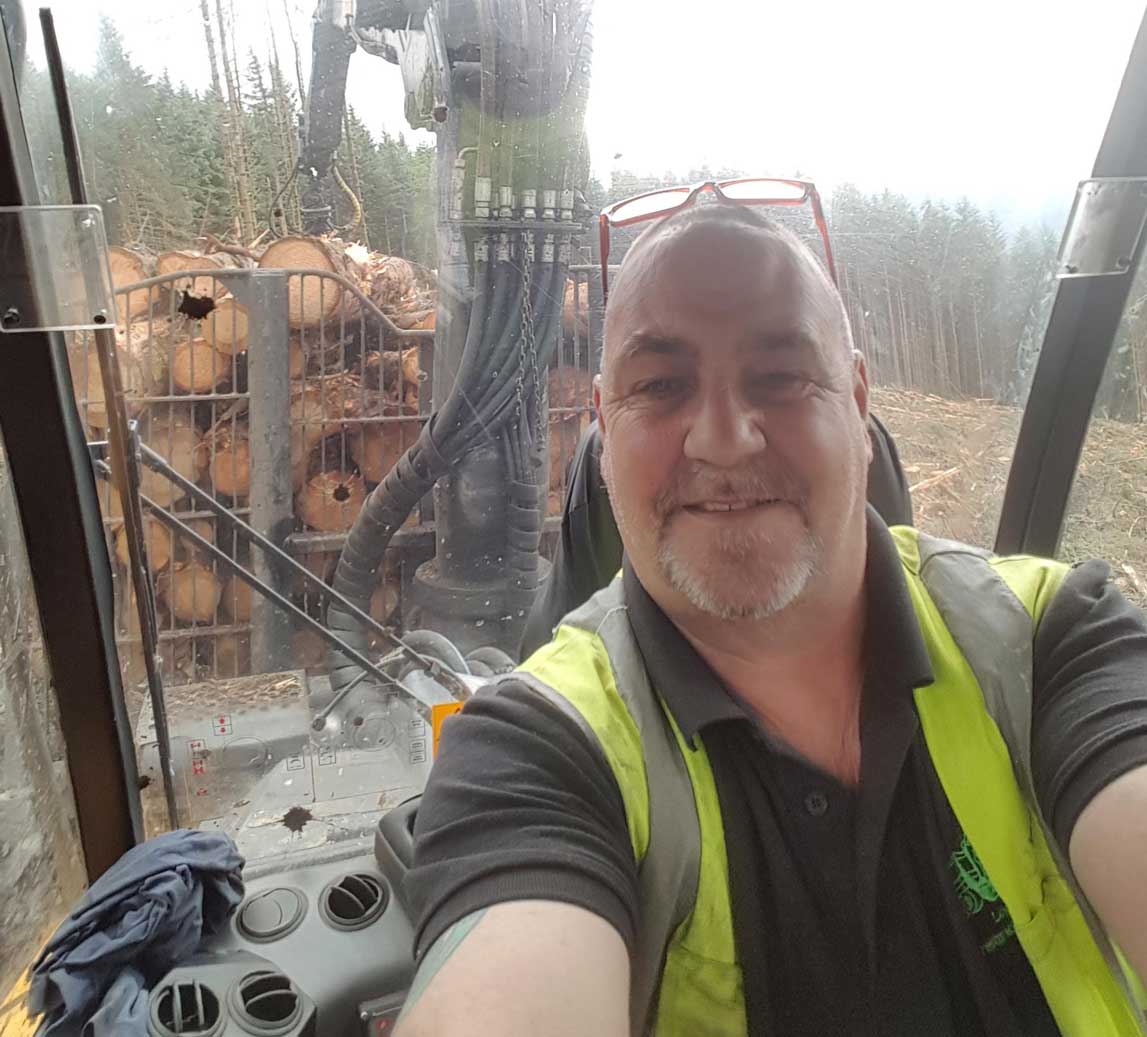
New Harvester Laser Scanning technology can help harvester operators detect crooked trees before they are felled and cut.
In a new Harvester Laser Scanning project, the Forestry Research Institute of Sweden, SLU, RISE and Komatsu Forest have investigated whether laser scanners mounted on harvesters can measure curvature to be used for better bucking. The results show that the technology works and that in the long term it can contribute to higher timber values and fewer wrecks.
-
The WeighPro Wireless Weighing Link represents a precise and dependable weighing system designed specifically for round timber, eliminating the need for re-calibration. This system offers operators minimal maintenance requirements, boasting an impressive battery life of up to two years between recharges.
-
That’s a remarkable amount of work hours for a single machine, the Norcar 600 owned by Erkki Rinne is taken well care of, it even has the original Diesel engine.
-
It is not possible to eliminate chain shot, but there are simple steps that can be taken to reduce the risk.
-
Arwel takes great pride in the fact that the mill has no waste whatsoever, “the peelings are used for children’s playgrounds, gardens and for farm animals in barns in the winter and the sawdust has multiple uses in gardens and farms as well.
-
Timber hauliers need to encourage young blood in, and also look after the hauliers we have, we need make the sector a safe and positive place to work.
FIND US ON
Bending costs money
Bending is one of the most common reasons why pine logs are scrapped or downgraded at Swedish sawmills. Since today’s harvesters lack automatic tools to measure bend, the responsibility rests entirely on the machine operator’s experience and visual judgement. This puts a mental strain on me and takes focus away from other work tasks.
If bends can be identified before the tree is felled, the possibility opens up to adapt the bucking so that crooked parts are avoided in logs. This can both reduce the proportion of wreckage and increase the value of the raw material produced.
Laser scanning from the harvester measures standing trees
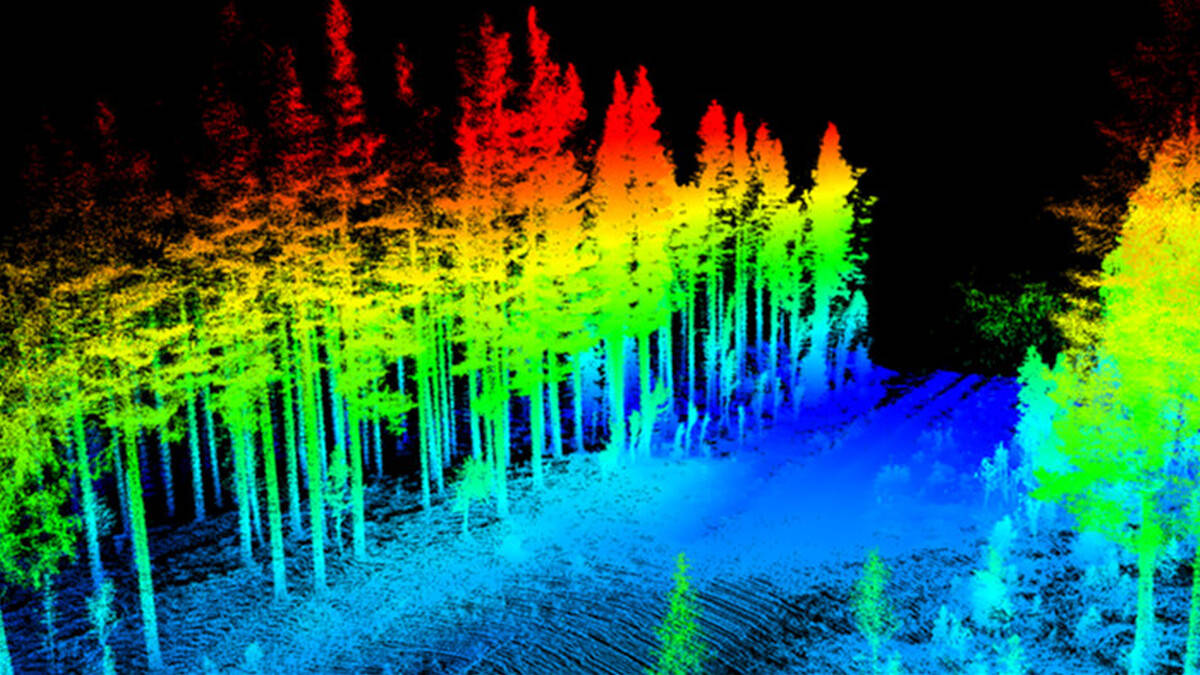
The project has investigated whether mobile laser scanning (MLS) mounted on harvesters can be used to measure the curvature of the trees around the harvester and whether this information can be used to improve the bucking decisions. The technology is based on a laser scanner continuously measuring the surroundings with millions of laser beams and creating three-dimensional point clouds that describe the shape of the trees. Based on this data, algorithms were developed that can identify stems, reconstruct the shape of the stem and calculate different measurements of curvature. The study was conducted on two pine-dominated final felling areas outside Umeå.
The results show that it is possible to measure long bend on standing trees with MLS mounted on harvesters. For the part of the trunk where the data quality was highest – between one and five meters above the ground – a measurement accuracy was achieved that is considered promising for future operational use.
Value increase through better bucking
Bucking simulations based on measured trunk shape showed that consideration of bend can increase timber yield and timber value by avoiding making logs that otherwise risk being scrapped at the industry. The gains were greatest for trees with clear curvatures in the lower part of the trunk.
By integrating laser scanning into the harvester’s bucking computer, the machine operator can be supported in making decisions that maximize the tree’s overall value. This means, for example, that a shorter pulpwood log can be cut out over the crooked part of the trunk, which enables the removal of straight logs higher up.
Challenges remain for practical application
Despite the good potential, there are challenges that require further development:
- Detection: Better algorithms are needed to measure crookedness both high up in the trees and close to the ground.
- Complex shapes: Algorithms need to get better at handling complex stem shapes such as cross bends and double peaks.
- Laser scanning during felling: Laser scanning from a working machine is difficult, many things move around the machine and areas are obscured by, for example, the crane.
The study also included an initial pilot study of AI-based detection of the timber defect lyre using a camera. The results showed that the method has potential, but that significantly larger amounts of training data are required for practical application.

Looking ahead
In summary, the project shows that the technology has good conditions to contribute to more efficient use of raw materials and increased value creation in the forest value chain. The next step in development is to scale up testing, improve the treatment of point clouds, and evaluate the economic impact on a larger scale.
The project “Measurement of bend and timber quality with mobile sensors on harvesters” has been carried out in collaboration between the Forestry Research Institute of Sweden, SLU, RISE and Komatsu Forest AB. It has been funded by TräCentrum Norr, Mistra Digital Forest, Åforsk, the Northern Forest Research Foundation, the Önnesjö Foundation and the Forestry Research Institute’s framework grant.

Contact forestmachinemagazine@mail.com to get your products and services seen on the world’s largest professional forestry online news network.
#homeoflogging #writtenbyloggersforloggers #loggingallovertheworld
Written by loggers for loggers and dedicated to the equipment used in forestry operations.