
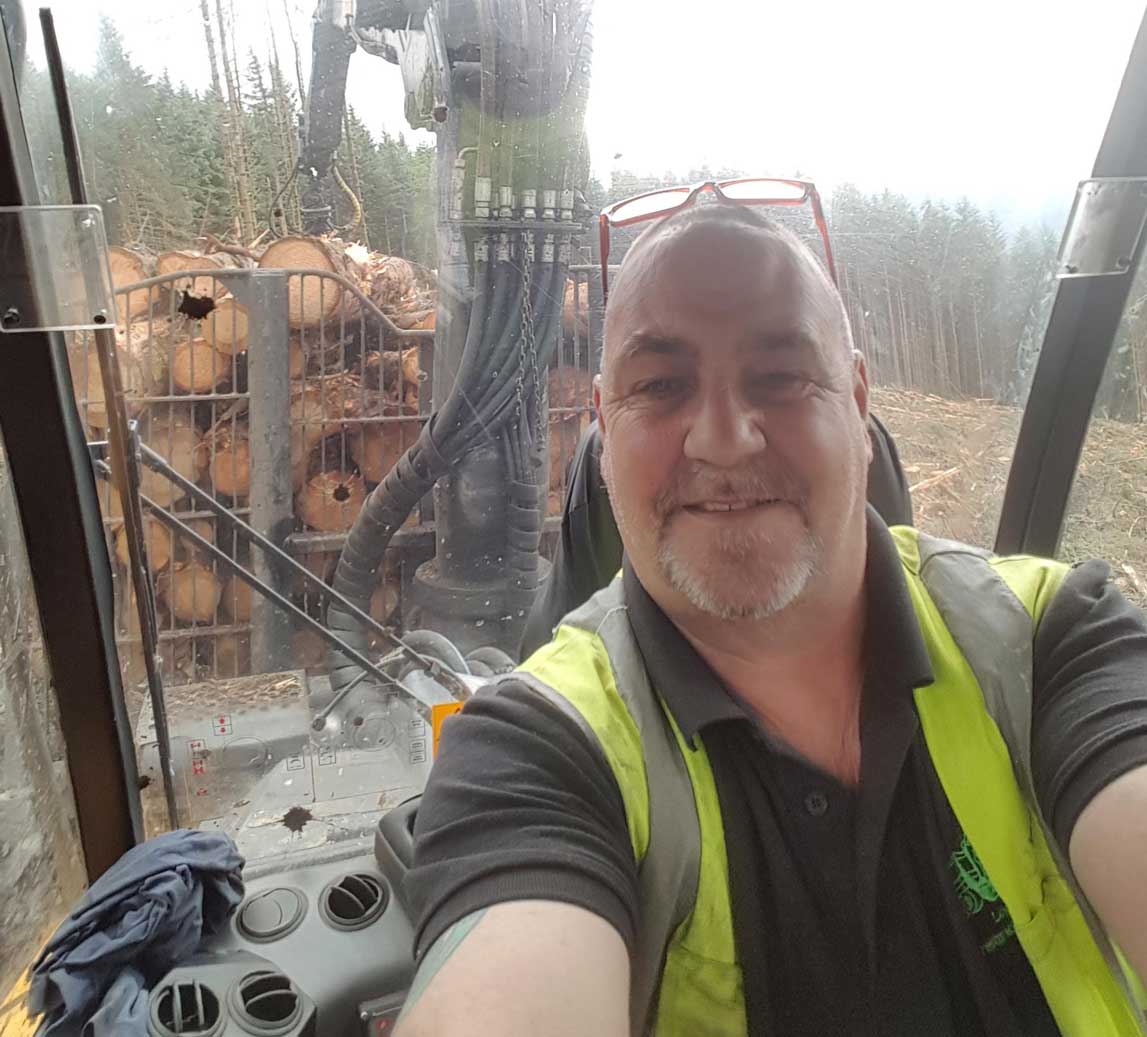
It has been a turbulent period for forestry in the UK but investment in recruitment and training is still a priority
If you are asking whether forestry is in demand in the UK, the short answer is yes – but not evenly, and not in every part of the trade. Demand is there across harvesting, haulage, machine operation, woodland management and processing, yet the pressure points vary depending on timber markets, grant schemes, policy shifts and the availability of skilled people who can actually get the work done.
That matters because forestry is one of those sectors where demand on paper and demand on the ground are not always the same thing. A region can have standing timber ready to move, mills wanting volume and landowners planning work, but still struggle to keep jobs moving if there are not enough competent operators, enough haulage capacity or enough suitable kit in the right place at the right time.

-
The WeighPro Wireless Weighing Link represents a precise and dependable weighing system designed specifically for round timber, eliminating the need for re-calibration. This system offers operators minimal maintenance requirements, boasting an impressive battery life of up to two years between recharges.
-
That’s a remarkable amount of work hours for a single machine, the Norcar 600 owned by Erkki Rinne is taken well care of, it even has the original Diesel engine.
-
It is not possible to eliminate chain shot, but there are simple steps that can be taken to reduce the risk.
-
Arwel takes great pride in the fact that the mill has no waste whatsoever, “the peelings are used for children’s playgrounds, gardens and for farm animals in barns in the winter and the sawdust has multiple uses in gardens and farms as well.
-
Timber hauliers need to encourage young blood in, and also look after the hauliers we have, we need make the sector a safe and positive place to work.
FIND US ON
Is forestry in demand in the UK right now?
Across much of the sector, yes. The strongest demand is not some vague interest in trees or countryside jobs. It is practical, commercial demand tied to timber production, restocking, harvesting programmes, transport, biomass supply and long-term woodland creation targets.
The clearest sign is labour pressure. Contractors in many areas continue to look for experienced harvester and forwarder operators, reliable chainsaw hands, HGV drivers with forestry knowledge, mechanics who understand forest machines and supervisors who can manage compliance as well as production. Those roles are difficult to fill quickly because they rely on field experience, not just certificates.
There is also demand coming from the wider supply chain. Sawmills need a stable flow of roundwood. Biomass users need feedstock. Estates and forestry investors need planting, maintenance and harvesting work carried out to programme. Public and private woodland managers need contractors who can meet environmental rules without slowing production to a standstill.
That said, demand can feel stronger in one quarter than the next. Softwood prices move. Haulage costs bite. Weather wrecks access. Planning and environmental constraints delay work. So the demand is real, but it is tied to operational reality rather than headline optimism.
Where the strongest demand sits
The biggest pressure is often found in skilled operational roles. Modern forestry relies heavily on mechanised harvesting, and that means experienced machine operators remain in short supply. A good harvester operator is not easily replaced. The same goes for forwarder operators who can keep extraction moving without tearing up a site or losing productivity on poor ground.
Haulage is another pinch point. Even when timber is ready roadside, getting it shifted depends on wagon availability, driver availability and transport economics. Forestry haulage is specialist work. Tight sites, forest roads, changing load conditions and strict compliance demands mean not every general haulage operator wants the job.
Demand is also rising around woodland creation and establishment, though this side of the market behaves differently from harvesting. Planting targets, grant-backed schemes and carbon-led investment have all pushed more attention towards new woodland, beat-up work, fencing, access and early-stage maintenance. The challenge is that this work can be seasonal, region-specific and vulnerable to delays in approvals.
The machinery angle matters
For this readership, the labour question cannot be separated from the machinery question. When demand rises but skilled operators are scarce, contractors naturally look at kit choices more carefully. Machine

uptime, operator comfort, fuel burn, telematics, attachment compatibility and dealer support all become more important.
A contractor under pressure to cover more hectares with fewer good operators will think hard about machine productivity and reliability. The same goes for wood chippers, processors, trailers, loading cranes and transport equipment. Demand in the sector does not just show up as more job adverts. It shows up in replacement cycles, used machine pricing, workshop workload and the appetite for kit that can reduce downtime.
This is one reason the used equipment market often tells you as much as the job market. When clean, well-maintained forest machines move quickly, it usually says something about contractor confidence and unmet operational demand. When buyers become cautious, that can point to uncertainty around timber prices, finance costs or work pipelines.
The weak spots and trade-offs
Saying forestry is in demand in the UK does not mean every forestry business is booming. There are real pressures that can limit growth or make demand hard to convert into profit.
The first is margin. Contractors may have full diaries but still feel squeezed by fuel, parts, finance, labour and insurance costs. A strong workload does not automatically mean healthy returns, especially if rates have not kept pace with input costs.
The second is regulation and compliance. Felling permissions, habitat considerations, watercourse protection, road issues and transport rules all add time and complexity. Most of that is part of modern forestry and has to be managed properly, but it does affect how much work can actually be completed.
The third is geography. Demand looks different in Scotland than it does in southern England. It looks different again in Wales. Some areas have a strong commercial softwood base and established contracting networks. Others have fragmented woodland, smaller parcels, more mixed objectives and less continuity of work for heavy harvesting outfits.
Recruitment is still the hard part
If there is one place where demand is easiest to see, it is recruitment. Good people remain difficult to find and even harder to keep. Forestry work asks a lot of people. It is outdoors, weather-dependent, safety-critical and often remote. The hours can be long, the travel can be awkward and the learning curve is steep.
That does not put serious operators off, but it does narrow the field. Employers are competing not only with other forestry businesses, but with agriculture, plant hire, civil engineering, utilities and transport. A mechanically minded young worker with machine sense has options.
This is where the sector still has work to do. Wages matter, obviously, but so do training routes, progression, machine quality, site conditions and whether a new entrant is given proper support. Businesses that invest in people, not just iron, tend to be in a stronger position when the market tightens.
What it means for contractors and suppliers
For contractors, demand is an opportunity only if capacity is under control. Taking on more work without the right operators, backup kit or workshop support can damage margins quickly. Plenty of firms have learned the hard way that a busy year can still be a painful one.
For manufacturers, dealers and suppliers, a market with steady demand but ongoing skills shortages creates a clear brief. Machines need to be productive, dependable and easier to live with. Support needs to be quick. Parts availability matters. Training matters. So does finance, especially when businesses are trying to modernise fleets without taking on reckless risk.
For those entering the sector, the answer to is forestry in demand uk is encouraging, provided they understand what is actually in demand. The market is not crying out for armchair interest in forestry. It needs practical competence – people who can operate, repair, plan, transport, process and deliver.
There is no guarantee every corner of the trade will stay hot all the time. Timber markets will move, policy will shift and some businesses will struggle. But the underlying need for skilled forestry work across the UK is not going away. For firms that can combine good people, reliable kit and sensible commercial judgement, there is still work to be won – and plenty of it.
Sign up for our free monthly newsletter here
Contact forestmachinemagazine@mail.com to get your products and services seen on the world’s largest professional forestry online news network.
#homeoflogging #writtenbyloggersforloggers #loggingallovertheworld
Written by loggers for loggers and dedicated solely to the equipment used in forestry operations.