Matching Mini Skid Steer Attachments to Hydraulic Flow for Site Clearing and Establishment
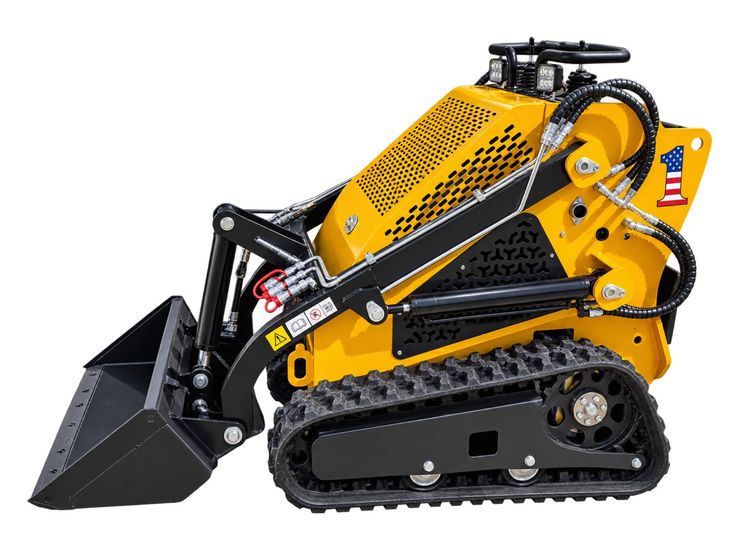
Mini skid steer, the small stand-on or walk-behind tracked loaders, have become a common sight on establishment and restocking work. They fit through gateways and between stumps where a full-size machine cannot; they leave a light footprint on soft ground, and one machine can run a whole set of tools in a day: a brush cutter in the morning, a stump grinder after lunch, an auger for planting holes or
fence posts.
-
The WeighPro Wireless Weighing Link represents a precise and dependable weighing system designed specifically for round timber, eliminating the need for re-calibration. This system offers operators minimal maintenance requirements, boasting an impressive battery life of up to two years between recharges.
-
That’s a remarkable amount of work hours for a single machine, the Norcar 600 owned by Erkki Rinne is taken well care of, it even has the original Diesel engine.
-
It is not possible to eliminate chain shot, but there are simple steps that can be taken to reduce the risk.
-
Arwel takes great pride in the fact that the mill has no waste whatsoever, “the peelings are used for children’s playgrounds, gardens and for farm animals in barns in the winter and the sawdust has multiple uses in gardens and farms as well.
-
Timber hauliers need to encourage young blood in, and also look after the hauliers we have, we need make the sector a safe and positive place to work.
FIND US ON
The catch is that every one of those tools runs on the loader’s auxiliary hydraulics, and a small machine has a small hydraulic budget. Get the match wrong and the tool stalls, overheats, or wears out early. Get it right, and a mini loader does far more work than its size suggests.
Two numbers decide everything: flow and pressure
Every hydraulic attachment needs a certain flow (how much oil arrives per minute, in litres per minute or US gallons per minute) and a certain pressure (how hard that oil pushes, in bar or psi). Flow sets how fast the tool turns. Pressure sets how much force it can apply before it bogs down.
The loader’s auxiliary circuit has a rated flow and a relief pressure, usually printed in the operator’s manual or on the spec sheet. The attachment has a recommended operating range, normally a minimum and maximum flow and a maximum pressure. The rule is simple: the loader’s rated auxiliary flow should sit inside the attachment’s range, and its relief pressure should not exceed the attachment’s maximum.
Mini loaders vary a lot. Smaller petrol stand-on machines often deliver somewhere around 30 to 45 L/min on the auxiliary circuit, while larger diesel minis can reach 60 to 75 L/min or more. That spread is why two machines that look almost identical can run the same brush cutter very differently.
What goes wrong when the match is off
Too little flow. The tool runs slowly. A brush cutter blade that should be spinning at full speed instead chews and tears, and a stump grinder wheel stalls in hard wood. Operators tend to compensate by pushing harder, which raises pressure, which pushes oil over the relief valve and turns engine power into heat instead of work.
Too much flow. The tool overspeeds. Motors and bearings run past their design limits, seals fail early, and, on cutting heads, overspeed is a safety concern. Some attachments include a case drain or flow- control valve for exactly this reason. Do not remove it.
Heat. Small machines carry small oil reservoirs, so they heat up quickly under continuous duty like mulching or grinding. If the machine has an oil cooler, keep it clean; on brush work it clogs with leaves and dust faster than most people expect. If oil temperature climbs, stop and let it recover rather than
running through it.
Matching common establishment tools
Brush cutters and rotary mowers. These are continuous-duty tools and among the most flow-hungry.
Check the minimum flow carefully. A cutter rated for the top of a mini loader’s range will disappoint on a smaller machine. On sites with bramble, birch regrowth, and saplings, a cutter that runs at its proper speed with less flow will outperform a wider deck starved of oil.

Stump grinders. Grinders want steady flow and enough pressure to hold the wheel in the cut. Take small bites and sweep across the stump rather than plunging. On a low-flow machine, choose a grinder built for that flow rather than a larger wheel that will stall.
Augers. Auger drives are torque tools and are the most forgiving match. Most will run acceptably across a wide flow range, turning slower on lower flow but still drilling. Choose the drive by the hole diameter and ground conditions. Stony or root-filled ground needs more torque and a stronger bit, not more speed.
Grapples and rakes. Rock buckets, root rakes and grapples use hydraulics only to open and close, so flow barely matters. They are the tools to reach for when clearing brash and windrowing debris after cutting.
Before you buy or hire an attachment
- Find the loader’s real auxiliary figures from the manual: rated flow, relief pressure, and whether it has a separate high-flow circuit.
- Read the attachment’s range, not just its headline size. Minimum flow matters more than maximum on a small machine.
- Check the couplers and case drain. Use flat-face couplers in the right size, and add a case drain line if the motor needs one. Running a motor that needs a case drain without one can blow its shaft seal.
- Check the mounting. Many mini loaders share a common quick-attach plate, but not all do. Confirm the plate before anything else.
- Test before the job. Run the tool unloaded for a few minutes and watch for speed, noise and oil temperature. Then put it in the work and see whether it holds speed.
Look after the circuit
Keep couplers capped and clean. Grit in a coupler goes straight into the pump. Check hoses for rubbing where they run along the boom, because on brush work they snag constantly. Change hydraulic oil and filters on the manufacturer’s schedule, and sooner if the machine has been running hot for long periods.
A mini loader is rarely the limit on a small clearing job. The match between the machine and the tool usually is. Spend ten minutes with the two spec sheets before the job and the machine will do the work it was bought for.
Braden Chupp is a consultant with Chupp Industrial in Chouteau, Oklahoma, which has supplied skid steers, mini skid steers and attachments for more than 15 years.
Contact forestmachinemagazine@mail.com to get your products and services in front of the world’s largest professional forestry online news network.
#homeoflogging #writtenbyloggersforloggers #loggingallovertheworld
Written by loggers for loggers and dedicated to bringing you the latest forestry news