
Scottish Forestry faces legal action for the fourth time in just two years, as mounting environmental concerns continue to spark controversy over their practices and policies. This ongoing series of court cases underscores growing apprehensions surrounding the environmental impact of forestry management in Scotland.
Scottish Forestry-Press releases can sometimes leave me perplexed, especially when considering our current progress toward annual UK tree-planting goals. In 2024, we planted 16,000 hectares; in 2025, 15,580 hectares. This is significantly below the government’s proposed target of 30,000 hectares per year, which equates to approximately 90 to 120 million trees annually

-
The WeighPro Wireless Weighing Link represents a precise and dependable weighing system designed specifically for round timber, eliminating the need for re-calibration. This system offers operators minimal maintenance requirements, boasting an impressive battery life of up to two years between recharges.
-
That’s a remarkable amount of work hours for a single machine, the Norcar 600 owned by Erkki Rinne is taken well care of, it even has the original Diesel engine.
-
It is not possible to eliminate chain shot, but there are simple steps that can be taken to reduce the risk.
-
Arwel takes great pride in the fact that the mill has no waste whatsoever, “the peelings are used for children’s playgrounds, gardens and for farm animals in barns in the winter and the sawdust has multiple uses in gardens and farms as well.
-
Timber hauliers need to encourage young blood in, and also look after the hauliers we have, we need make the sector a safe and positive place to work.
FIND US ON
Related Posts
In straightforward terms, the current annual target of 30,000 hectares is insufficient for the United Kingdom to achieve its net-zero objectives. This figure must increase to at least 37,000 hectares to align with the established pathway towards net zero.
There are legitimate arguments both for and against tree planting; however, it is crucial that we enhance our sustainable timber supply. We must strive to collaborate with nature while simultaneously working to reduce our carbon dioxide levels.
Scottish Forestry has once again been challenged on its decision that a major forestry plantation in the south of Scotland can proceed without the need for an environmental impact assessment (EIA).
The latest challenge concerns a 307-hectare conifer scheme proposed for Duchrae, near St John’s Town of Dalry in Dumfries and Galloway. It is the fourth time in two years that the Scottish Government agency has been taken to court over its involvement in large-scale forestry plantations
At a preliminary hearing on Friday, the courts accepted a petition to challenge the scheme, lodged by neighbouring landowner and farmer Jim Ramsey, and confirmed a judicial review will go ahead before the Court of Session in due course.
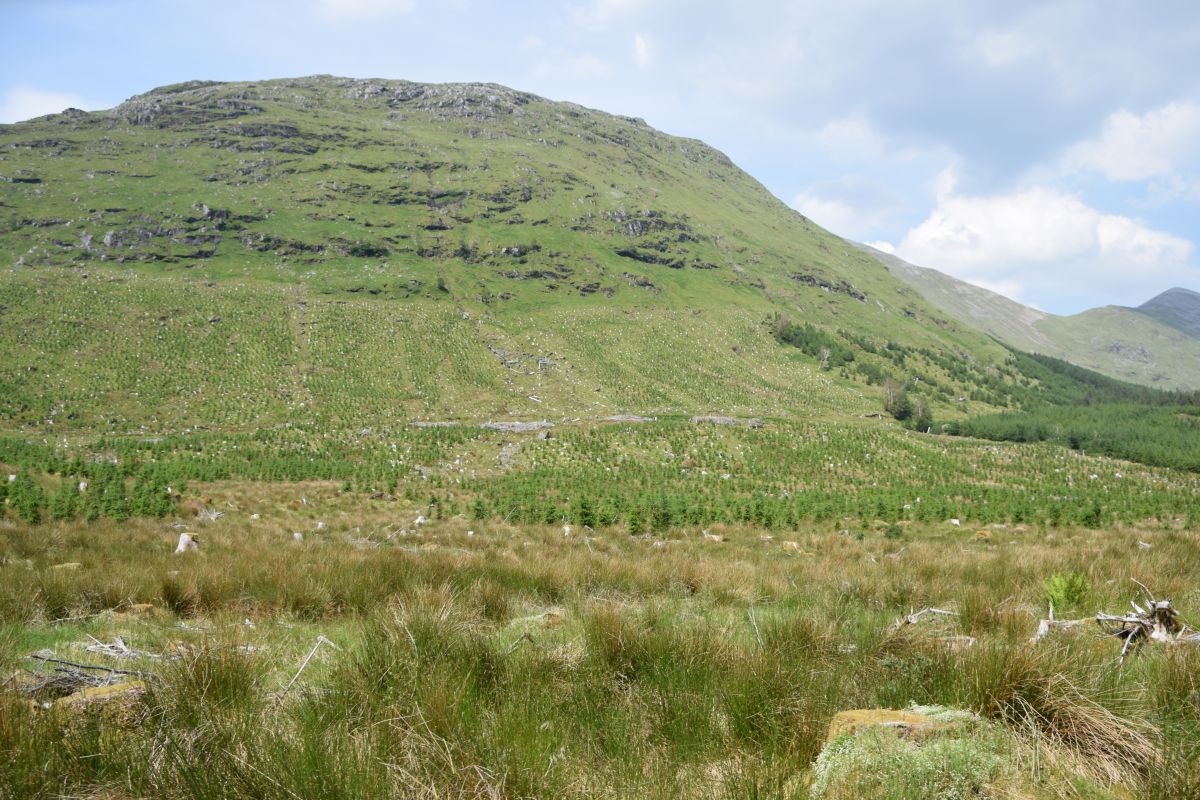
Mr Ramsey and local campaigners are protesting against the proposed Duchrae plantation due to concerns about its potential impact on local wildlife. They highlight that species such as the curlew and lapwing, which require large areas of open ground, may be adversely affected.
Some opponents have raised concerns about the quality of the surveys used to assess the site’s suitability for planting, particularly because the area includes extensive deep peat. Conifer plantations can disrupt the fragile balance of bog ecosystems by drying out the peat. This process can change the role of peat from a carbon sink to a carbon emitter.
The latest challenge follows three separate judicial reviews concerning two large-scale forestry plantations approved by Scottish Forestry over the past two years.
One of these proposed plantations is located at Stobo Hope in the Borders. After local residents successfully challenged the project, the government agency was compelled to cancel the original contract immediately. Judges ruled that an Environmental Impact Assessment (EIA) was necessary before any planting could proceed.

The other proposed plantation, covering 579 hectares at Todrig, also in the Borders, faced a successful legal challenge. The judge ruled that the forestry agency acted unlawfully by failing to properly assess the environmental impacts. This included neglecting to consider the risks the project posed to sensitive and vulnerable wildlife, such as the Northern Brown Argus butterfly.
Duchrae Estate Limited, the company behind the Duchrae forestry scheme, insists the plans have undergone detailed assessment across a wide range of environmental factors.
David Stein, the company’s director, stated, “This is a carefully designed project that will provide homegrown timber along with significant long-term environmental benefits.”
Hayden Morrison, director of Goldcrest Land & Forestry, who is overseeing the strategic asset management of the Duchrae site for the owner, commented, “This was a rigorous process supported by comprehensive specialist surveys, including assessments of landscape, ecology, hydrology, and peat.”
“The design protects existing peatland, including areas of deep peat, and ensures that there is no unacceptable loss of productive agricultural land. Based on this, Scottish Forestry concluded that a formal Environmental Impact Assessment (EIA) was not necessary.”Mr. Morrison added, “Duchrae is a modern, mixed-use forest designed to deliver multiple long-term benefits, including timber production, carbon sequestration, climate resilience, and biodiversity enhancement. The scheme will create a diverse mosaic of habitats that combines open ground, native woodland, and productive conifer planting.
Talk about caught between a rock and a hard place
Sign up for our free monthly newsletter here
Contact forestmachinemagazine@mail.com to get your products and services seen on the world’s largest professional forestry online news network.
#homeoflogging #writtenbyloggersforloggers #loggingallovertheworld
Written by loggers for loggers and dedicated solely to the equipment used in forestry operations.