
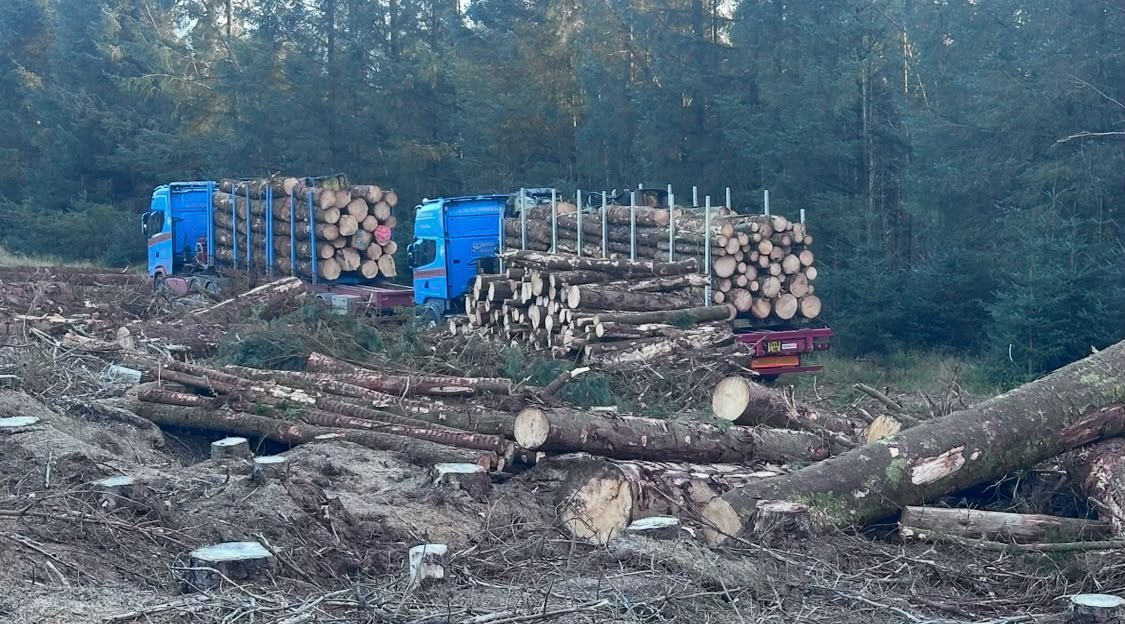
Timber haulage isn’t general freight with a bit of bark on it. It is specialist transport work where the driver, the lorry and the operator all need to be right.
For anyone looking at timber haulage jobs, or trying to fill them, the reality is straightforward. Good people are hard to find because the work asks more of them. It needs road sense, machine awareness, patience in the woods, and a proper handle on compliance. The best drivers are not just steering wheel holders. They understand timber, loading, site conditions, axle weights and how quickly a routine day can turn awkward.
-
The WeighPro Wireless Weighing Link represents a precise and dependable weighing system designed specifically for round timber, eliminating the need for re-calibration. This system offers operators minimal maintenance requirements, boasting an impressive battery life of up to two years between recharges.
-
That’s a remarkable amount of work hours for a single machine, the Norcar 600 owned by Erkki Rinne is taken well care of, it even has the original Diesel engine.
-
It is not possible to eliminate chain shot, but there are simple steps that can be taken to reduce the risk.
-
Arwel takes great pride in the fact that the mill has no waste whatsoever, “the peelings are used for children’s playgrounds, gardens and for farm animals in barns in the winter and the sawdust has multiple uses in gardens and farms as well.
-
Timber hauliers need to encourage young blood in, and also look after the hauliers we have, we need make the sector a safe and positive place to work.
FIND US ON
Why timber haulage jobs are different
A timber driver works in two worlds. One is the public road network, with all the legal and safety obligations that come with running an HGV commercially. The other is the forest and estate road environment, where surfaces change by the hour, weather can shut down access, and loading points are often tight, muddy and unforgiving.
That split matters when employers recruit. A solid curtainsider or bulk tipper background can help, but it does not always transfer cleanly. Timber haulage brings different risks. The load is long, heavy and can move if it is not properly stacked and secured. Collection points may involve reversing into rough ground with limited visibility. On some jobs, a driver will be expected to work confidently around harvesters, forwarders, loaders and sawmill traffic without getting in the way.
This is also why rates, retention and expectations vary so much. One operator may be running straightforward roadside collections into a local mill. Another may be dealing with remote upland sites, narrow lanes and long days split between waiting, loading and distance haulage. On paper both are timber haulage jobs. In practice, they can be very different propositions.
The skills employers actually look for
Any serious timber haulier starts with the basics. Drivers need the right licence entitlement, Driver CPC and a clear enough grasp of working time and tachograph rules to stay out of trouble. Beyond that, forestry operators usually look for practical judgement before anything else.
A driver who can read a site, assess the ground, spot a poor stack, question a doubtful load and keep calm under pressure is worth having. Mechanical sympathy matters too. Timber outfits take punishment, especially on rough access routes, and a driver who looks after tyres, hydraulics, bunks, stanchions and crane equipment will save an operator real money.
Experience with self-loading timber cranes is still a major advantage in many fleets, though not every role requires it. Where crane work is part of the job, employers will want proof that the driver can load cleanly and safely without battering the trailer or wasting time. If the role is purely drawbar or artic haulage with loading done on site, that requirement may drop away, but awareness around loading operations never does.
Communication also counts for more than some admit. Timber movements rely on mills, harvesting sites, woodland managers and transport planners all staying aligned. A driver who reports delays, damaged access, stack problems or route issues early is easier to plan around than one who goes quiet and brings the problem back to the yard.
What makes a good timber haulage operator to work for
From the driver’s side, not all employers are equal. The decent firms are usually easy to spot. Their kit is properly maintained, rates are clearly explained, and they are honest about the kind of work involved. If the job includes regular nights out, awkward access, crane work or heavy handball with chains and securing gear, that should be stated upfront.

The same goes for vehicle spec. A modern, well-maintained lorry with sensible tyre choice, reliable hydraulics and fit-for-purpose guarding will make a hard job manageable. Poor kit turns every shift into a battle. In timber, breakdowns and defects are not just costly. They can quickly become safety issues when you are carrying weight in poor conditions.
Good operators also understand that forestry haulage cannot always be run like pallet work. Delays happen. Weather closes sites. Forest road conditions change. Mills get congested. The strongest businesses plan for that reality rather than pushing drivers to make up lost time in ways that pose risk. For experienced hands, that often makes the difference between staying and moving on.
Pay, pressure and why turnover happens
One reason timber haulage jobs remain difficult to fill is that the work is demanding enough to expose any mismatch between pay and conditions. Drivers are expected to operate safely in rough conditions, navigate the public road network, properly manage load security, and often work long, irregular days. If rates do not reflect the skill involved, people leave.
It also depends on the shape of the operation. Some firms offer steady local work with predictable patterns and decent home time. Others pay better for more punishing schedules, harder routes or specialist crane capability. Neither model is wrong, but employers need to know what they are selling. Drivers generally accept hard work if the money, equipment, and management align with it.
Turnover often comes from the same weak points. Poor maintenance, vague pay structures, unrealistic scheduling and a lack of respect for driver judgement all push skilled people away. In a tight labour market, that is expensive. Training a newcomer into competent timber work takes time, and not everyone sticks with it.
Compliance can make or break timber haulage jobs
No forestry operator needs reminding that enforcement pressure is real. Weight compliance, load security, vehicle condition, drivers’ hours and operator licence responsibilities are not optional extras. Timber haulage adds another layer because site conditions can tempt people to take shortcuts, especially when weather, distance and production targets collide.
The better firms build compliance into the daily routine. They make load security non-negotiable, keep defect reporting simple, and give drivers enough time to do the job properly. They also think carefully about routing, bridge limits, seasonal road issues and access suitability before a lorry is committed.
For drivers applying for timber haulage jobs, this is worth checking early. Ask how maintenance is handled. Ask what support exists when a load or site condition is not right. Ask who makes the call if access is unsafe. A professional answer usually tells you plenty about the business.

Where newcomers can break into the sector
Not every timber driver starts in forestry. Some come from agriculture, plant transport, general haulage, or bulk work, and move across once they have gained exposure to off-road conditions and specialist trailers. That route can work well if the employer is willing to train and the driver is realistic about the learning curve.
The hardest part for newcomers is often not the driving itself. It is understanding the rhythm of forestry operations. Site etiquette, loading order, stack presentation, machine movement, timber grades and mill expectations all affect the day. Drivers who listen, ask sensible questions and take site safety seriously tend to settle quicker than those who assume it is just another haulage job.
For employers, bringing in less-experienced people can make sense when the attitude is right. The trade cannot keep fishing in the same small pond forever. But training needs to be structured. Pairing a new driver with an experienced hand, investing time on load security and crane familiarisation, and setting realistic first routes usually pays back better than throwing someone in at the deep end.
The market outlook for timber haulage jobs
Demand for haulage follows the wider health of harvesting programmes, sawmill intake, biomass movement and infrastructure spend across forestry. It rises and falls by region, species mix, weather and end market demand, but the underlying need remains. Timber still has to move, and it has to move legally, safely and on time.
That leaves the sector with a familiar challenge. There is work, but not enough skilled people want the tougher roles unless the package stands up. Operators who invest in better kit, clearer scheduling, and decent driver support are more likely to retain staff. Those still treating timber haulage as ordinary road transport with a few extra chains will struggle.
For a trade audience, that is the real point. Timber haulage jobs are not just vacancies to fill. They sit at the join between the forest and the market. If that link is weak, harvesting slows, mills wait, margins tighten, and everyone feels it.
Anyone serious about working in this part of the sector should look past the headline wage and ask what the day really looks like, what the equipment is like, and how the operator handles the hard bits when conditions turn. In timber haulage, that is usually where the good jobs reveal themselves.
Contact forestmachinemagazine@mail.com to promote your products and services on the largest professional forestry online news network.
#homeoflogging #writtenbyloggersforloggers #loggingallovertheworld
Written by loggers for loggers and dedicated solely to forestry equipment.