For forestry contractors, arb firms moving into biomass, estates and woodfuel yards, the wrong choice shows up quickly: inconsistent chip, excessive fines, awkward feeding, high fuel consumption or a machine that spends too much time waiting for a loader. Both systems have earned their place. Their strengths are simply different
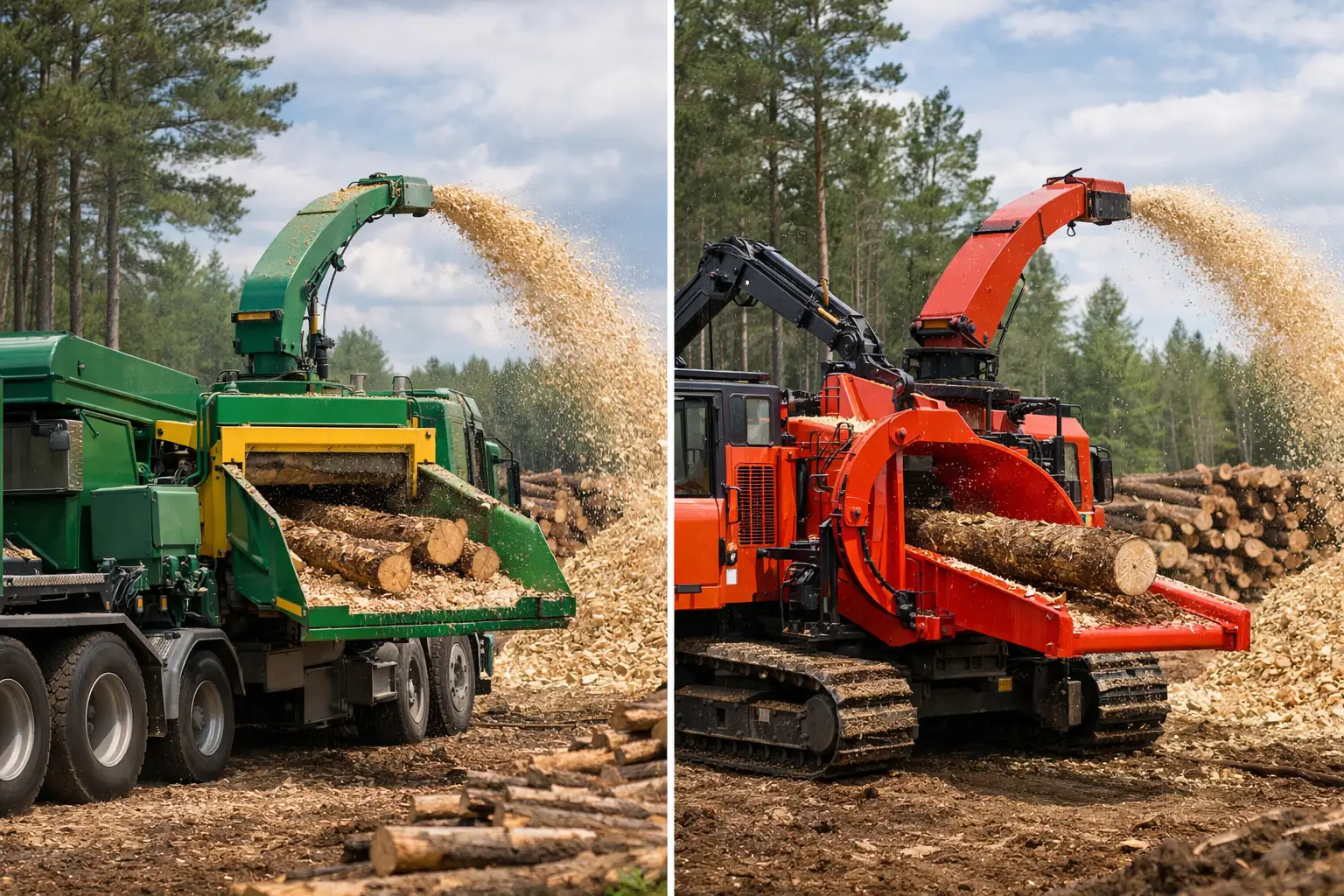
Drum Versus Disk Chipper’s-A disc chipper uses a heavy rotating disc fitted with knives. Material enters across the face of the disc, where the knife cuts a chip before it is discharged through paddles or vanes. The cutting action is clean and established, particularly where reasonably straight stemwood is being processed to a defined chip specification.
A drum chipper carries knives across a rotating drum. Timber is drawn through the infeed and cut as it passes the drum, with the chip thrown onwards by the rotating assembly. Drum machines generally offer a wider, more forgiving throat and are often better suited to irregular, branchy and bulky material.

-
The WeighPro Wireless Weighing Link represents a precise and dependable weighing system designed specifically for round timber, eliminating the need for re-calibration. This system offers operators minimal maintenance requirements, boasting an impressive battery life of up to two years between recharges.
-
That’s a remarkable amount of work hours for a single machine, the Norcar 600 owned by Erkki Rinne is taken well care of, it even has the original Diesel engine.
-
It is not possible to eliminate chain shot, but there are simple steps that can be taken to reduce the risk.
-
Arwel takes great pride in the fact that the mill has no waste whatsoever, “the peelings are used for children’s playgrounds, gardens and for farm animals in barns in the winter and the sawdust has multiple uses in gardens and farms as well.
-
Timber hauliers need to encourage young blood in, and also look after the hauliers we have, we need make the sector a safe and positive place to work.
FIND US ON
That description is useful, but it does not settle the buying decision. Feedstock moisture, desired chip size, screen specification, loader capacity, transport arrangements and end-user tolerance all matter. A contractor supplying a boiler with a tight fuel contract has different priorities from one reducing roadside residues or producing mixed landscape chip.
Feedstock decides more than the brochure does
The first serious question is what will go through the machine for most of its working life, not what it might process on its best day.
Disc chippers are commonly favoured for cleaner roundwood and more uniform material. Straight softwood stemwood, small diameter logs and sawmill offcuts can feed consistently, allowing the disc to produce a relatively even chip. Where the market rewards uniformity, this is a meaningful advantage. A good disc machine, correctly set up and fed steadily, can produce a clean, predictable product with limited oversize.
Drum chippers tend to be more tolerant when the timber is less civilised. Tops, brash-heavy material, forked stems, slabwood, bent lengths and mixed woodland arisings are often easier to handle through a large drum infeed. The material still needs sensible preparation and controlled feeding, but the machine is less likely to object every time a crooked piece reaches the rollers.
This is especially relevant in UK forestry, where a biomass job may involve several species, varying stem form and wet material coming straight off a harvesting site. A drum chipper can keep a loader and crew moving where a disc unit may require more sorting and presentation of the feedstock.
That does not mean every drum chipper is the right answer for dirty material. Stones, metal, soil-contaminated brash and old fencing timber are trouble for any chipper. Larger, more forgiving machinery is not a licence to feed it rubbish. Contamination destroys knives, damages screens and can turn a profitable contract into a repair bill.
Chip quality and the end market
Chip quality should be defined by the customer’s fuel system, not by what looks tidy on the floor. Boiler operators care about size distribution, fines, moisture, contamination and the consistency of deliveries. A district heating plant, a farm boiler and a lower-grade biomass outlet may all accept different material.
Disc chippers have a strong reputation for producing a more uniform chip from clean, regular wood. This can make them attractive for higher-specification fuel where oversize particles and long slivers cause handling problems. Knife condition, anvil setting, feed speed and screen choice remain critical. A poorly maintained disc chipper will not produce premium fuel merely because it is a disc design.
Drum chippers can also make excellent fuel chip, particularly modern machines with appropriate screens, controlled infeed and sharp knives. However, they may produce a broader particle distribution when dealing with mixed and branchy feedstock. For contractors handling variable woodland material, that trade-off can be worthwhile because the machine keeps processing rather than requiring constant feedstock sorting.
Ask a potential buyer for a chip sample from material that resembles their own. Not clean demonstration poles. Not dry, straight conifer fed one at a time. The useful test is a representative mix of species, moisture levels and stem form, processed at a realistic rate. Then compare the sample against the customer’s required class and fuel handling system.
Throughput is a system figure
Manufacturers quote tonnes per hour, but a chipper does not work alone. Actual output is governed by the loader, operator skill, feedstock presentation, knife sharpness, discharge arrangement, transport swaps and the distance between pile and machine.
Drum chippers often appeal where high-volume, awkward material needs to be swallowed without slowing the operation. Their broad infeed and ability to deal with larger, irregular pieces can keep production moving on clearance work, residue recovery and mixed forestry contracts. If the machine is continually fed, they can shift serious volume.
Disc chippers can also deliver very high output, especially on uniform timber. Their advantage is often seen in controlled yard work or dedicated woodfuel processing, where logs are presented cleanly and consistently. In that setting, precise chip quality and reliable output can outweigh the benefits of a wider infeed.
Do not buy on maximum capacity alone. Consider the normal shift rather than the peak hour. A machine that will comfortably process the available material at the capacity of the loader, while producing saleable chip, is usually the better commercial choice than a larger unit that is underfed, over-fuelled and difficult to move between jobs.

Fuel use, wear and daily maintenance
Both designs demand routine attention. Knives need to be sharp, correctly set and replaced as a matched set where specified. Anvils, screens, feed rollers, bearings, belts or drive components, hydraulic hoses and discharge systems all need regular inspection. Poor knife condition increases power demand, reduces chip quality and places unnecessary strain on the machine.
Disc chippers have fewer variables in the cutting path in some applications, but disc weight and access arrangements matter when maintenance is due. A contractor should look closely at knife-change procedure, guarding, lock-out points and whether the job can be done safely and efficiently in the yard or at site.
Drum chippers can involve more knives and more working surface, particularly on large units. They may deliver the capacity needed for difficult material, but the cost of keeping a heavily worked drum in top condition must be built into the operating calculation. Check knife price, expected sharpening cycles, availability of wear parts and the time required for a competent operator to complete routine servicing.
Fuel consumption needs the same honest assessment. A high-output drum chipper can use a great deal of diesel, yet still be the cheaper option per tonne if it processes difficult material quickly and reduces handling. Conversely, a disc chipper running clean roundwood at a controlled rate may deliver lower fuel use and better chip value. Litres per hour alone are not enough. Measure litres per saleable tonne, including loading and handling time.
Mobility, access and site layout
The choice also changes according to where the work is carried out. A tracked or wheeled mobile chipper gives flexibility on forest roads, clearfell sites and estate work, but weight, transport permits, ground conditions and support machinery must be considered. A static electric machine may be the stronger choice in a fixed yard with a reliable grid connection and predictable feedstock.
Disc chippers often suit structured yard layouts where material can be graded before processing. Drum chippers are frequently at home in more variable environments, although a large mobile unit still needs enough space for the loader, chip discharge and lorry movements.
Pay attention to discharge height and throw. If chip is being loaded into walking-floor trailers or high-sided bulkers, the machine must fill the body properly without frequent repositioning. An impressive chipper is of little use if the trailer becomes the production constraint.
What to ask before placing an order
A sensible procurement process should include more than comparing horsepower and purchase price. Ask the supplier to process representative material, specify the target chip class, and show the expected output with the screen fitted for that product. Establish what support is available during a breakdown in the middle of a contract, not just during commissioning.
Also check the practical details: transport weight, drawbar or tracked dimensions, access for daily checks, noise controls, fire suppression options, remote control functions and the compatibility of the machine with the existing loader or excavator. For a contractor, parts availability and a dealer who understands forestry workloads can be worth more than a marginal saving on the initial invoice.
The best choice is usually clear once the job is defined. If the priority is clean, consistent chip from uniform stemwood, a disc chipper deserves serious attention. If the work centres on bulky, mixed and irregular forestry material, a drum chipper may keep the whole operation productive. Buy the machine that makes money from the timber actually on the ground, then set it up and maintain it well enough to do that job every day.
Contact forestmachinemagazine@mail.com to get your products and services seen on the world’s largest professional forestry online news network.
#homeoflogging #writtenbyloggersforloggers #loggingallovertheworld
Written by loggers for loggers